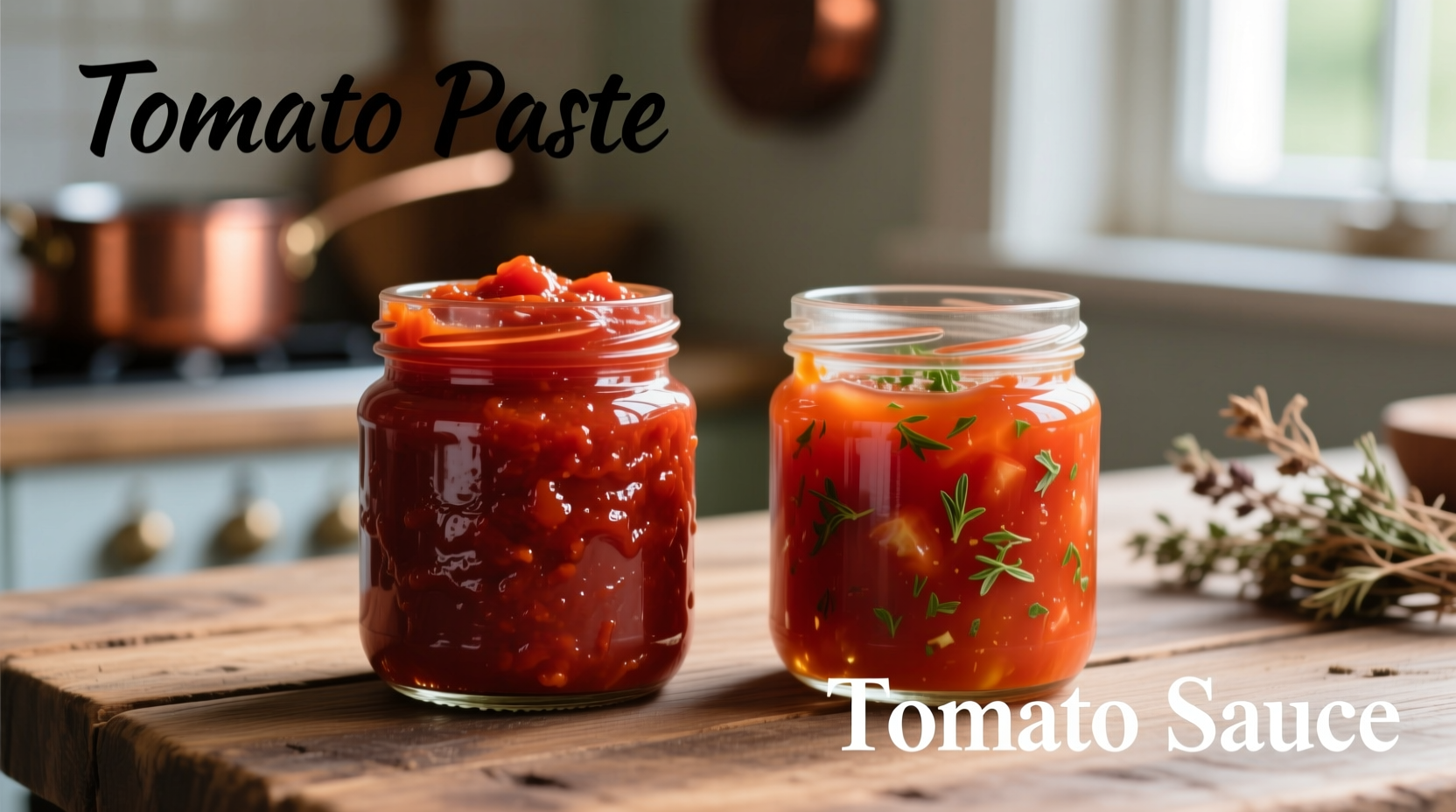
Last Tuesday, I was halfway through making my grandmother’s legendary spaghetti sauce when I hit a wall. I reached for the tomato paste, and all I found was an empty spot in the pantry. My heart sank, because you know the drill: the pasta is boiling, the garlic is sizzling, and the recipe is screaming for that thick, dark, intense stuff. But there it was, a shiny, untouched can of tomato sauce staring back at me from the counter. And in that moment, I asked the question we’ve all asked at 6 PM on a hungry Tuesday: can I substitute tomato sauce for tomato paste?
The Short Answer: Yes, But You Need a Strategy
Let’s get the straight-up truth out first. Yes, you can absolutely swap tomato sauce for tomato paste, but you can’t just pour it in at a 1:1 ratio and call it a day. That would be like swapping a shot of espresso for a cup of American coffee and expecting the same kick. Tomato paste is super concentrated—it’s cooked down for hours until it’s thick, dark, and intensely savory. Tomato sauce is thinner, more watery, and already seasoned in many cases.
So if you’re in a pinch, your mission is simple: reduce the sauce to mimic that paste-like thickness. Pour your tomato sauce into a small saucepan and simmer it on low heat until it’s reduced by about half or even two-thirds. You’ll know it’s ready when it looks like a thick, sticky red sludge—that’s your homemade paste. And honestly? It works way better than you’d expect for a last-minute fix.
Must Read
The Math: How Much Sauce Equals That Little Can?
Let’s do some quick kitchen math—don’t worry, no calculators required. Most standard tomato paste cans are 6 ounces, while tomato sauce cans are usually 15 ounces. Because paste is so concentrated, you’re looking at roughly 3 to 4 tablespoons of paste per cup of sauce when cooking. But if you’re reducing the sauce, a good rule of thumb is to start with about one and a half cups of sauce to get the equivalent of one small can of paste after reduction. Just keep an eye on it, and don’t walk away to check your phone—sauces can burn faster than your last online order arrives.
Side note: If your tomato sauce has added salt, garlic, or herbs (lots of them do), you might want to adjust the seasoning in your dish later. You don’t want your dinner to taste like a salt lick. Trust me, I’ve been there.
When You Should Not Make the Swap
Alright, honesty hour: there are times when you really should just run to the store or order a backup can. Baking is one of those times. If a recipe—like a thick barbecue sauce glaze or a flatbread base—calls for paste because it provides structure and low moisture, using reduced sauce can make things soggy and sad. Also, if you’re making a precise sauce that relies on paste’s umami punch (think vodka sauce or a braise), the reduction might not get you that same rich, deep flavor. In those cases, you’re better off hunting down the real thing.
Another no-go zone: ketchup. Please don’t think ketchup is a good substitute, even though it looks similar. Ketchup is loaded with sugar, vinegar, and spices that will totally mess up your recipe. I made that mistake once for a chili, and it tasted like a sad fast-food apology.
 12 Amazing Ideas For Tomato Sauce Substitutes (Including Non-Tomato
The Flavor Factor: What You Gain (and Lose)
Using reduced tomato sauce actually has a hidden benefit: you get a slightly brighter, fresher tomato taste. Tomato paste often has a cooked, almost caramelized flavor, while sauce retains more of that bright acidity. This can be a good thing if you’re making a lighter marinara or a tomato-based soup. But if you’re after that deep, slow-cooked richness of a Bolognese or a chili, add a tiny pinch of sugar or a splash of balsamic vinegar to compensate for what the paste would have provided.
Here’s a pro tip from my own kitchen disasters: if you’re reducing sauce and it starts to taste a bit flat, stir in half a teaspoon of tomato paste if you have any left, or a dash of fish sauce (trust me, it doesn’t taste fishy, just adds depth). You’ll thank me later.
Other Quick Workarounds (Because We’ve All Been There)
What if you don’t have tomato sauce either? Don’t panic. You can blend canned tomatoes (diced or whole) until smooth, then reduce them the same way. Or, if you have sun-dried tomato paste (the kind in a tube), you can use that at a 1:1 ratio—just be aware it’s a bit sweeter and stronger. And if you’re really scraping the bottom of the barrel, a combination of ketchup and a little tomato juice can work in a real emergency, but only if you reduce the sugar in your recipe.
The bottom line is: cooking is about flexibility, not perfection. You’re not a robot following a code—you’re a hungry human with a pantry. So go ahead, crack open that tomato sauce, let it bubble down, and own your substitution. Even if it doesn’t turn out exactly like Grandma’s, it’ll be yours, and that’s kind of the whole point of making dinner anyway.