
Let’s be honest: smoked turkey has a reputation problem. It’s often dry, pale, and about as exciting as a beige cardigan. But there’s a secret weapon that transforms this holiday workhorse into a showstopper: crispy skin. That golden, crackling, salt-studded exterior is the difference between a good bird and a legendary one.
The magic happens when smoke meets heat, turning the skin into a savory chip. It’s a textural paradox—tender, juicy meat beneath a brittle, shattered crust. And let’s face it, we’re all chasing that perfect crunch, whether it’s in fried chicken or a Thanksgiving turkey. Here’s how to get it without a deep fryer.
The Science of the Snap
Why does skin turn crispy? It’s all about rendering fat and evaporating moisture. When you smoke a turkey low and slow, the fat under the skin slowly melts away. But the skin itself stays flabby unless you dry it out completely.
Must Read
Think of it like this: steam is the enemy of crunch. If the skin is wet, it steams rather than fries. The goal is to create a surface so dry that the heat from the smoker acts like a gentle blowtorch, toasting the proteins into a brittle membrane.
Fun fact: The Maillard reaction—that browning magic—needs temperatures above 300°F to really kick in. Traditional smoking at 225°F won’t get you there. That’s why the best crispy-skinned birds get a finishing blast of high heat.
Prep Work: The Overnight Obsession
Start the day before. Pat the turkey dry with paper towels—and I mean aggressively dry. Then, place it uncovered on a rimmed baking sheet in the fridge for 12 to 24 hours. This is called “dry brining” in fancy chef speak, but it’s really just letting the air work its magic.
During this time, the skin tightens and loses surface moisture. Sprinkle it generously with kosher salt and a little baking powder—yes, baking powder. This alkaline helper raises the skin’s pH, making it brown faster and crisp up like a dream.
A cultural nod: This technique is a cousin to the classic Peking duck method, where chefs hang ducks to dry in the wind for days. You’re essentially doing a lazy, 24-hour version. Less dramatic, but just as effective.
Smoke Low, Then Blast High
Smoke your turkey at 250°F to 275°F until it hits about 150°F internally. Use wood like apple, cherry, or hickory for that rosy, aromatic smoke ring. But here’s the pivot: the skin will still be a bit rubbery at this point.
 How To Get Crispy Skin On Turkey In Roaster Oven at Hazel Peterson blog
Now, crank the heat. Move the bird to a preheated oven at 425°F, or if your smoker can handle it, dial up the temperature. The goal is to blast the skin for 15 to 20 minutes until it turns deep mahogany and shatters when pressed. Watch it closely—sugar in the brine can burn fast.
Pro tip: If you don’t have a smoker, use a gas grill with a smoke box. Or even a regular oven with smoked salt. The crispiness is still achievable; the smoke flavor is just a bonus.
The Patience Payoff
Let the turkey rest for at least 30 minutes before carving. This allows juices to redistribute, so the meat stays moist. But resist the urge to cover it with foil—that traps steam and will destroy your crispy skin in seconds.
Instead, tent it loosely with foil or invert a large bowl over it. The skin will stay crackly for about an hour. If you need to re-crisp it, pop it under a broiler for two minutes. It works like a charm.
Fun fact: In Texas barbecue culture, the “burnt ends” of brisket are revered. Turkey skin is essentially the burnt end of the bird—the crispy, caramelized edge that everyone fights over. Own that chaos.
Flavor Hacks for the Adventurous
Before smoking, slide your fingers under the skin and rub a compound butter (softened butter mixed with herbs, garlic, and lemon zest) directly onto the meat. This adds flavor without wetting the skin. The butter melts into the breast, keeping it juicy.
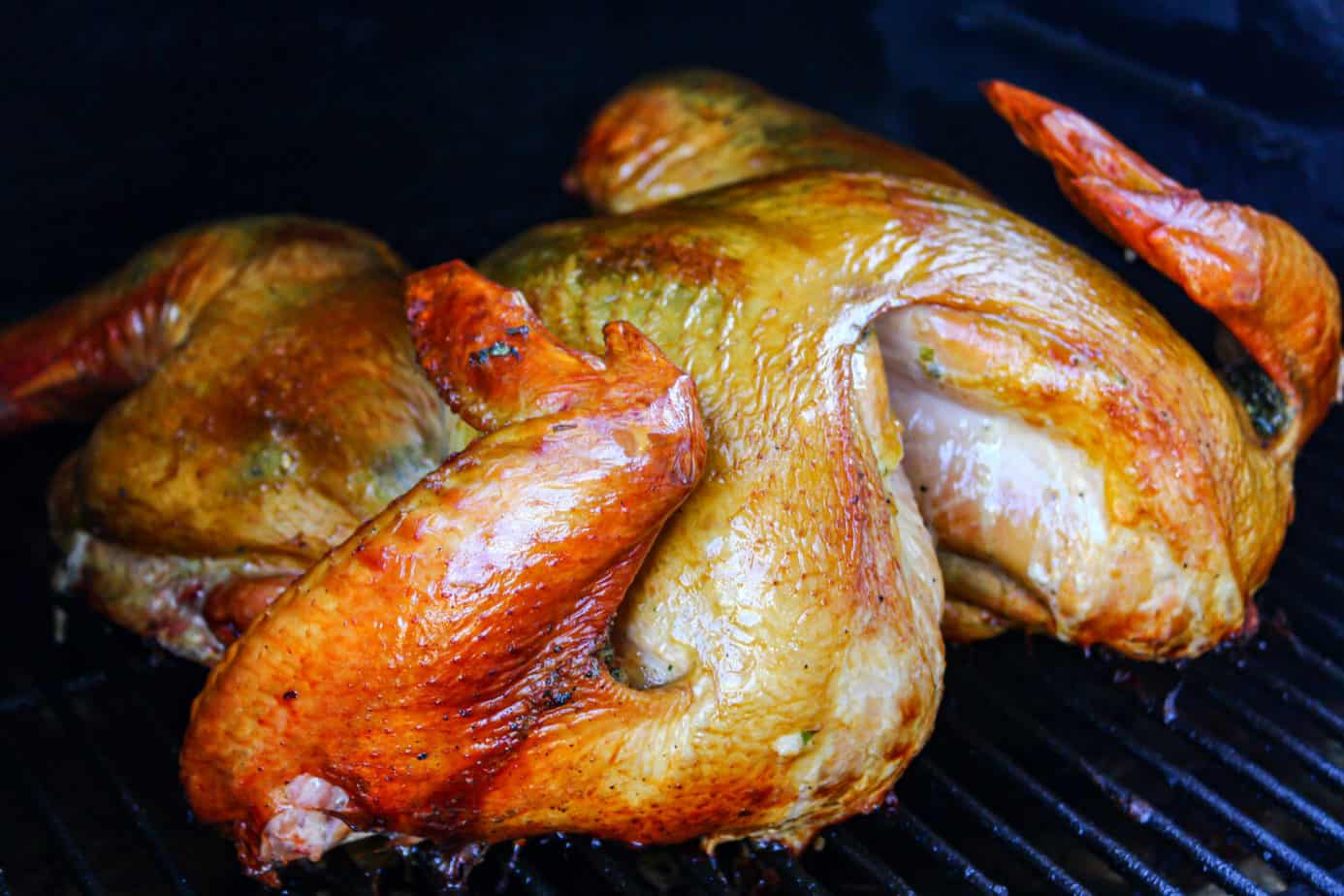 How to Make Perfectly Smoked Spatchcock Turkey with Crispy Skin
For a spicy twist, add cayenne or smoked paprika to the dry rub. For a sweet-savory vibe, brush the turkey with a light layer of maple syrup during the final 10 minutes of high heat. It caramelizes into a glassy, crunchy shell.
Cultural crossover: Korean fried chicken uses a double-fry method for ultimate crispiness. You can borrow that logic here—smoke first to cook, then high-heat finish to crisp. It’s the same principle, different continent.
The Leftover Dream
Crispy skin is fleeting. It’s at its peak right out of the smoker. But don’t despair if you have leftovers. Use a cast-iron skillet on high heat to re-crisp slices of turkey skin—they become something like turkey pork rinds.
Crush them over salads, soups, or mac and cheese. You can even blitz them in a food processor for a smoky “breadcrumb” topping. It’s a zero-waste move that feels deeply satisfying.
Here’s a final thought: that crackling skin is a metaphor for life. We all need a little low-and-slow patience, followed by a high-heat moment of courage to finish strong. So dry that bird, honor the process, and listen for the snap. It’s the sound of a job well done.
In a world that often feels soft and mushy, crispy skin is a reminder that the best things come from a little friction, a lot of heat, and an unwillingness to settle for bland. Go get that crunch. Your taste buds—and your dinner guests—will thank you.