
So, picture this: my buddy Dave, a man who believes a "good enough" fix is a permanent solution, decided to hang a heavy punching bag from his garage ceiling. He used a single, rusty hook he found in a drawer and some old rope that looked more like frayed shoelaces. The bag went up, looked great for about three days, and then one afternoon, while he was showing off his "killer hook," the entire thing came crashing down, narrowly missing his prized lawnmower. Dave’s mistake? He forgot about something engineers call the Factor of Safety.
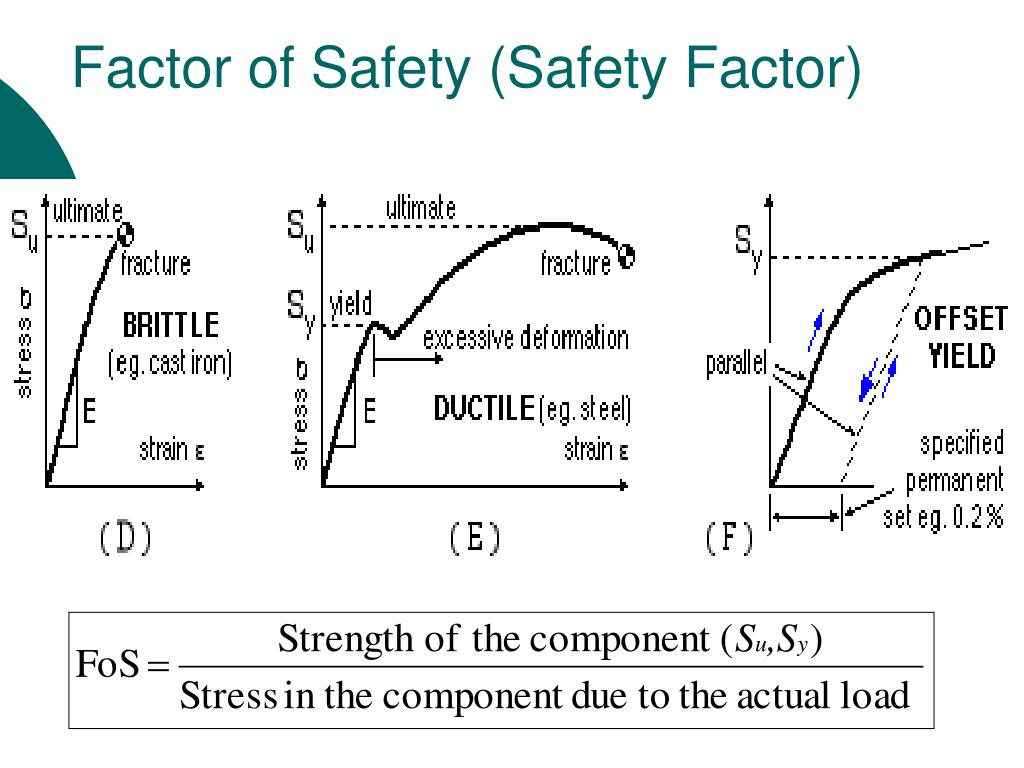
At its core, the Factor of Safety (often written as FoS or SF) is just a fancy term for a reality check. It’s a number that engineers multiply by the expected load on a part or structure to make sure it doesn’t break under unexpected stress. Think of it as a bring-it-on multiplier for your design. If your bridge needs to hold 10 tons, and you use a Factor of Safety of 2, you'll design it to hold 20 tons. It’s like buying a "one-size-fits-all" insurance policy against your own assumptions, and also against Dave-level installation skills.
Why Can’t We Just Build It Perfectly?
This is where the irony kicks in. You might think, "Why not just calculate exactly what the load will be and build to that?" Welcome to reality, my friend. The real world hates perfect calculations. Materials aren’t perfectly uniform—a steel beam might have a tiny flaw inside that you can't see. A car's suspension doesn't know it's only supposed to hit a pothole of a certain size.
Must Read
Then there’s the human factor (cue Dave’s hook). A worker on a site might mis-tighten a bolt. A kid might jump on that park bench designed for a sedate grandmother. The Factor of Safety is the secret handshake between theory and chaos. It’s the engineering equivalent of saying, “I know you said ‘use lightly,’ but just in case you go full gorilla...”
The Numbers Game: How Big is Big Enough?
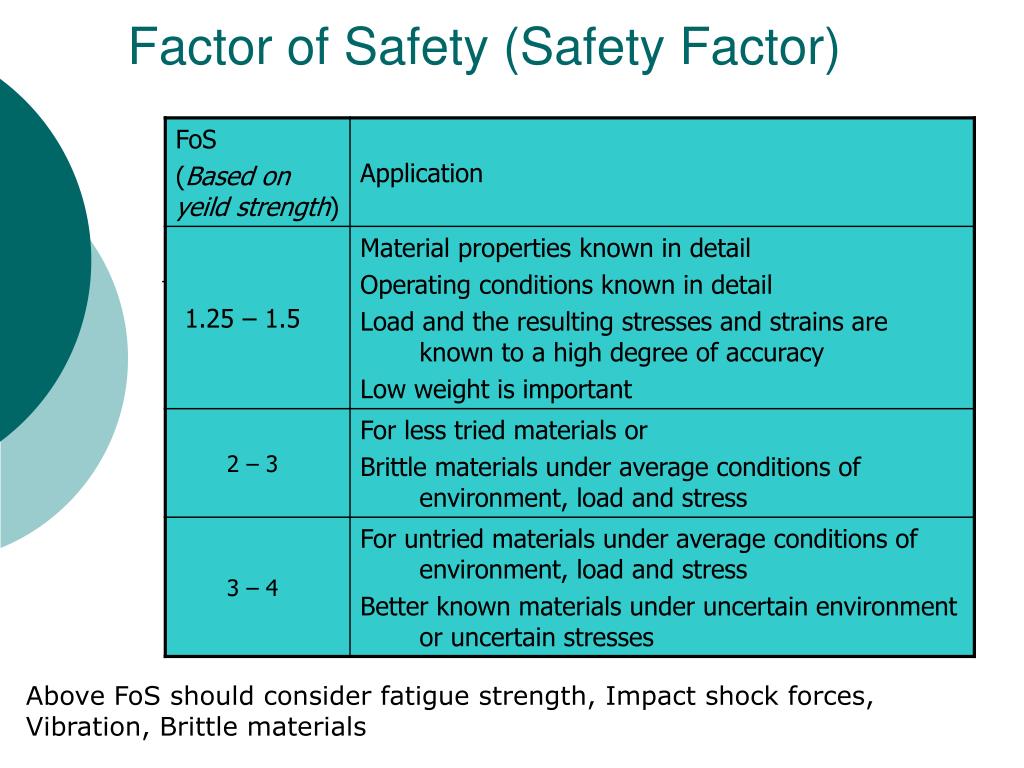
So, what’s the magic number? It’s never a single value, and that’s where it gets interesting. For a passenger elevator cable, a Factor of Safety of 11 or 12 is common. Why so high? Because if that cable snaps, people die. Also, cables can degrade, get greasy, or get jolted. That high number is your peace of mind multiplier.
But then look at an airplane wing. It uses a Factor of Safety of around 1.5. Wait, that’s tiny! A plane wing is only built to handle 50% more than the worst expected load. Isn't that scary? Yes and no. Planes are built with absurdly precise materials, constant inspections, and zero margin for cowboy installation. A higher FoS would add so much weight the plane couldn't fly. It’s a calculated risk, not a safety gamble.
 Safety Factor Mechanics Of Materials at Jose Orr blog
And for your garden-variety sidewalk? The concrete is probably designed with a Factor of Safety around 2 to 3. That means it can handle the weight of a fire truck, even if it was only designed for pedestrians. It's overkill for you, but a lifesaver for that one-in-a-million scenario—like Dave driving his truck onto it to fix his garage door.
The Ultimate Irony of the Factor of Safety
Here’s the kicker that always makes me chuckle: a Factor of Safety doesn’t guarantee safety. It’s a tool, not a magic shield. If an engineer uses a unit of 10 but makes a wild guess about the load (like assuming snow is light and fluffy when it’s actually wet and heavy), the FoS can still be useless. It’s like wearing two seatbelts but driving off a cliff—the number can't fix fundamental bad assumptions.
Also, a ridiculously high Factor of Safety can sometimes be a bad thing. Wait, what? An overly safe bridge made of too much steel becomes incredibly heavy, expensive, and ugly. It might also be less safe in an earthquake because its extra weight creates more destructive forces. The goal is not to build a fortress—it’s to find the sweet spot between protection and practicality.
 What Is A Typical Factor Of Safety
So next time you drive over a bridge or sit on a chair that wobbles but doesn't break, smile. Some engineer did the math, added a little extra, and whispered, “Just in case.”
What About Your Life's Factor of Safety?
Now, I’m going to get a bit meta here. You can apply this idea to your own projects. When you’re planning that DIY bookshelf, your Factor of Safety isn't just about wood. It’s asking: “How much load am I truly putting on myself? Am I leaving room for mistakes, delays, and bad sleep?”
Dave’s hook failure wasn't just about physics; it was about ego. He assumed his single, rusty hook had a Factor of Safety of 100. He was wrong. A good life rule? Assume your predictions are slightly optimistic. Give yourself an extra 20% of time, effort, or backups.
And please, for the love of all that is sturdy, never trust a frayed shoelace to hold a punching bag. That’s just asking for a flying lawnmower incident.