So, picture this: I’m trying to hang a framed poster in my dorm room. I had the string, the tack, and the willpower—but the frame just wouldn’t hang straight. It kept sagging into a sad, lopsided rhombus. I spent a good ten minutes yanking the string, muttering about the unfairness of geometry, until my roommate—an engineering major—strolled in, looked at my mess, and sighed.
He didn’t say a word. He just grabbed the bottom left corner, moved it a fraction of an inch, and bam—the frame was perfect. “You were fighting the diagonals,” he said. I stared at him. “The what now?” That’s when I learned a secret that could have saved me a decade of frustration: the diagonals of a parallelogram always bisect each other. And honestly, it’s the most underrated cheat code in shape-world.
What Does “Bisect” Even Mean? (No, It’s Not a Bug)
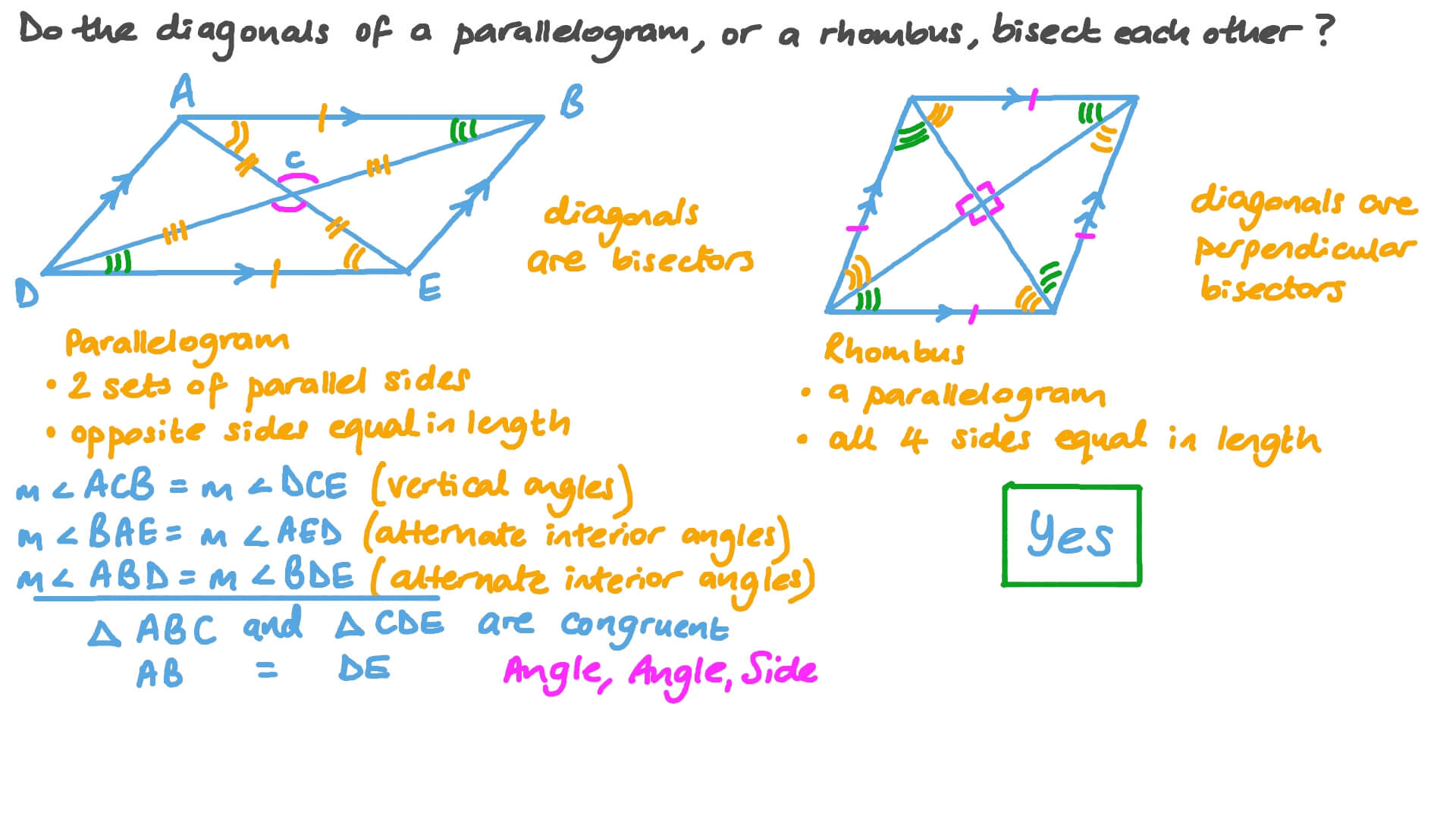
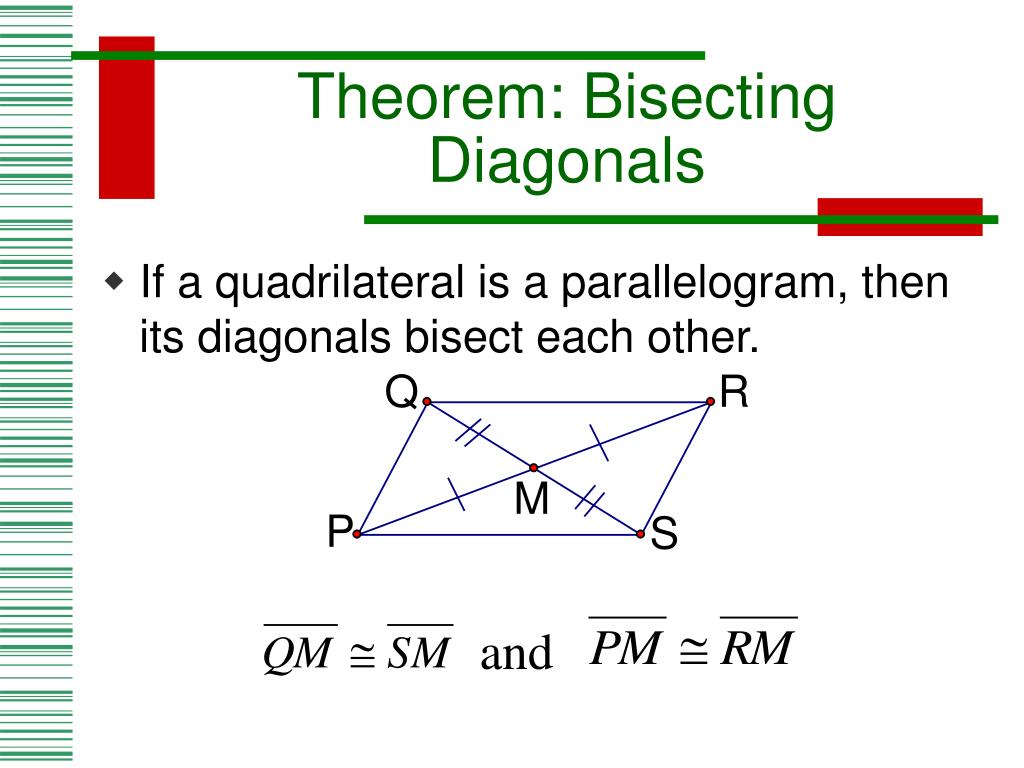
Bisect just means “cut in half.” So, when we say the diagonals of a parallelogram bisect each other, we’re saying they cross right at the middle point. Like two swords meeting exactly at their midpoints—very dramatic, very symmetrical.
Must Read
Think of it this way: draw a line from one corner of a parallelogram to the opposite corner (that’s a diagonal). Do that for the other pair of opposite corners. Where they cross? That intersection is the exact halfway point for both lines. And this isn’t a “sometimes, if you’re lucky” thing—it’s a guaranteed, ironclad rule for every parallelogram on planet Earth. (Yes, even slanty ones.)
Now, I know what you’re thinking: “Okay, cool, but why should I care about a math rule that doesn’t help me pay rent?” Fair point. But stick with me—this little fact is sneakily powerful.
The “Wait, That’s It?” Moment (And Why It’s Actually Huge)
Let’s be real: when you first hear this property, it sounds like the most boring fact ever. It’s up there with “water is wet.” But here’s the kicker—this property is what makes a parallelogram a parallelogram. It’s not just a random coincidence; it’s the soul of the shape.
If you take any quadrilateral and its diagonals do not bisect each other, then it’s not a parallelogram. Period. No rectangular loophole, no rhombus exception. It’s like a test of citizenship for shapes. “Do your diagonals bisect each other? Welcome to the Parallelogram Club. No? Sorry, you’re a trapezoid or something.”
This rule works in reverse, too. If you ever have a quadrilateral where the diagonals do cut each other in half, you’ve got yourself a parallelogram. It’s a two-way street, which in geometry is like finding a VIP shortcut.
Real Life? Oh, You’d Be Surprised
Remember that awful dorm room frame? The problem was that the diagonal string inside the back of the frame wasn’t attached at the midpoint of the frame’s diagonal. So when I hung it, the frame twisted. I was fighting physics. Once I saw that the two diagonals of the frame’s rectangle (which is a type of parallelogram) needed to cross at the center, I fixed it in ten seconds.
Ever used a scissors lift? Those giant metal platforms that mechanics and movers use to lift cars or furniture? Their secret sauce is a bunch of parallelograms linked together. The diagonals bisect each other, which keeps the platform perfectly level as it goes up and down. No tilting, no disaster. Pure, elegant geometry doing its job so you don’t have to think about it.
 PPT - Properties of Parallelograms PowerPoint Presentation, free
And if you’ve ever tried to center a design on a page or a sign—like a logo inside a rectangular banner—you’re using this fact. You find the center by drawing the two diagonals of the rectangle (the parallelogram). Where they cross? That’s the dead center. Humanity has been using this trick since ancient architects built temples. We just didn’t call it “diagonal bisection.”
The Secret Identity of the Intersection
Here’s a fun rabbit hole: the point where the diagonals cross? In a parallelogram, that point is the centroid—the shape’s center of mass. This is why a parallelogram (and its special cousins like rectangles, squares, and rhombuses) balances perfectly on a pencil tip at that intersection. Try that with a trapezoid. I dare you. It’ll wobble and fall because its diagonals don’t bisect each other. The parallelogram’s symmetry is a gift.
You can even prove this property with a piece of paper. Draw any old parallelogram, cut it out, and fold it along one diagonal. The opposite corners won’t line up. But if you fold it so that one corner meets the opposite corner? The crease goes right through the center. Do the same with the other diagonal. Surprise: the creases cross exactly at the midpoint of each diagonal. Paper doesn’t lie—except when it jams the printer.
And here’s the ironic twist: we often think of diagonals as “just the slanting lines.” But they’re the shape’s backbone. Without them bisecting each other, a rectangle would be a weird, wobbly thing. A square would lose its mind. The whole family of parallelograms would fall apart—literally.
So, What’s the Takeaway?
Next time you see a door, a window, a book, or even a slice of toast that’s cut square, silently thank the diagonals that bisect each other inside them. (Don’t say it out loud—people will think you’ve gone full nerd. But you’ll know.)
You can even use this to impress someone at a party. “Hey, you know what makes this a rectangle? The fact that its diagonals bisect each other.” You might get a laugh, or they might avoid you for the rest of the evening. Either way, you’re technically correct—and that’s the best kind of correct.
So, the next time you’re struggling to hang something, build something, or just balance a piece of furniture, remember: the diagonals are on your side. They’ve got your back—right at the midpoint.