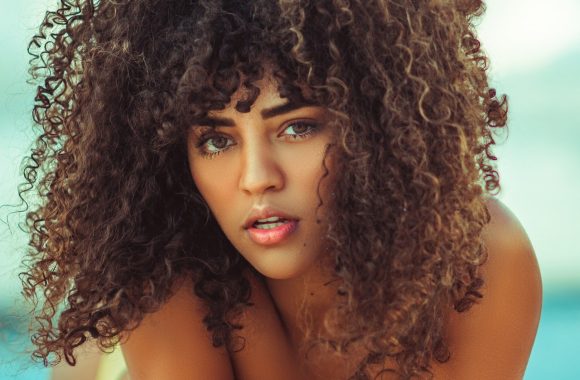
So, let’s talk about something that’s basically a whole conversation in itself: skin color in the Dominican Republic. Grab your coffee and pull up a chair, because this is a topic with layers—like a really good tres leches cake, but way more tangled. You can’t talk about the DR without bumping into a thousand shades of brown, beige, and everything in between.
The "Official" Palette
You ever look at a box of crayons and think, "That’s not even close?" Yeah, that’s the DR. The Dominican Republic is a mosaic of Taíno, African, and Spanish roots, but the official story is almost too neat. The government loves to push "Indio" (Indian) as a skin color—you know, like a polite way to say "brown but not too black."
Spoiler alert: most of us aren’t actually Indigenous. But the word "Indio" stuck around like that one auntie who refuses to leave the party. It’s a whole vibe—a euphemism that dodges the real conversation about race.
Must Read
The "What Are You?" Game
Walk down any street in Santo Domingo, and you’ll hear a whole glossary of colors. Negro, mulato, jabao, trigueño, canela, indio claro, indio oscuro—it’s like a menu at a fancy paint store. People will look at you and say, "Tú eres bien trigueña," like it's a compliment about your tan.
And here’s the funny part: everyone is an expert. Your abuela can tell you your exact shade from across the room. "No, mija, you’re not brown, you’re canelita—like a little cinnamon stick." It’s sweet, it’s ridiculous, and it’s deeply personal.
The Hair Factor (Oh, It’s A Thing)
Skin color is only half the story. The real drama? It’s your hair. In the DR, your curl pattern can change your social standing faster than you can say "pelo malo" (bad hair). I know, I know—"bad hair" is a wild phrase, but it’s used everywhere.
Straight or wavy hair? You’re "pelo bueno" (good hair). Kinky or tightly coiled? Time for a relaxer, a blowout, or a secret prayer to the hair gods. It’s a whole industry. Dominicans will spend hours and pesos to "tame" their natural texture, and it’s exhausting to watch.
But hey—times are changing. Younger folks are ditching the chemicals and rocking natural curls like a rebellion. It’s a slow burn, but it’s happening.
 Dominican women Dancing. Diversity of Women is presented by Vicini in
The "No Somos Negros" Dance
Here’s where it gets really messy. Many Dominicans will tell you, "We’re not Black, we’re Dominican!" That sentence is like a philosophical grenade. You have a country where the majority of the population has African ancestry, but the word "Black" feels like a dirty secret.
Why? Colonial hangover, baby. Spanish colonizers left a deep scar: whiteness = good, blackness = bad. So we invented a million shades to avoid the label. It’s a coping mechanism, a cultural trap, and a generational habit all rolled into one.
Is it logical? Not even a little bit. But it’s real.
Colorism in Everyday Life
Let’s be real: lighter skin still gets the better seat at the table. You’ll see it in telenovelas (the main character is always "Indio claro"), in job ads ("good presence" often means light-skinned), and in families (grandma loves the lightest grandkid a little louder).
It’s not the Dominican Republic’s exclusive problem—colorism is everywhere from India to Brazil. But here, it’s baked into the language itself. You’ll hear someone say, "Mejorar la raza" (improve the race) like it’s a to-do list item. Oof.
 Amara La Negra | Pretty Dark-Skinned Girl Problems In Dominican
The irony? We’re all mixed anyway. Trying to untangle the "races" in a Dominican family is like trying to sort a bag of jellybeans by flavor—you’re gonna end up with a handful of everything.
The Coconut Analogy (Because Why Not?)
Ever notice a coconut? It’s brown on the outside, white on the inside, and filled with water that’s good for you. That’s kind of the Dominican skin color experience. You’ve got a tough outer shell of labels, a soft inside of identity, and nobody agrees on the recipe.
Some people are proud of their skin. Others are bleaching it. Some crack jokes about it. Most of us just live in the gray (or brown) area, trying to figure it out one day at a time.
Where We’re Going
The good news? The conversation is finally happening in public. Young Dominicans on social media are using hashtags like #PeloNatural and #BlackIsBeautiful to challenge the old scripts. They’re calling out the "Indio" avoidance and saying, "Hey, being Black and Dominican is not an oxymoron."
It’s messy, awkward, and sometimes hilarious—like watching your uncle try to use a smartphone for the first time. But it’s movement. The palette is expanding, and people are learning to love the shade they’re in, no matter what the census form calls it.
So next time you see a Dominican and wonder about their skin color? Just smile. It’s a whole novel, a history book, and a comedy special all packed into one melanin-rich package. And honestly? That’s beautiful.