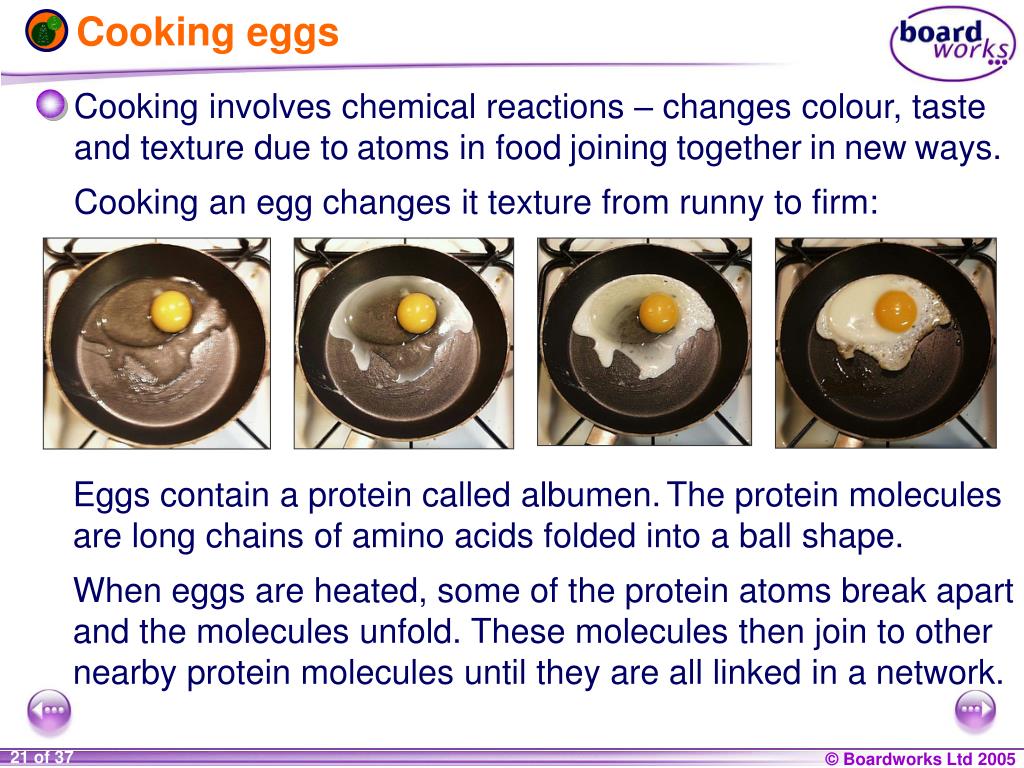
So there I was, staring at a frying pan like it had personally insulted me. I had cracked an egg, and the gloppy, translucent blob was now turning into a solid, white, and utterly delicious circle. It felt like magic, but I knew it was just heat doing its thing.
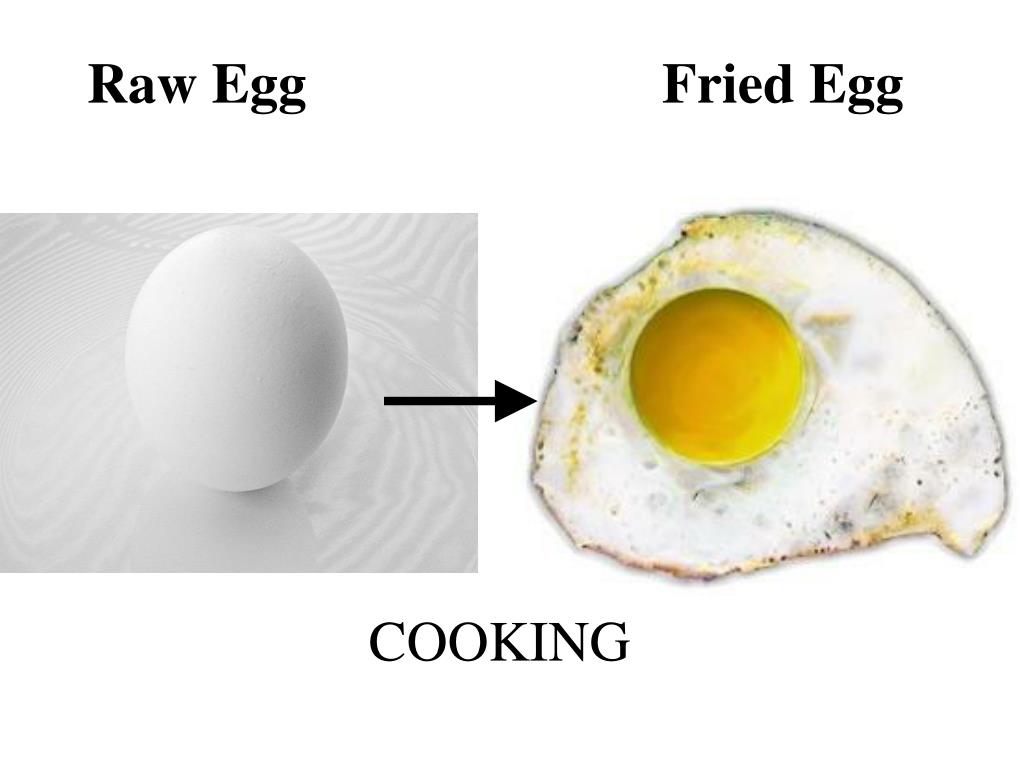
But here’s the kicker: that innocent egg will never go back to being liquid. You can’t “un-fry” an egg, no matter how much you beg. That’s your first clue that we’re dealing with a chemical change, not just a physical one.
Think about it. Melting ice is a physical change—you can refreeze it. But cooking an egg? That’s a one-way ticket to breakfast. The heat permanently rearranges the proteins, locking in a new structure.
Must Read
The science feels like betrayal
When you heat an egg, the proteins start to wiggle and unfold—a process called denaturation. It sounds dramatic because it is. Those long, tangled protein chains break their bonds and then snap together with other chains, forming a solid mesh.
This is why the white turns from clear to opaque. You’re literally watching molecules panic and cling to each other forever. Poaching, scrambling, or frying—they all trigger this same irreversible handshake.
And the yolk? It’s a similar story, but with more fat. When you cook it until it’s crumbly, you’ve denatured the proteins there too. No going back to that sunny, liquid center.
Wait, is this really chemistry?
Yes, and it’s annoyingly simple. A physical change (like cutting a potato) just changes the shape. A chemical change (like cooking the potato) creates new molecules with new properties. The egg’s proteins are literally different after heat.
You can even smell the difference. A raw egg smells like… well, raw egg. A cooked egg smells like breakfast. That smell is a brand new chemical compound being released—sulfur compounds, to be exact.
 PPT - Activity 3: Physical and Chemical Changes PowerPoint Presentation
If you burn the egg? That’s a further chemical reaction called the Maillard reaction. Basically, you’re toasting the proteins and sugars until they turn black and crispy. Don’t do that. It’s sad.
Why you should care (besides breakfast)
Every time you cook, you’re a lab assistant in a kitchen. You’re controlling temperature and time to force molecules to behave. The egg is just the most dramatic example—it screams “I’ve changed!”
Bread toasting? Chemical change. Steak searing? Chemical change. Even browning butter is a chemical change—you’re breaking down milk solids into new, nutty flavors.
So next time someone says cooking isn’t science, just show them a hard-boiled egg. It’s literally a solid argument.”
But let’s get real for a second
I know you’re not going to whip out a periodic table while scrambling eggs. But understanding this makes you a better cook. If you know denaturation happens at around 150°F (65°C), you won’t overcook your omelet into rubber.
 20 Examples of Chemical Change that You Can Experiment
Rubber is a chemical change too—but it’s an unpleasant one. So respect the heat. Slow and low for creamy eggs; high heat for that crispy edge.
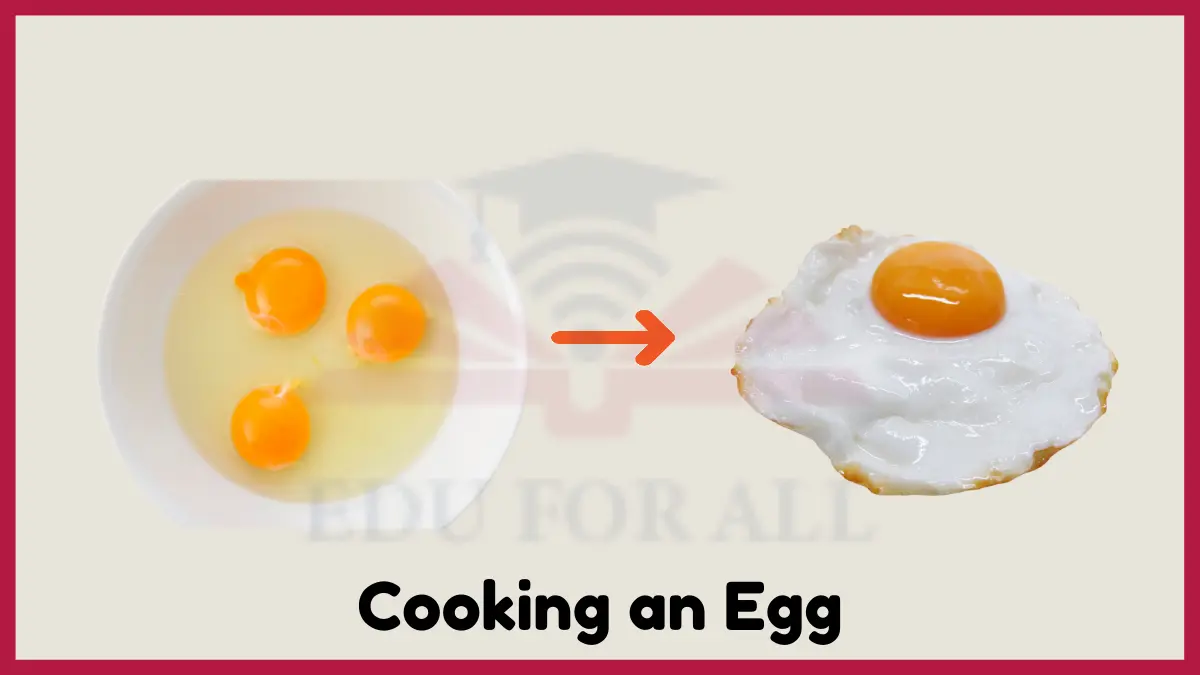
And here’s the ironic part: you’re eating the evidence. Every bite of that fried egg is a mouthful of successfully rearranged atoms. You’re basically consuming a chemistry experiment that tastes good.
The big takeaway? Don’t overthink it.
You don’t need to know the word “denaturation” to enjoy a perfect sunny-side-up. But knowing it makes you feel like a wizard who understands the spell.
So go crack an egg. Heat it. Watch it change. And smile, because you just performed a permanent, irreversible chemical reaction for your own stomach. That’s pretty cool, right?
Just don’t try to change it back. Trust me. I’ve tried. Cold eggs aren’t liquid again; they’re just sad, cold rubber.