
Let’s talk about a power couple that doesn’t get enough credit. I’m talking about gin and dry vermouth. These two are the ultimate odd couple—one is a rebellious, botanical hell-raiser, and the other is a sophisticated, wine-based diplomat. Together? They are pure liquid magic.
The Daring Duo You Already Know
You’ve met them before. They’re the brains behind the Martini, the mythical king of cocktails. But don’t let that fancy reputation fool you. These two are incredibly fun to hang out with at home.
Gin is the party starter. It’s a clear spirit that was basically medieval medicine. Monks and alchemists called it “genever,” a juniper berry tonic they swore would cure your kidney stones. Spoiler: it probably didn’t, but you didn’t care once you tasted it.
Must Read
Dry vermouth is the chill, older sibling. It’s a fortified wine, meaning they added extra alcohol and a secret mix of herbs, roots, and bark. Think of it as wine that went to finishing school and then got a black belt in flavor.
The Funky Facts Nobody Tells You
Here is a funny truth: vermouth was invented by a man named Carpano in Italy around 1786. He called it “Wormwood Wine,” because wormwood is the main herb in it. Yes, you read that right. A worm is in the name. Gross? Maybe. Delicious? Absolutely.
Gin, on the other hand, has a wild history. It was nicknamed “Mother’s Ruin” in 18th-century London. Why? Because it was so cheap and strong that people drank it like water. Entire streets were drunk. The government tried to ban it, but the people rioted. Gin is that rebellious.
The British love for gin actually created the Martini. American bartenders mixed their cheap, harsh booze with imported vermouth to make it drinkable. They just threw in an olive for garnish, and boom—a legend was born.
Why They Work So Well Together
Gin is loud. It screams pine, citrus, and a weird floral note that smells like a forest had a baby with a perfume shop. Dry vermouth is the whisper. It adds a gentle dryness, a hint of bitterness, and a silky, wine-like texture that tames gin’s wild side.
It’s a perfect balance. Too much gin, and you’re drinking a Christmas tree. Too much vermouth, and you’ve got a sad, soggy soup. The magic ratio? 2:1 for a classic Martini. But feel free to break the rules. Some famous drinkers like a 3:1 or even a 5:1 ratio. You do you.
 Martini med Ilginus London Dry Gin og Padró & Co. Vermouth Dorado
The best part? There is no “right” way to mix them. James Bond famously ordered his “shaken, not stirred.” Most bartenders will tell you that stirring keeps the drink colder and less cloudy. But if 007 did it, you can too. He’s fictional, by the way. You can still not care.
The Quirky Rituals to Try
Want to get weird with it? Chill your glass in the freezer for ten minutes. Fill it with ice, stir your gin and vermouth together, and strain it in. That’s it. No fancy shaker needed. The cocktail is pure efficiency.
Pick your garnish wisely. An olive gives you a briny, savory kick. A lemon twist adds a bright, oily zing. Serious Martini nerds argue about this like it’s a political debate. They will tell you that an olive ruins the “spirit’s aroma.” Ignore them. Or listen. It’s your drink.
Fun fact: In Italy, people drink vermouth straight, on the rocks, with a slice of orange. It’s called a vermouth (duh). They sip it before dinner to wake up their taste buds. It’s basically a salad for your mouth, but in liquid form.
How to Be a Rogue Martini Maker
Here’s where it gets fun. Don’t limit yourself to the classic Martini. Try a Gibson. That’s a Martini with a pickled onion instead of an olive. Sounds weird? It’s a savory, tangy explosion. The onion was a bartender’s joke that accidentally became a classic.
Or mix them with a splash of orange bitters. That transforms it into a Martini Royale. It adds a citrus kick that makes you feel like you’re on a yacht in the 1920s. You’re not, but your brain will pretend.
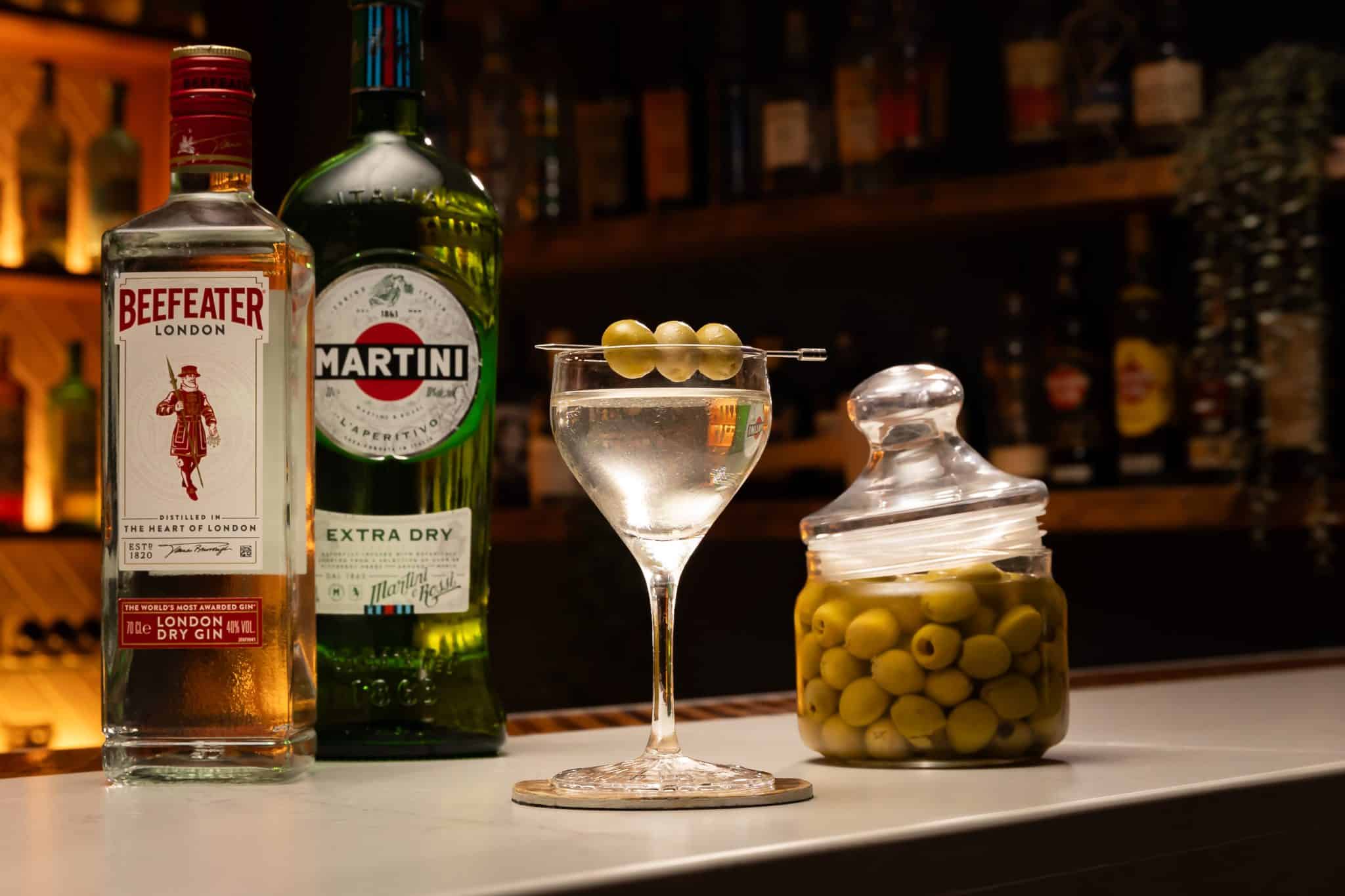 Dirty Martini Recipe by DrinksWorld
Don’t have a stirring glass? Use a large mason jar. Don’t have a strainer? Just pour carefully. Perfection is overrated. Gin and dry vermouth are forgiving friends. They’ll still taste excellent even if you spill a bit.
Why You Need This in Your Life
This duo is a gateway drug to cocktail culture. Once you master a Martini, you can rule your home bar. You’ll feel like a mad scientist mixing potions. The best part? It’s only two ingredients. No triple sec, no simple syrup, no six types of bitters.
Dry vermouth has a secret, though. It goes bad. Unlike gin, it’s a wine. Once opened, you have about a month to use it before it turns into vinegar. Store it in the fridge. Yes, the fridge. That little fact makes you sound like a pro.
Gin, meanwhile, basically never dies. It’s a spirit, so it can sit on your shelf for years. It will get better with age? No. But it won’t kill you. Just promise you’ll use it before you forget it exists.
The Final Sip
Gin and dry vermouth are proof that opposites attract. One is loud and prickly. The other is smooth and calm. Together, they create something that’s greater than the sum of its parts. It’s a conversation starter, a comfort drink, and a little piece of history in a glass.
So go ahead. Buy a decent bottle of gin and a decent bottle of dry vermouth. Don’t cheap out on the vermouth—it matters more than you think. Pour yourself a small, cold, soul-cleansing Martini. Raise it to your lips. Take a sip. Welcome to the club. We’ve been waiting for you.