
Have you ever stood in the grocery store, staring at a pile of spiky yellow fruit, feeling completely lost? You’re not alone. Picking a sweet pineapple is one of those little mysteries of life, like choosing a ripe avocado or guessing if a melon is actually good. But trust me, it’s way easier than you think once you know a few cool tricks.
The Pineapple is a Party Fruit
Think about it: a pineapple is basically nature’s party favor. It looks tough and armored, like a tiny dragon’s egg, but inside it’s pure sunshine and sugar. The best part? It doesn’t get sweeter after you pick it. Unlike bananas or avocados, a pineapple stops ripening the moment it’s harvested. So, the sweetness is locked in at the store, and you have to choose wisely. No pressure, right?
Step One: Look at the Leaves
Start with the spiky crown. You want leaves that look fresh and green, not brown, wilted, or sad. Here’s the fun part: give one of the center leaves a gentle tug. If it pops off easily with just a little pull, that’s a good sign. A stubborn leaf that stays put? That pineapple might be underripe and sour. It’s like checking if a friend is ready to leave the party—if they slip out easily, they’re done.
Must Read
The Smell Test: Your Nose Knows
Now, get close and take a whiff. A sweet pineapple will smell fragrant and floral, especially at the base. If it smells like nothing, it’s probably bland. If it smells a little vinegary or like rotten fruit, put it down and walk away. Your nose is way smarter than you give it credit for—treat it like a fruit fortune teller. Pro tip: don’t be shy; shove your nose right into the bottom. People might stare, but your taste buds will thank you.
Color: A Tricky Clue
You might think a golden pineapple is always the sweetest, but color isn’t everything. A green pineapple can be perfectly ripe, especially if it’s a variety like the “Smooth Cayenne.” However, avoid pineapples with dark, soft spots or mushy eyes—that’s the fruit equivalent of a bad sunburn. Instead, look for one that’s uniformly golden-yellow from top to bottom, but don’t ignore a greenish one if it passes the smell and leaf test. It’s like judging a book by its cover—sometimes the best story has a boring cover.
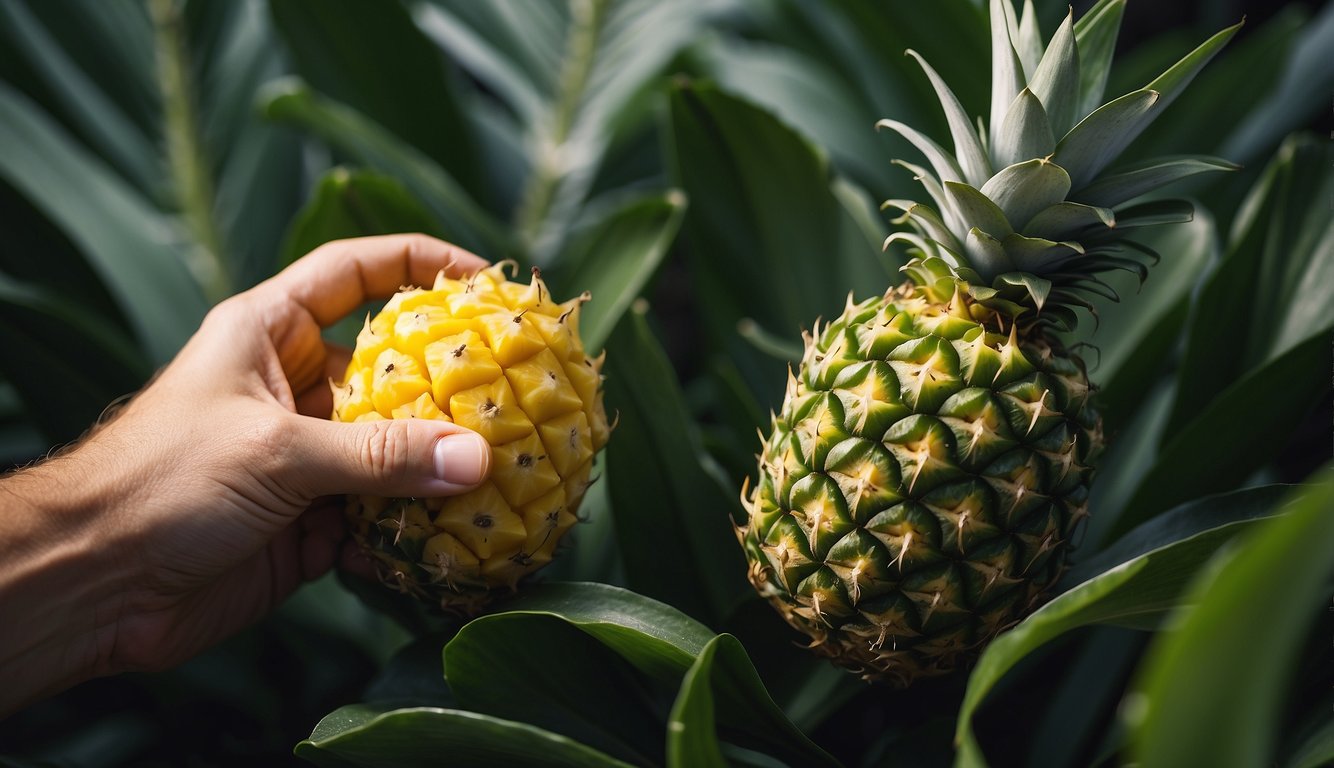 How to Pick a Pineapple: Tips from a Fruit Expert (2024)
Firmness and Weight: The Squeeze and Heft
Give the pineapple a gentle squeeze. It should be firm but give slightly under pressure, like a ripe peach, not hard as a rock or squishy like a sponge. A rock-hard pineapple is usually underripe, while a soft one is past its prime. Now, pick it up. A heavy pineapple for its size is loaded with juice—that’s what you want. A lightweight one? It might be dry and mealy, like chewing on cardboard. Think of it as choosing a water balloon: you want the heavy one that’s ready to burst.
The Easiest Hack: The Bottom Check
Here’s a little secret that pineapple pros love: flip it over and look at the bottom. The base should be firm and sweet-smelling, with no mold or cracks. If it looks a little dried out, skip it. The bottom is like the pineapple’s “hello”—it tells you everything about its journey. A fresh, happy bottom usually means a fresh, happy pineapple.
 Pineapple Ripeness Chart: How to Pick a Sweet & Juicy Pineapple
Why This Matters (Beyond Just Snacks)
Picking a great pineapple isn’t just about avoiding a sour mouthful—it’s about unlocking a tropical experience. A sweet pineapple is nature’s candy, perfect for grilling, blending into drinks, or eating raw with a sprinkle of chili salt. It’s also a cool party trick. Imagine bringing a perfect pineapple to a barbecue and having everyone ask, “How did you know?” You’ll feel like a fruit wizard. And honestly, who doesn’t want to be the fruit wizard at a party?
One Last Chill Thought
Don’t stress too much. Even if you pick a less-than-perfect pineapple, you can always cook it or mix it into a smoothie. The whole point is to enjoy the process of choosing, smelling, and guessing. It’s a tiny adventure with a delicious reward. So next time you’re at the store, give that spiky fruit a little love—and trust your gut (and your nose). You’ve got this.