
Imagine your body is a high-end sports car, and cortisol is the turbo boost. For most of us, that boost kicks in during a deadline or a near-miss on the highway, then fades. But for someone with Cushing syndrome, the turbo is stuck on full throttle, flooding the system with stress hormone 24/7. It’s not just about feeling wired; it’s about your metabolism, skin, and bones staging a quiet rebellion.
Before you self-diagnose after a stressful week, know this: true Cushing syndrome is rare. It’s also a master of disguise, often mimicking run-of-the-mill lifestyle woes like weight gain and fatigue. The real test? It’s less “Are you stressed?” and more “Let’s spy on your cortisol while you sleep.”
The First Whispers: When to Raise an Eyebrow
You don’t test for Cushing because you had a rough Monday. Doctors look for a specific pattern: rapid weight gain in the face (moon face), a buffalo hump between the shoulders, and purplish stretch marks on the belly. Thin arms and legs paired with a rounder torso are another red flag.
Must Read
Think of it like Willy Wonka’s chocolate river—everything looks delicious until you realize the Oompa Loompas are hiding a trapdoor. The body’s symptoms are the trapdoor clues. If you’re bruising like a peach and your bones ache for no reason, it’s time to ask your GP for a deeper look.
Saliva by Moonlight: The Late-Night Surveillance
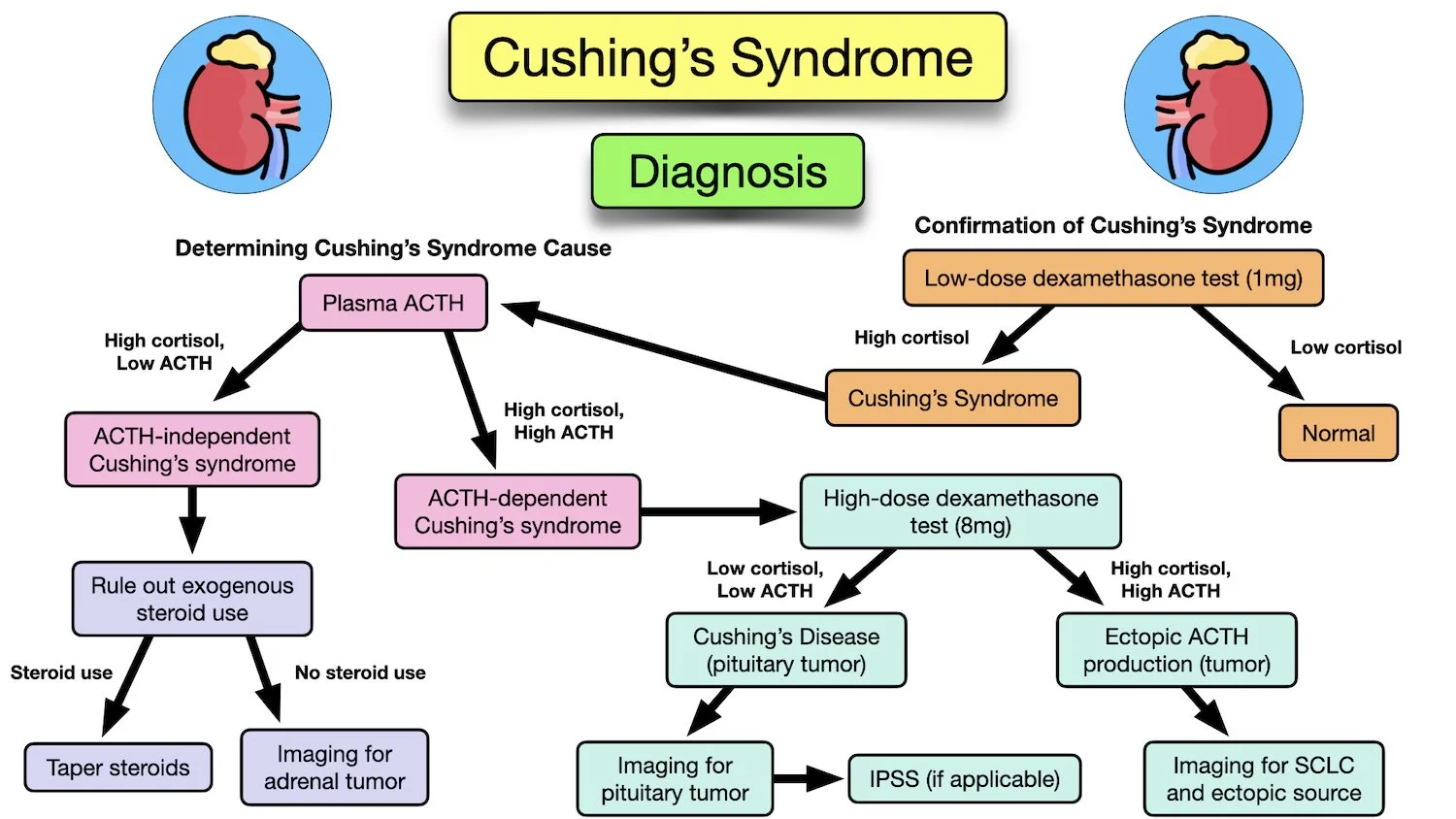
The first line of defense is delightfully low-tech: the late-night salivary cortisol test. Between 11 PM and midnight, you spit into a tube. Why? Cortisol is supposed to crash while you sleep, hitting rock bottom around midnight. If your spit shows a high level, the system is broken.
This test is practically a spy movie—you, in your pajamas, collecting evidence while the rest of the house dreams. It’s non-invasive and weirdly satisfying. Pro tip: Don’t brush your teeth or eat two hours before, because no one wants to test the plaque. A single high result isn’t a diagnosis, but it’s your ticket to the next round.
The Dexamethasone Game: Tricking the Gland
Next up is the dexamethasone suppression test, which sounds like a villain from a Harry Potter book. You take a small pill of synthetic steroid at night, and in the morning, they measure your cortisol. In a healthy person, the pill tells the pituitary, “Hey, we have enough steroids, chill out,” and cortisol plummets.
If your cortisol stays stubbornly high, it’s like the pituitary is ignoring the memo. This is a major clue that the problem is either a tumor in the pituitary (Cushing’s disease) or a rogue adrenal gland. It’s the medical equivalent of telling a toddler “No more candy” and watching them eat the whole bowl anyway.
 Cushing's Syndrome: Symptoms, Causes, Treatment, Diagnosis, Definitions
24-Hour Urine: The All-Day Stakeout
For a truer picture, you’ll likely do a 24-hour urine collection—a commitment akin to binge-watching a whole season of The White Lotus. You pee into a jug for an entire day, storing it in the fridge. Yes, the fridge. Next to the kombucha.
This test measures total cortisol output over a full day, smoothing out those annoying hourly spikes. It’s messy, it’s inconvenient, and you will absolutely forget to bring the jug to the bathroom at least once. But it gives doctors the most reliable average. Fun fact: Stress from the test itself can slightly raise cortisol, so try to treat it like a zen challenge. Deep breaths. Aim for the jug.
Imaging: The CSI of the Endocrine System
If your biochemical tests scream “Cushing,” it’s time for visuals. A high-resolution MRI of the pituitary gland becomes the star of the show. Think of it as looking for a tiny, rebellious pea in the center of your brain. Tumors here are usually smaller than 10 mm—microadenomas—small enough to hide from casual scans.
If the pituitary looks clean, the search moves to the adrenal glands via CT scan. Adrenal tumors can be benign and tiny, like a forgotten charm on a bracelet. The radiologist becomes your detective, zooming in on shadows that don’t belong. It’s like a treasure hunt, but the treasure is a malfunctioning gland and you’d really rather not find it.
The Inferior Petrosal Sinus Sampling (IPSS)
For the rare but tricky cases, doctors deploy the big guns: IPSS. This is not a test for the faint of heart. They thread a catheter from your groin up into the veins draining your pituitary gland, sampling blood directly from the source. It’s invasive, a bit dramatic, and incredibly precise.
 Guide to Testing for Cushing's Syndrome and Disease
Think of it as The Bourne Ultimatum of diagnostics—intense, highly accurate, and you’ll definitely tell your friends about it afterward. This test determines if the cortisol is coming from the pituitary or from an ectopic source (like a lung tumor). It’s the final word when other tests are fuzzy.
The Takeaway: Don’t Google Your Way into a Panic
Most “Cushing symptoms” are actually just life: stress, poor sleep, and too much takeout. The true diagnostic process takes weeks, with multiple tests to avoid false positives. Be patient with your body and your doctors. Over-diagnosing Cushing is actually more common than the disease itself.
Practical tip: If you’re worried, start a simple symptom diary. Note your weight, bruises, and energy levels for two weeks. Bring data, not anxiety to your appointment. And for the love of all things holy, do not bring a urine jug to a first appointment. Start with saliva.
It’s easy to feel like your body has betrayed you when things go haywire. But testing for Cushing is a reminder that our biology, messy as it is, runs on logic. Each test peels back a layer, and each answer—even a scary one—is just information. In daily life, we often overthink small glitches: a bad day, a lost key, a forgotten name. Maybe the Cushing test teaches us a gentler lesson: sometimes, the most powerful thing you can do is stop guessing and start collecting the data. Then, let the experts read the map.
Next time you feel your cortisol spike in traffic, take a breath. Remind yourself that your body is usually doing its job perfectly—keeping you alert, alive, and ready for the next curveball. And if it’s not? Well, science has a very good swab for that.