
Okay, grab your coffee. We’re about to get rocky. Not the romantic kind, the geology kind. Ever wonder how those massive, sparkly granite countertops formed? Or how a mountain can be solid inside? It’s all thanks to intrusive igneous rocks. And trust me, their origin story is way cooler than a slow-cooker recipe.
What Even Is an Intrusive Igneous Rock?
Let’s break it down. Igneous means “from fire.” These rocks are born from magma—that super-hot, liquid rock deep underground. Intrusive means it stays put. Instead of exploding out of a volcano, this magma forces its way into existing rock layers. It’s like magma moving into a new apartment while the landlord (the Earth’s crust) isn’t looking.
So, it intrudes. Hence the name. No drama, no fireworks. Just a slow, patient cooling process. Think of it as the tortoise of rock formation, not the hare.
Must Read
The Secret Ingredient: Time and a Cozy Blanket
Here’s the magic part. Magma underground is surrounded by insulation. The rock around it acts like a giant, warm blanket. This keeps the magma hot for thousands—sometimes millions—of years. Ever tried cooling a coffee by putting it in a thermos? Yeah, that’s intrusive magma.
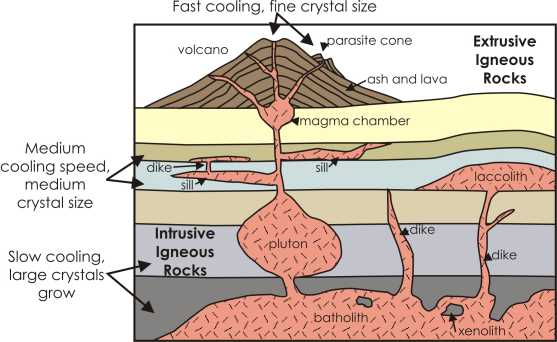
Because it cools slowly, something incredible happens: crystals grow big. You get those gorgeous, visible chunks of quartz, feldspar, and mica. That’s why granite looks like a mosaic of gemstones. It’s not magic; it’s just patience. And a little bit of pressure from miles of rock above.
How Does It Actually Get There?
Imagine a crack in your ceiling. Magma is that pushy. It follows any weakness—a fracture, a fault, a layer of softer rock. It oozes upward like cold honey, but with incredible force. It doesn’t just seep; it wedges its way in. Sometimes it melts the surrounding rock. Sometimes it just shoves it aside.
As it moves, it forms these huge blobs called plutons. (Yes, named after Pluto, the god of the underworld. Apt, right?) The biggest plutons are called batholiths. These are the true giants—hundreds of miles wide. Half the Sierra Nevada mountains? That’s a giant batholith from an ancient magma chamber.
You might be thinking, “If they’re underground, how do we see them?” Great question, friend. It takes erosion. Wind, rain, glaciers—they act like cosmic sandpaper. Over millions of years, they scrape away the overlying rock. And poof—the intrusive rock is exposed. It’s like Earth finally showing off its buried treasure.
The Big Types: Granite vs. Gabbro
Intrusive rocks have a secret language. It’s all about color and minerals. Granite is the star. It’s light-colored, full of quartz and feldspar. That’s your kitchen countertop, your gravestones, your fancy building facades. It’s the popular kid at the rock party.
 Igneous Rocks - Planet Earth
Then there’s gabbro. This is the dark, brooding cousin. It’s made of heavier minerals like pyroxene and olivine. It’s denser, darker, and often sits deeper in the Earth’s crust. Think of it as the goth phase of intrusive rocks. Both are formed the same way—slow cooling—but with different ingredients.
And don’t forget diorite. It’s the in-between rock. Salt-and-pepper colored. It’s like granite and gabbro had a quiet, non-explosive child. Intrusive rocks are full of these subtle dramas.
Why Should You Care? (Spoiler: You Already Do)
Without intrusive igneous rocks, we’d have no mountains that last. Those batholiths act like the skeleton of a mountain range. They’re the structural glue. Also, all those precious metals—copper, gold, silver—they often form in cracks near intrusive magma. So your smartphone’s circuit board? Thank an intrusive rock from 100 million years ago.
And let’s be real: granite is tough. It’s been holding up buildings since ancient Egypt. It doesn’t chip, it doesn’t stain easily, and it looks fabulous. That’s what happens when you cool down for a million years—you get hard.
The Takeaway (No Chisel Required)
So, intrusive igneous rocks form when magma gets cozy underground, cools slowly, and grows big crystals. No explosions. No lava flows. Just time, pressure, and a really good blanket of rock. It’s the slow-cooker approach to geology. And you know what? It works.
Next time you see a speckled rock, give it a little nod. It’s been cooking for eons just to meet you. That’s commitment, my friend. That’s the hot, patient truth of intrusive rocks.