
So, you’ve just microwaved a bag of popcorn, and now you’re staring at a fluffy, buttery cloud. But ever wonder how that little hard rock of a kernel becomes a snackable masterpiece? Grab a seat, and let’s pop the lid off this mystery.
The Humble Kernel: Not a Rock, a Survival Pod
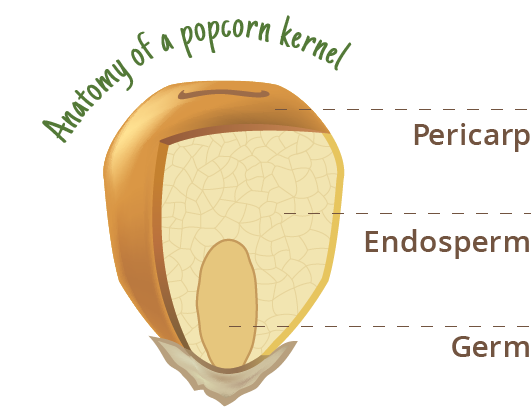
First, that kernel isn’t just a seed—it’s a tiny, armored survival pod. Inside, it holds three things: a starchy endosperm, a tiny bit of germ (the baby plant), and a smidge of water. Yes, water. That’s the secret weapon.
The outer shell, called the pericarp, is basically a super-strong helmet. It’s so tough that water can’t escape, and bugs give up trying to bite it. Basically, it’s the kernel’s version of a titanium spacesuit.
Must Read
The Science of the Big Bang
When you heat that kernel, the water inside turns into steam. Steam wants to expand. It’s like a tiny, invisible wrestler trying to push against the walls of the kernel from the inside.
But the pericarp is stubborn. So the pressure builds… and builds… and builds, like a very angry soda bottle. At around 356°F (180°C), the pressure hits a massive 135 pounds per square inch. That’s more pressure than a car tire!
Then—BOOM! The kernel explodes, turning itself inside out. The starchy inside bursts forth, cools instantly in the air, and becomes that fluffy, cloud-like mass we love. It’s a thermonuclear sneeze of deliciousness.
But Wait, Why Does It Pop Not Just Explode?
Good question! If the kernel just cracked open, you’d get a sad, burnt chip. The secret is the perfect moisture content—about 13.5 to 14%. Too dry? No pop. Too wet? Soggy, sad popcorn.
 Popcorn Kernel Diagram
Farmers and scientists (yes, popcorn has its own science nerds) obsess over this ratio. They’re like the Goldilocks of the snack world, except instead of porridge, it’s a volcanic eruption of starch.
And here’s a fun fact: every popcorn kernel has a tiny, natural “belly button”—a soft spot called the hilum. That’s the weakest point where the pop starts. So, in a way, every kernel is born from its own little belly button. Navel-gazing never tasted so good.
How Do We Get the Kernels? (The Farm-to-Bowl Journey)
Popcorn isn’t just any corn. It’s a specific subspecies called Zea mays everta, which translates roughly to “corn that goes pouf.” Farmers grow it on tall stalks, just like sweet corn, but they let it dry out in the field.
After harvest, they carefully dry the ears to that magic 13.5% moisture level. Too early, and the kernels stay wet and get moldy. Too late, and they shatter like glass. It’s a high-stakes game of veggie roulette.
Then, the kernels are snapped off the cob, sorted by size (bigger kernels = bigger puffs, you greedy thing), and shipped to you. Each bag is a tiny army of sleeping volcanoes, waiting for their moment in the microwave.
 From Seed to Snack
Why Does Some Popcorn Taste Like Cardboard?
Ah, you’ve met the enemy: old or stale kernels. If the moisture inside evaporates over time, you get half-popped, burnt little rocks. That’s why fresh popcorn is key—it’s a race against entropy.
The best popcorn comes from kernels stored in airtight containers. Pro tip: If you’re fancy and use a stovetop popper, add a tiny sprinkle of water to a paper towel, toss it in with the kernels for 30 seconds, then remove it. That boosts the moisture and makes them pop like fireworks. You’re welcome.
The Uplifting Conclusion: You Are a Popcorn Kernel
Here’s the beautiful truth: You are a popcorn kernel. Life heats you up, turns up the pressure, and sometimes you feel like you’re about to burst. Just like that kernel, you hold water (tears, sweat, hopes) and starch (resilience, strength).
But when the heat is on, you don’t shatter. You pop. You turn into something fluffy, warm, and delightfully unexpected. You expand beyond your own shell.
So the next time you hear that first pop in the microwave, remember: you’ve got the same magic inside you. A little heat, a little pressure, and boom—you’re a masterpiece. Now go grab a bowl, butter it up, and enjoy being gloriously, ridiculously you.