So, you made a gorgeous piece of salmon for Tuesday’s dinner, and now there’s a single, perfect fillet left staring at you from the fridge. We’ve all been there. You don’t want to eat the same thing three days in a row, and you definitely don’t want to throw good food away. That’s where your freezer steps in like a superhero in a cold, icy cape.
The big question is: how long can you actually freeze cooked salmon before it turns into a science experiment? Trust me, it’s a lot simpler than you think, and the answer might just save your next busy weeknight. Let’s break it down like we’re chatting over a cup of coffee.
The Magic Number for Peak Quality
For the absolute best taste and texture, you want to eat your frozen, cooked salmon within two to three months. After that, it won’t go bad in a dangerous way, but it will start to lose its lovely, flaky personality.
Must Read
Think of it like this: your salmon is a friendly fish that loves being at a party. After three months in the freezer, it’s still a nice guest, but it’s gotten a little tired and dry. It’s still safe to eat, just not the life of the party anymore.
If you leave it in there for six months or longer, the texture becomes a bit like a sponge that forgot what moisture feels like. It’s still edible, but you’ll probably want to smother it in a really good sauce to make up for its lost charm.
Why Should You Even Care?
Because life is hectic! Last Tuesday, I had a whole salmon dinner planned, but my kid decided they only wanted mac and cheese from a box. That leftover salmon? Straight into the freezer. Two weeks later, when I had zero energy to cook, it became a quick lunch that saved my afternoon.
It’s also a huge money saver. Salmon is pricey, and tossing it out feels like throwing a little stack of cash into the trash. Freezing cooked salmon means you’re being kind to your wallet and your future self who will be too tired to chop an onion.
Plus, it makes you feel like a kitchen wizard. Pulling out a perfectly good meal from the freezer on a frantic Wednesday is a small victory that deserves a little happy dance.
The Right Way to Freeze (So It Doesn’t Taste Like a Frozen Fish Stick)
First, let it cool down completely. You wouldn’t put hot leftovers in the fridge, so don’t shock your freezer with a steaming hot fillet. Give it about 20 minutes on the counter to chill out.
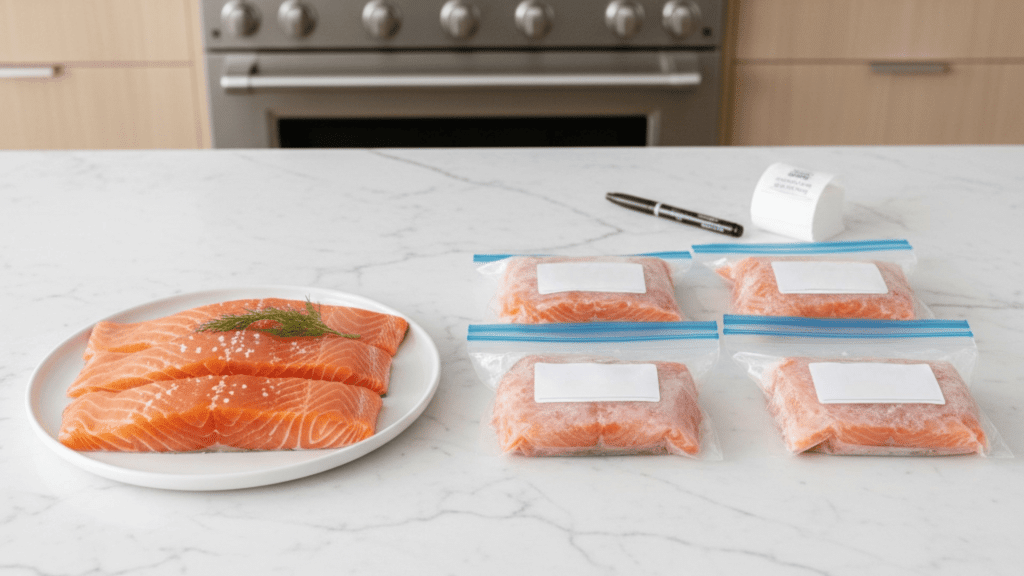
Next, wrap it like a cozy little present. Use a double layer of plastic wrap, then pop it into a freezer bag or an airtight container. Squeeze out as much air as you can—air is the enemy of flavor and texture.
Pro tip: write the date on the bag with a sharpie. I once found a frozen piece of salmon from “2021” and it felt like archaeological discovery. Labeling saves you from guessing games later.
When You're Ready to Eat It Again
The best way to thaw it is overnight in the fridge. It’s slow, but it keeps the fish from getting that weird, watery texture. If you’re in a rush, you can run the sealed bag under cold water for about 20 minutes.
 Can You Freeze Cooked Salmon? – How to Store, Freeze, and Thaw Cooked
Don’t use the microwave to thaw unless you enjoy salmon that tastes like a damp sock. Microwaves heat unevenly and make the fish tough and rubbery. Your future taste buds will thank you for the patience.
Once it’s thawed, reheat it gently. A warm oven at 275°F for about 10 minutes works wonders. Or flake it cold into a salad or a pasta dish. It’s already cooked, so you’re just waking it up.
Fun Little Stories from My Freezer
I once found a bag of frozen salmon that was labeled “Emergency Lunch.” It was from a dinner party I’d hosted three months prior. I thawed it, flaked it over some greens, and it was genuinely delicious. That bag became my freezer hero.
My neighbor, Karen, freezes her cooked salmon in single-serving portions. She calls them her “no-nonsense dinners.” When she’s too tired to cook, she grabs one, reheats it, and feels like she has her life together. It’s a small act of self-care, wrapped in foil.
The truth is, frozen cooked salmon is your reliable friend. It’s not as glamorous as a fresh seared fillet, but it’s there when you need it, no judgment, no fuss. Just a simple, safe meal waiting for you.
When to Let It Go
If it’s been more than three months, don’t panic. It’s still safe to eat if it was stored properly. But if you open the bag and it smells off, looks slimy, or has freezer burn that makes it look like a desert landscape, trust your gut and toss it.
Freezer burn won’t kill you, but it tastes like sadness. A little bit of dry, white patches is okay—just cut them off. A lot of it means the fish has been neglected, and it’s time to say goodbye with a respectful nod.
Your freezer isn’t a time machine. It can pause time, but it can’t reverse it. So, enjoy your frozen salmon within a couple of months, and you’ll always have a tasty, convenient option hiding in the cold.
So go ahead, cook that extra salmon next time. Freeze it with confidence. Label it with a proud flourish. And when you pull it out weeks later, give yourself a little pat on the back. You planned ahead, you saved some coin, and you’re about to eat like a champion. Your freezer is basically a treasure chest, and you’ve just found the gold.