Okay, let’s talk about the glorious, salty, pink-in-the-middle ham that’s been lounging in your fridge. You bought it, you stared at the label, and it whispered sweet nothings like "fully cooked." But now you’re panicking. Do you even need to cook it? The short, hilarious answer is: no, you don’t—but you will want to. Because cold ham is for sad sandwiches, and warm ham is for happy dreams.
The Magic of "Fully Cooked"
First, a little pep talk. A fully cooked ham is like a superhero who already saved the world. It’s been cured, smoked, or baked until it’s perfectly safe to eat straight out of the package. You could slice it up and serve it cold—and nobody would judge you. But where’s the fun in that?
Think of reheating as the victory lap. You’re not cooking it for safety; you’re cooking it for flavor, texture, and that irresistible glossy glaze. Plus, a warm ham makes your kitchen smell like a cozy holiday hug.
Must Read
So, How Long Do You Actually Cook It?
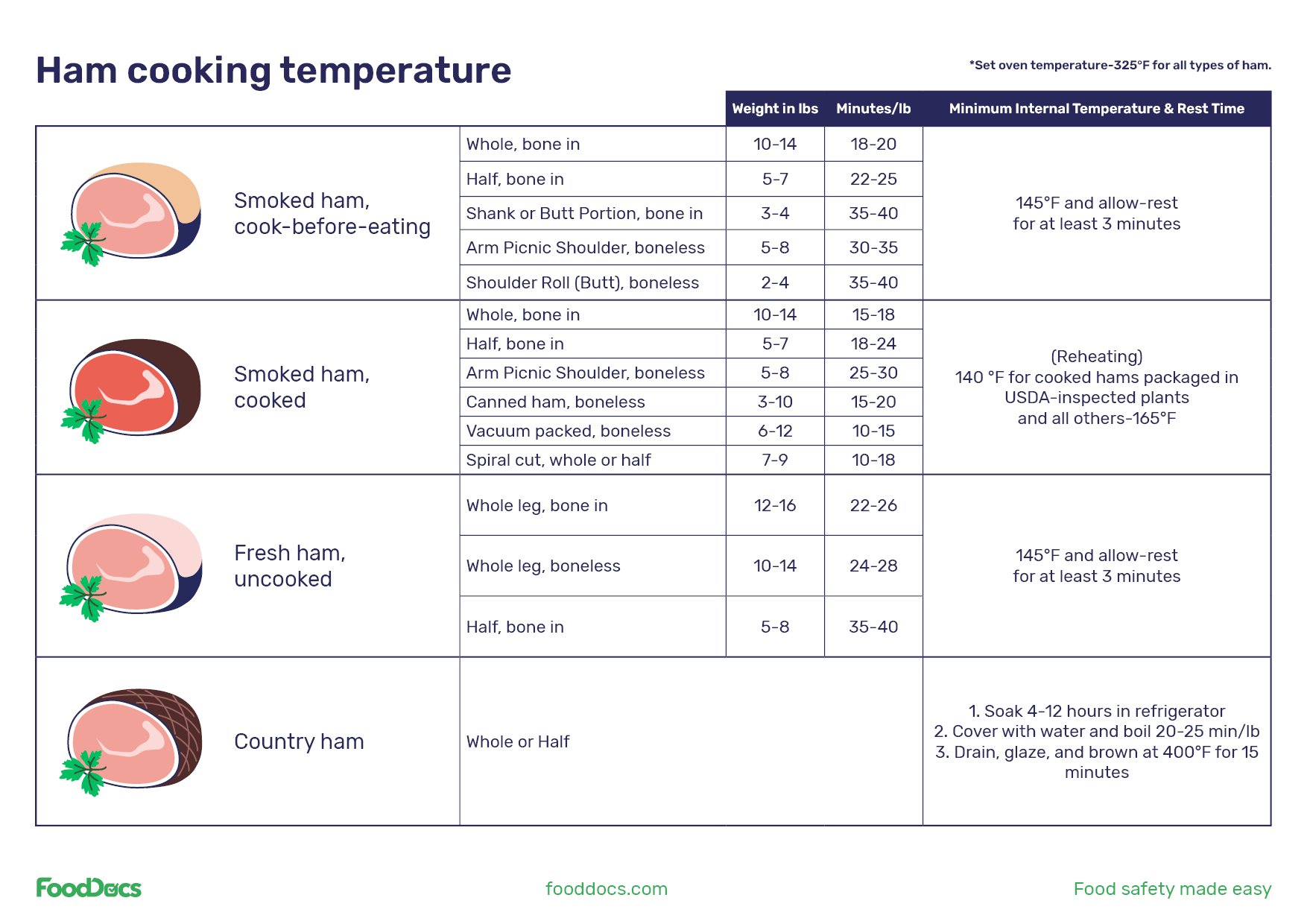
Here’s the golden rule, and I want you to tattoo it on your brain: 10 to 14 minutes per pound at 325°F (163°C). That’s it. That’s the math. If your ham is 5 pounds, you’re looking at about 50 to 70 minutes. If it’s a 10-pound beast, it’s around 1 hour 40 minutes to 2 hours and 20 minutes.
But wait—don’t just set a timer and ghost it. You need to check the internal temperature. The USDA says you want it to reach 140°F (60°C)—and that’s just for warming through. Remember, it’s already safe. You’re just making it lobster-level-warm.
Spiral-Cut Ham: The Sneaky One
Spiral-cut hams are the handsome devils of the ham world. They’re pre-sliced, which is awesome for serving, but they dry out faster if you’re not careful. For these, aim for 10 minutes per pound at 325°F. Cover them tightly with foil to trap steam, and only glaze them in the last 20 minutes. Pro tip: Don’t let the slices separate—they’ll dry out like a desert sidewalk.
Bone-In vs. Boneless: Does It Matter?
It does, but only a little. Bone-in hams are bigger and usually take longer per pound. Boneless hams are more compact and heat up faster. Both are delicious, but bone-in wins for drama. You get to say “Look at this magnificent bone” at the dinner table. That’s worth an extra 10 minutes.
The Glaze Game: Don’t Skip It
Here’s where the jokes end and the serious business begins. A glaze is not optional—it’s mandatory for happiness. Mix brown sugar, honey, mustard, or pineapple juice. Brush it on during the last 30 minutes of cooking. Apply two or three coats for that sticky, caramelized crust that makes people moan in delight.
One warning: Don’t glaze too early. Sugary glazes burn if they’re on for an hour. You’ll end up with a ham that looks like it fought a fire and lost. Not the vibe.
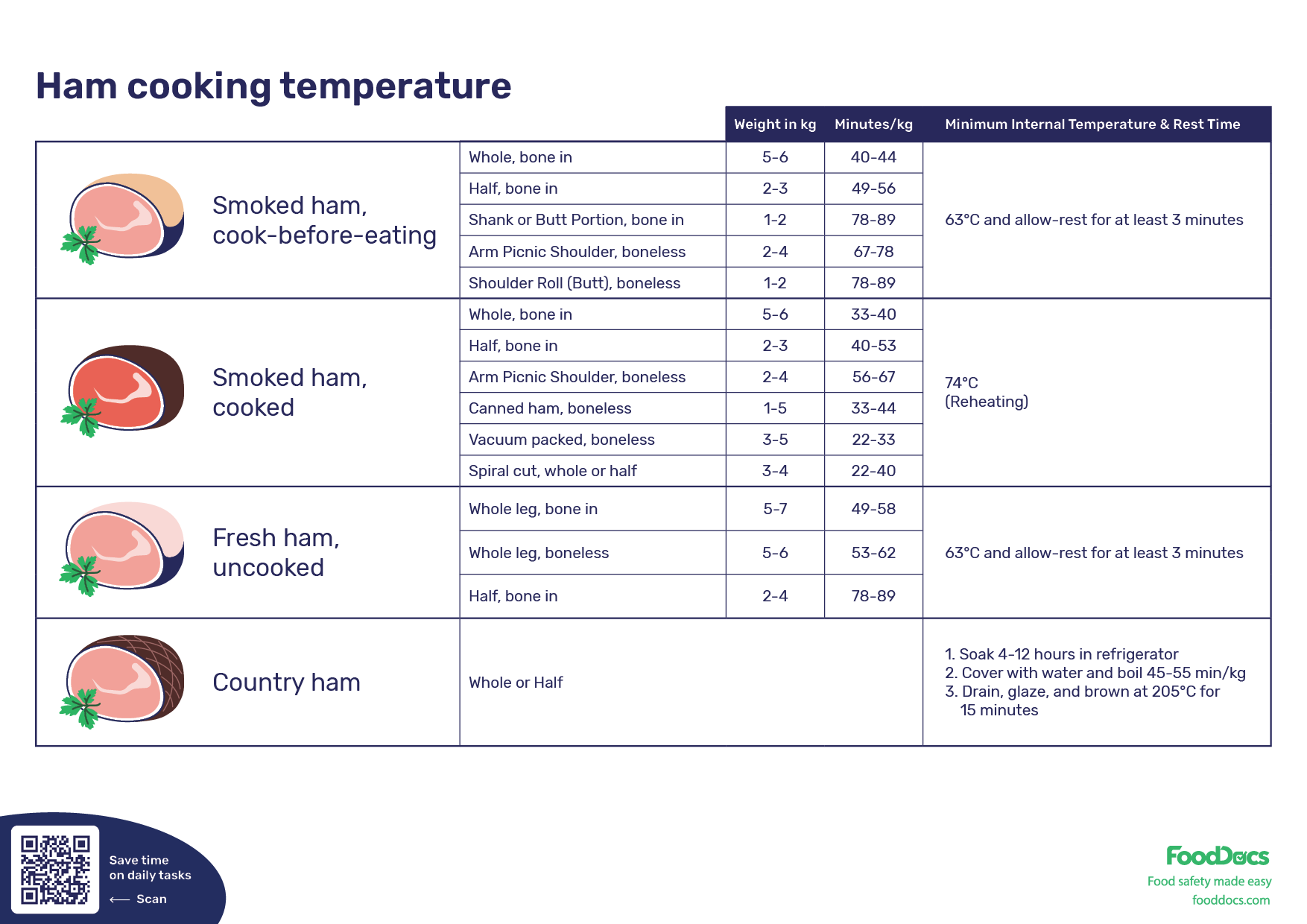 Ham Cooking Temperature Chart | Free Download
Using a Slow Cooker? You Rebel.
If you’re feeling lazy (or your oven is occupied by a billion side dishes), a slow cooker works beautifully. Place the ham cut-side down, add a cup of pineapple juice or apple cider, and cook on low for 4 to 6 hours. Yes, it’s that easy. No basting, no fuss. Just set it and forget it—but don’t actually forget it, because you’ll want to glaze it 30 minutes before serving.
Pro tip: If your ham is too big for the slow cooker, chop it in half. Nobody will know. It’s a secret between you and your appliance.
The "What If I Overcook It?" Panic
Okay, reality check. Overcooked ham becomes dry, stringy, and sad—like a party balloon two days after the party. To avoid this, use a meat thermometer. Stick it into the thickest part (not touching bone). Once it hits 140°F, pull it out. Let it rest for 15 minutes. Resting is non-negotiable. It lets the juices redistribute so your ham doesn’t taste like cardboard confetti.
If you do overcook it (it happens to the best of us), douse it in warm chicken broth or apple juice. It won’t be perfect, but it will be less sad. You’re welcome.
Shortcut: The "I’m Exhausted" Method
Sometimes you just want ham, and you want it now. For a fully cooked ham, you can microwave it. I know, I know—blasphemy. But if you’re desperate: slice the ham into ½-inch thick pieces, arrange on a microwave-safe plate, cover with a damp paper towel, and heat for 1 to 2 minutes per serving. It won’t be fancy, but it’ll be warm. Pair it with a smile and some store-bought rolls, and you’re a hero.
The Uplifting Conclusion (I Promise)
So, how long do you cook a fully cooked ham? Long enough to make it warm, but not so long that it cries for help. You now have the power. You know the temperatures, the times, and the glaze secrets. You can walk into any kitchen, stare down a ham, and say, “I own you.”
And here’s the beautiful truth: a fully cooked ham is the friendliest dinner guest. It arrives pre-cooked, smiles at your mistakes, and still tastes amazing even if you mess up the timing. It’s the “I forgive you” of meats. So go ahead, roast that ham with confidence. Glaze it with joy. Serve it to people you love, and when they inevitably ask, “How did you get it so perfect?” just wink and say, “Trade secret.” You’ll both laugh, and dinner will be magnificent. You’ve got this, friend.