
Let’s be honest: the meatloaf is a culinary hero in disguise. It’s the quiet, comforting dish that saves weeknight dinners and impresses at potlucks without ever bragging. But if you’re staring at a raw loaf of seasoned meat, you’re probably thinking, How long do I actually cook this thing? The answer isn’t as rigid as you might think, but we’ve got the blueprint.
The Golden Rule of Time and Temperature
The classic standard for a two-pound meatloaf in a 350°F oven is about 55 to 65 minutes. This sweet spot ensures the center reaches a safe 160°F without turning the edges into hockey pucks. For a smaller, one-pound loaf, trim that down to 40–45 minutes. A larger, three-pound beast might need a full hour and fifteen minutes.
Here’s the secret that separates pros from amateurs: don’t trust the clock alone. Ovens lie. Some run hot, some run cool, and your loaf’s shape matters. A flat, wide loaf cooks faster than a tall, dome-shaped one. Your best friend here is an instant-read thermometer—push it into the very center and look for exactly 160°F for beef or pork mixtures.
Must Read
You’ll notice a little carryover cooking happens after you pull it out. That internal heat will climb another 5°F while it rests, giving you a safe, juicy loaf. Resting is non-negotiable—let it sit for ten minutes, or your slices will crumble into a sad pile of delicious rubble.
Cultural Inspirations from the Comfort Food Hall of Fame
Meatloaf isn’t just American—it’s a global shape-shifter. In Germany, they call it Hackbraten and often wrap it in bacon. In Sweden, it’s köttfärslimpa, usually served with lingonberry jam and creamy gravy. Even the UK’s “meatloaf” sometimes gets a hard-boiled egg center for a surprise yolk twist.
That 350°F oven is practically universal, but regional variations tweak the timeline. A Greek moussaka-style meatloaf with a béchamel topping might need an extra 10 minutes to set that creamy crust. Meanwhile, a classic Southern meatloaf with a sweet ketchup glaze can handle a higher temp—try 375°F for 50 minutes—for caramelized edges that taste like childhood.
Think of your oven as a quiet collaborator. It doesn’t care if you’re using ground turkey, beef, or a mix of pork and veal. Just remember: leaner meats dry out faster, so add a touch of olive oil or grated onion to keep them moist. The clock is a guideline, but your senses are the real boss.
Practical Tips for a No-Drama Loaf
Don’t overmix the meat. Treat it like you’re handling a fragile friendship—gentle folding until everything is just combined. Overworking it makes the loaf dense and tough, like a bad joke that goes on too long.
 How To Cook Meatloaf In Oven
Shape matters for even cooking. Form your loaf into a uniform rectangle, about 2.5 inches thick, on a foil-lined baking sheet. A loaf pan works too, but it traps fat—use a rack inside the pan if you want crispy edges on the bottom. For a fast-track version, flatten the mixture into a 1-inch-thick slab on a sheet pan; it’ll cook in just 25 minutes at 400°F.
Brush on a glaze halfway through. Your favorite combo—ketchup, brown sugar, and a dash of Worcestershire—needs time to caramelize. Apply it at the 30-minute mark for a glossy, sticky finish that feels like a hug on a plate. Pro tip: double the glaze and serve extra on the side for dipping.
Fun Facts to Impress Dinner Guests
Did you know that meatloaf became a household staple during the Great Depression? It was a clever way to stretch cheap ground meat with breadcrumbs, oats, or even crushed crackers. The term “meatloaf” first appeared in an 1890s American cookbook, but the concept dates back to ancient Roman times.
Today, the average American family eats meatloaf about four times a year—mostly on busy Tuesdays. There’s even a National Meatloaf Appreciation Day on October 10th, so mark your calendar. And if you’ve ever wondered why your meatloaf falls apart, it’s likely because you skipped the binder—eggs and breadcrumbs are the glue that holds your masterpiece together.
One more thing: meatloaf is the perfect leftover. Cold slices make incredible sandwiches the next day, especially with a smear of spicy mustard and some crunchy lettuce. It’s the dish that keeps giving, even after it’s long gone from the oven.
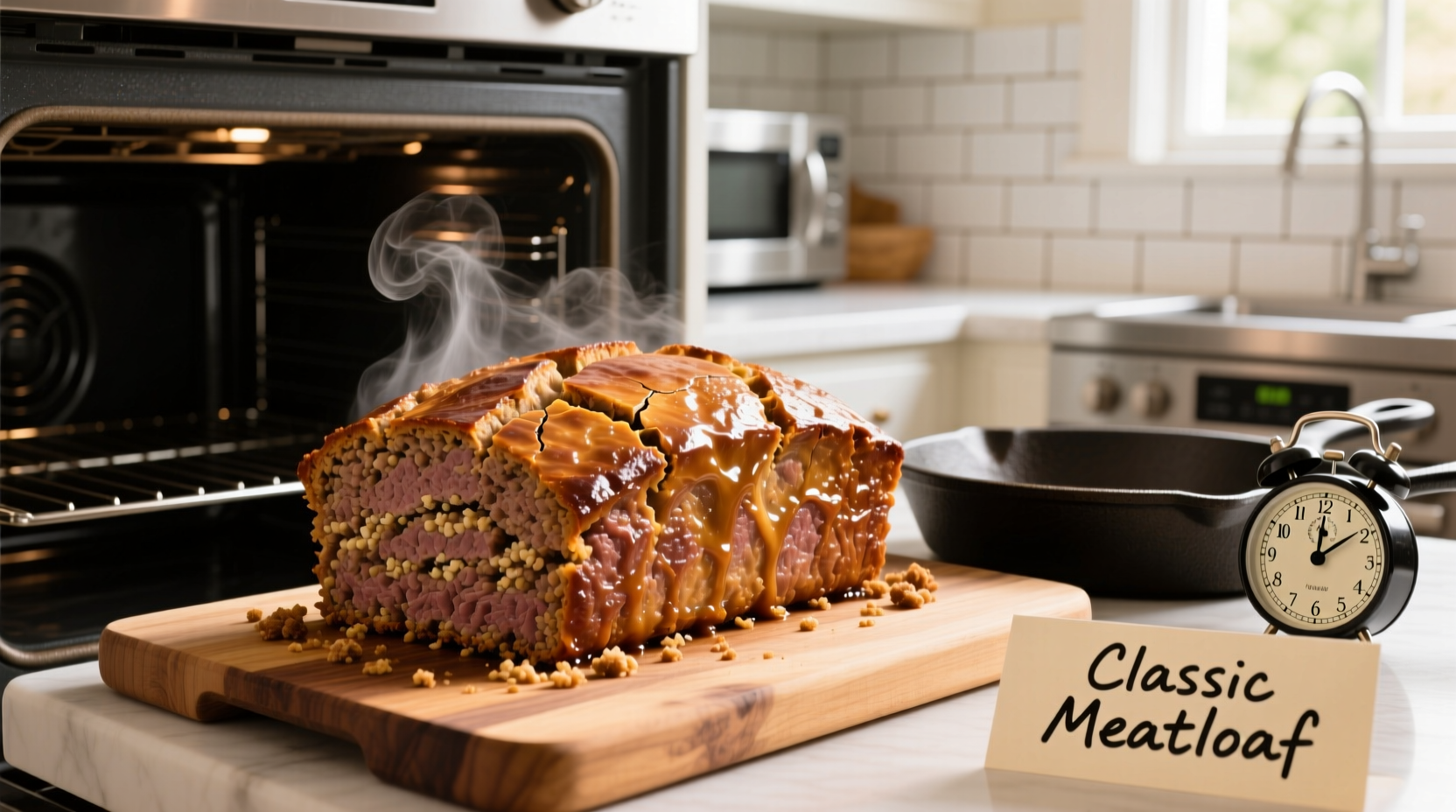 How Long to Cook Meatloaf in Oven: Perfect Timing Guide
When to Trust Your Gut (and the Timer)
If you’re short on time, don’t panic. You can crank the oven to 400°F, shape the loaf thinner, and cut the cooking time to 35 minutes. Just check the temp early—overcooked meatloaf is the enemy of joy. Alternatively, use a muffin tin for mini loaves that cook in 20 minutes flat. They’re adorable, portion-controlled, and perfect for meal prep.
Remember: the meatloaf is patient. It doesn’t judge you for running late or forgetting to thaw the ground beef. It simply sits there, waiting to become something comforting. So set your timer, but also pay attention to the way the kitchen smells—like garlic, onion, and the promise of a good dinner.
When the thermometer reads 160°F and the glaze is bubbling, you’ve done it. You’ve made a meal that feels like home, no matter where you are. The connection between your oven and your table is simple: time, heat, and a little faith.
A Reflection for Your Daily Life
Meatloaf isn’t fancy, and that’s its superpower. In a world that demands perfection and speed, this dish asks you to slow down for an hour. It teaches you that good things take time, and that consistency—not complexity—is what builds a solid foundation. The next time you’re stressed about a deadline or a busy schedule, remember the humble meatloaf. It shows up, does its job at 350°F, and emerges better than before. Maybe you can too.
So preheat that oven. Mix your ingredients with gentle hands. Trust the process. And when you slice into that golden-brown loaf, know that you’ve created more than dinner—you’ve created a moment of pause in a fast-moving world. That is the real recipe worth keeping.