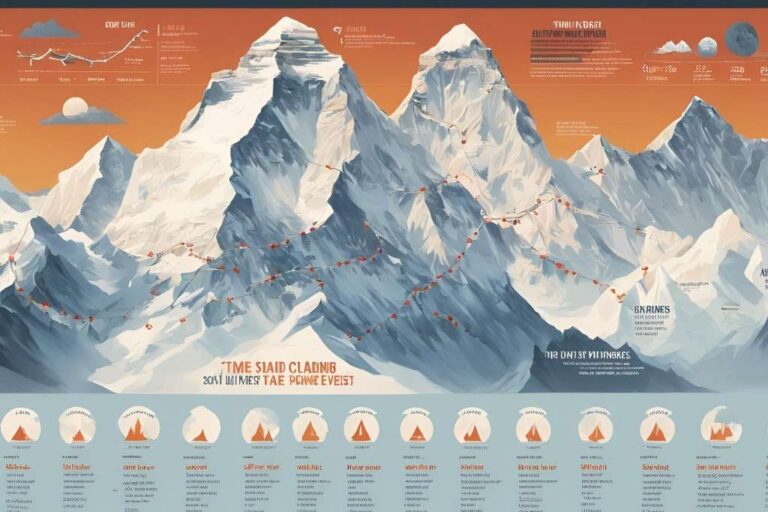
So, you’ve decided you want to climb Mount Everest. Maybe you saw a cool documentary, or maybe you just lost a bet. Either way, the first question everyone asks is: “How many days does it take?” The answer is about two months, give or take a few ego-crushing setbacks. But let’s be real—this isn’t a weekend camping trip.
The Long, Sloggy Math
Most expeditions take roughly 60 to 70 days from the moment you land in Kathmandu to the moment you stagger back down, gasping for oxygen you no longer have to pay for. That’s over eight weeks of living in tents, eating freeze-dried pasta, and peeing into a bottle while hypothermia whispers sweet nothings in your ear. You don’t just “climb” Everest; you marry it for a season.
Why so long? Because the mountain loves to play hard to get. You can’t just show up at Base Camp and say, “Hey, I’m here for the summit selfie.” That’s a great way to die in a very embarrassing way. The process is all about acclimatization—a fancy word for teaching your body that less oxygen is totally fine, which it absolutely is not.
Must Read
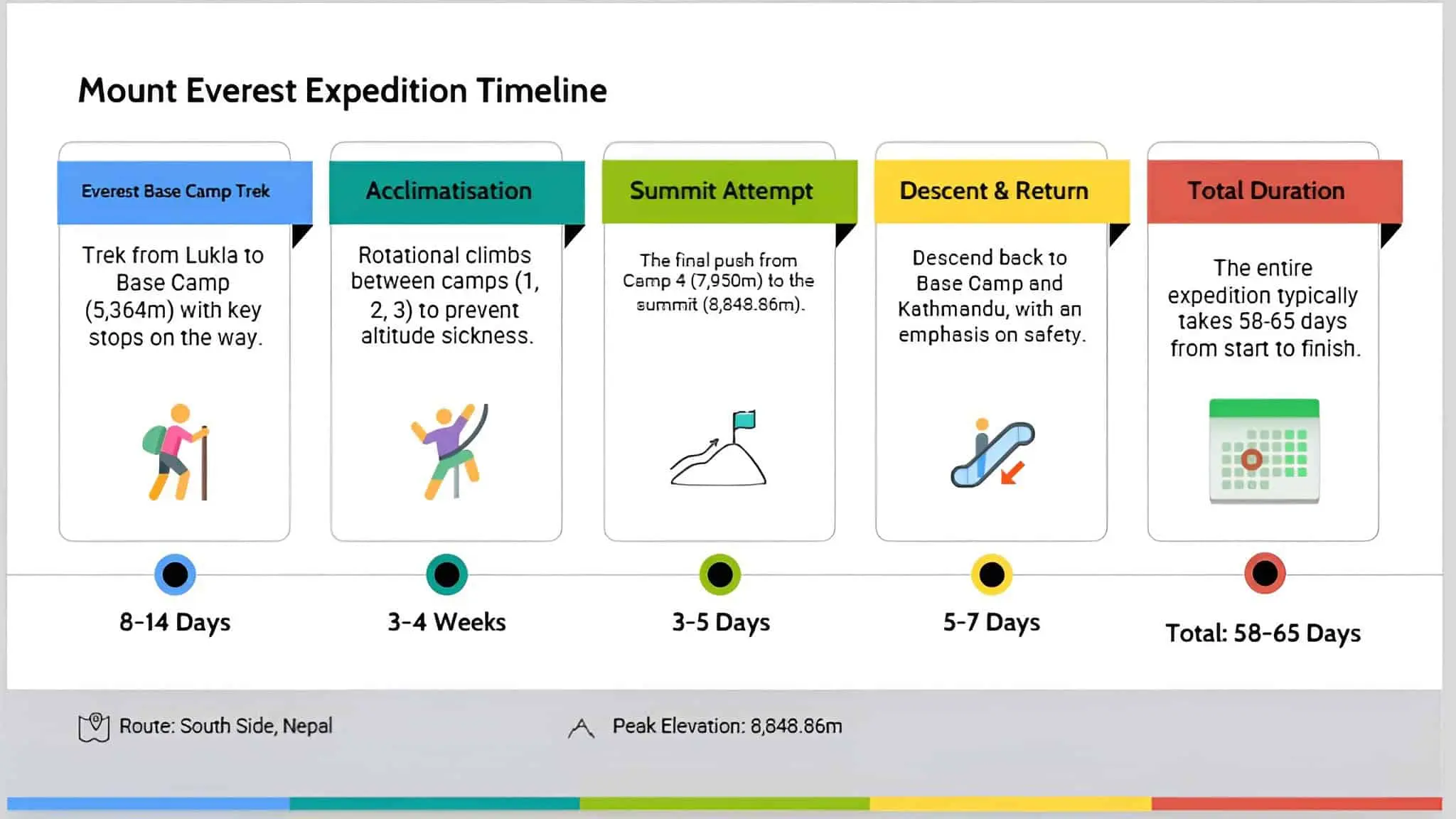
Step One: The Base Camp Tango (10–14 Days)
First, you’ll fly to Lukla, the world’s scariest airport (runway is basically a ski slope, no pressure). Then you’ll hike for about 10 days to Everest Base Camp, which sits at a cozy 17,600 feet. This part is like a nature walk for masochists. You’ll pass through villages where yaks have a better fashion sense than you, and you’ll begin to understand why your legs are screaming in an ancient language they’ve never used before.
At Base Camp, you’ll spend at least a week just sitting around. Not relaxing—sitting around intentionally. You’ll do short practice hikes up a nearby hill called Kala Patthar, then come back down to sleep. This “climb high, sleep low” trick lifts your blood’s oxygen-carrying capacity, like building a superpower, but slower and with more headaches.
The Rotation of the Tortured (30 Days or So)
After Base Camp, you enter the Khumbu Icefall, which is like walking through a frozen car wreck that’s actively trying to kill you. You’ll go up and down the same section of mountain three or four times, each time a little higher. It’s called “rotational acclimatization,” but I call it “the emotional equivalent of dating someone who keeps canceling plans.”
 How Long Does It Take to Climb Mount Everest
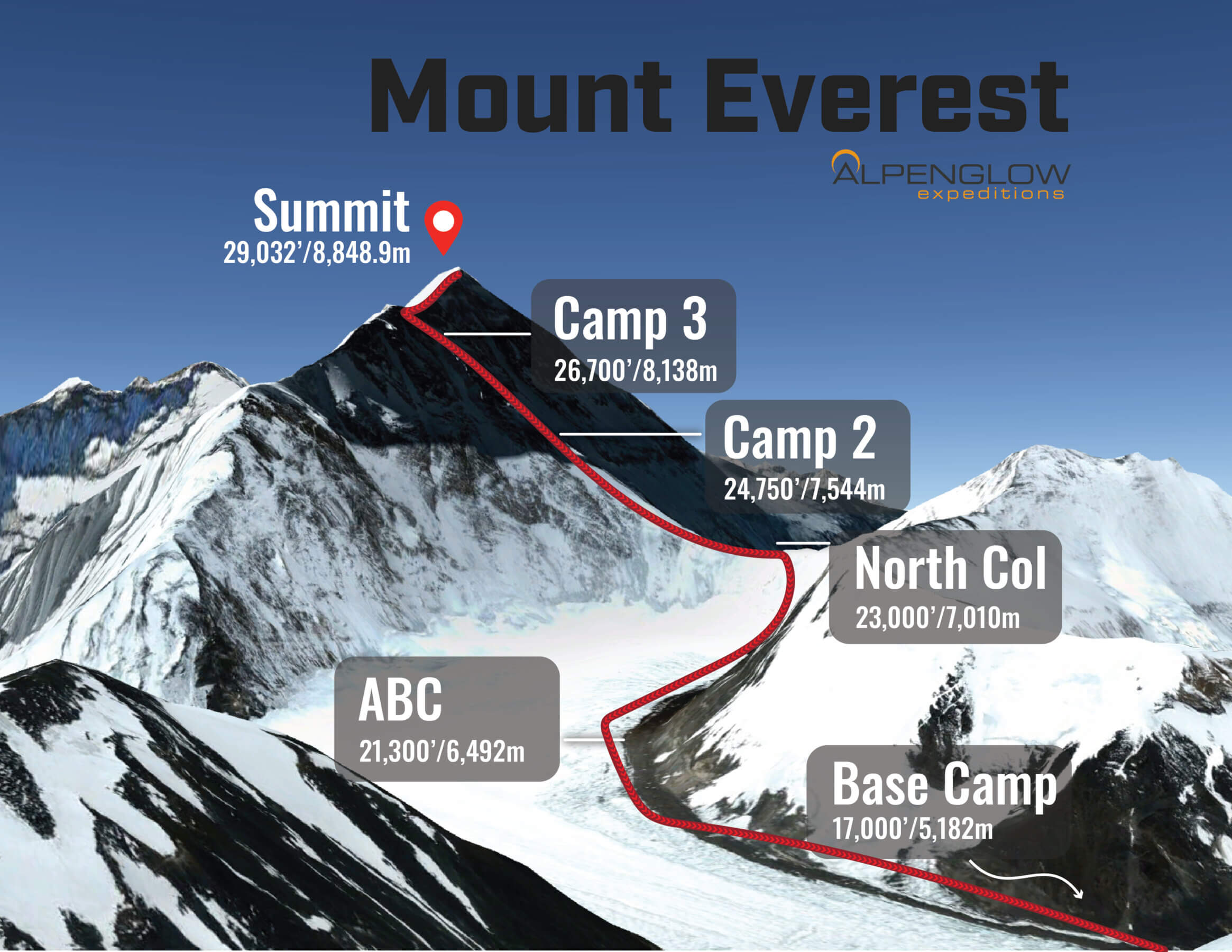
Each rotation takes you to Camp 1 (19,900 feet), Camp 2 (21,300 feet), and Camp 3 (23,600 feet). Your body starts producing more red blood cells—basically, you turn into a high-altitude blood bag. Fun fact: Your blood actually thickens so much that Everest climbers have a higher risk of stroke and heart attacks. So you’re simultaneously getting stronger and closer to popping like a balloon. Balance, right?
The Waiting Game (5–10 Days of Pure Anxiety)
Here’s the cruelest part: you’ll reach Camp 4 at 26,000 feet (the “Death Zone”) and then you’ll wait. For days. You need a “weather window”—a period of clear skies and low winds that might last exactly 48 hours. In 2024, that window lasted only three days for the entire season. So you sit in a tent, frozen, eating boiled Everest water (yum, microplastics), while your brain slowly leaks out your ears.
When the window finally arrives, you face the summit push: 12 to 18 hours of pure, oxygen-deprived madness. You’ll climb through the “Balcony,” the “South Col,” and the “Hillary Step”—a 40-foot rock face that’s basically nature’s middle finger. You’ll pass the frozen bodies of climbers who didn’t make it, which is a great motivational picture, by the way.
 Fluss Am Mount Everest Mit Vier Buchstaben
The Descent (The Real Scary Part)
You reach the summit—congratulations, you’re on top of the world! Now you have to get down, and that’s where most deaths happen. Why? Because you’re exhausted, your oxygen tank might run out, and your brain is a mushy potato. Descending from 29,032 feet to Base Camp takes about three to four days, but those days feel like a hangover after a week of bad decisions.
Total days? Roughly 60 to 65 from Base Camp to finally dragging your frostbitten butt back to civilization. But let’s bust a surprising fact: you actually spend only about four to five days above 26,000 feet. The rest is just... walking, waiting, and wondering why you didn’t choose a hobby like knitting or competitive eating.
So, Should You Go?
Look, climbing Everest is like adopting a very expensive, very angry dog that might eat your leg. It takes seven to nine weeks of your life, plus $50,000 to $100,000. You’ll lose weight, gain a permanent cough, and learn that “comfortable” is not a word in the Sherpa vocabulary. But you’ll also see a sunrise from the edge of space, and that’s pretty rad.
If you do go, remember: the mountain doesn’t care how many days you planned. It only cares if you packed enough snacks. Pack extra snacks. And maybe a book. You’ve got two months to kill.