
We’ve all been there. You’re enjoying a bowl of cherries, perhaps while listening to Lana Del Rey’s Cherry, and a rogue pit accidentally cracks between your teeth. A tiny alarm bell rings in your head: Is this it? Am I about to pull a Game of Thrones and dramatically keel over?
Relax. Let’s talk about the science of that little stone. The truth is far less terrifying than your vivid imagination suggests.
The Poisonous Numbers
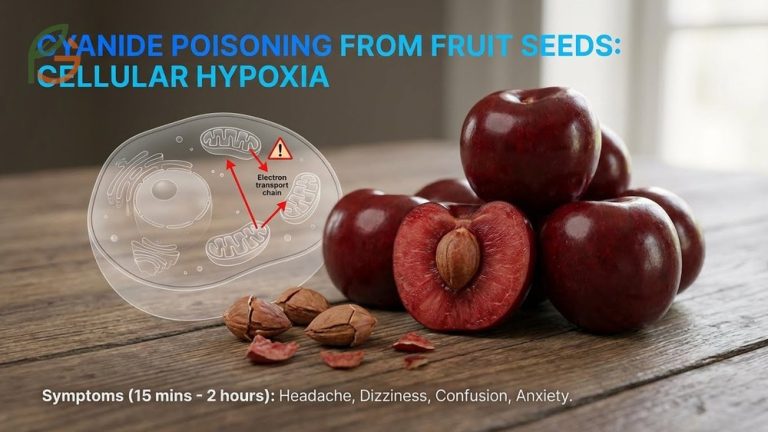
First, the headline you’re here for: one cherry seed contains roughly 0.17 milligrams of cyanide compounds. But here’s the crucial plot twist: that’s not pure, ready-to-kill-you cyanide. It’s a compound called amygdalin, which only turns into cyanide after you chew it up.
Must Read
The lethal dose of cyanide for an average adult is estimated at around 50 to 300 milligrams. Do the math. You’d need to crush and swallow the seeds from roughly 300 to 1,700 cherries in one sitting to risk serious harm. That’s an Olympic-level snacking event.
Even if you accidentally swallow a whole pit, don’t panic. The hard outer shell is designed to pass right through you like a tiny, smooth pebble. Your digestive system is a great bodyguard—it doesn’t bother breaking down that armor.
A Modern-Day Fear
This fear has deep roots, no pun intended. We associate cyanide with cold war spy capsules and murder mysteries. It’s the poison of choice for dramatic fiction, not your summer fruit bowl.
In reality, you consume far more natural toxins daily. Think of the solanine in potato skins or the lectins in raw beans. Your body is a chemical processing plant, and it handles these trace amounts with quiet, boring efficiency.
So the next time someone at a dinner party brings up cherry pits, you can deliver this fact with a casual shrug. You’re now the cool-headed scientist of the fruit platter.
The Cherry Family Tree
The same logic applies to your other stone fruit favorites. Apricot kernels are actually more potent—they’re sometimes sold as “healthy” snacks, which is a separate debate. Peach pits and plum stones also contain amygdalin.
But here’s a fun little fact: wild cherries, like the chokecherries native to North America, have a much higher concentration. This is why foragers always cook them thoroughly. Heat neutralizes the risk entirely.
Cooking is your friend. If you’re making a rustic cherry jam or a clafoutis, you are chemically deactivating any potential nastiness. Heat is the great detoxifier in your kitchen.
Cultural Cheats and Wisdom
In Greek culture, cherry pits were sometimes ground into a paste for medicinal plasters. In rural France, old wives swore that swallowing a whole pit cured a fievre (fever) because of its bitter nature. Folklore loves a little danger.
There’s also the curious case of Noilly Prat vermouth, which uses macerated sour cherry pits for that distinctive almond-like flavor. The alcohol and aging process renders it completely safe. It’s a beautiful example of chemistry turned into art.
 Are Cherry Seeds Poisonous? Cyanide Toxicity & Safety | 21 July, 2026
If you’re really worried, buy a cherry pitter. They’re cheap, fun to use, and they turn the prep-work into a satisfying, rhythmic hobby. It’s also oddly meditative.
Practical Wisdom for Daily Life
For children, the rule is simple: watch them carefully. A toddler’s body weight makes the threshold much lower. It’s not about panic; it’s about smart supervision, like you do with peanuts or small toys.
For adults, the takeaway is liberating. You have permission to stop worrying. Your body is robust, your kitchen is safe, and the cherry seed is a tiny, non-villainous part of a delicious fruit.
The real danger isn’t the pit. It’s the sugar high from eating a whole pound of cherries. Or the sticky purple fingers. Those are the true hazards of summer.
A Quick Cheat Sheet
If you accidentally chew and swallow one or two crushed seeds: you’ll taste a bitter, almond-like flavor. That’s the amygdalin. Your liver will process it without you even noticing. Drink some water. You’re fine.
If you purposely decide to grind up a tablespoon of seeds for a smoothie: please stop. That’s a different story. The problem is always dosage and intent. A single seed is a whisper; a handful is a shout.
Think of it like caffeine. One cup of coffee is a joy. Drinking thirty cups in an hour is a trip to the emergency room. Context is everything.
Final Reflection
So here we are, standing in the bright, innocent aisle of a grocery store, looking at cherries. The tiny pit inside each one holds a chemical secret, but so does every leaf of spinach, every sip of wine, every breath of city air. Fear is made of ignorance, not cyanide.
What this little fact teaches us is beautifully simple: life is a series of tiny, manageable risks. The cherry pit is a metaphor. You can spit out the bitterness, or you can savor the sweet flesh around it and trust your resilience.
Go ahead. Eat the cherry. Spit the pit. And maybe save a few for a cocktail. Your body already knows exactly what to do.