
You’ve probably heard the buzzword convection floating around kitchen aisles and cooking shows. It sounds like some futuristic air-frying magic, but it’s simply a fan that shoves hot air around your oven. The real question is: how much faster does it actually make your dinner?
Let’s get straight to the point. Convection cooking is typically 25 to 30 percent faster than a conventional oven. That means a tray of chicken thighs that would take forty minutes can be ready in about thirty.
The secret is the fan. In a standard oven, hot air rises, creating pockets of temperature unevenness. Convection uses a fan to circulate that air constantly, hitting your food from every angle like a hot wind tunnel.
Must Read
The Speed of the Everyday
For roasted vegetables, convection isn’t just faster—it’s crispier. Those Brussels sprouts that usually go soggy at the 45-minute mark become caramelized and golden in just twenty-five. You literally save 20 minutes per batch.
Think about a sheet-pan meal, the hero of weekday cooking. With convection, your salmon and asparagus can cook together 15 minutes quicker. That’s fifteen more minutes to pour a glass of wine, not stare at a timer.
Even frozen foods like pizza or fries notice the difference. Convection shaves off about 5 to 7 minutes from the box instructions. Just don’t forget to check them early—they burn faster, too.
The "Doneness" Factor
Here’s the cultural twist: European ovens have been doing this for decades. In France, a four à chaleur tournante (turntable heat oven) is standard. They laugh at our slow, static heat.
It’s also why your bakery’s croissants are so perfectly flaky. Professional bakers use convection to set steam quickly, giving pastry that fragile, layered crunch. It’s speed combined with texture.
Fun fact: The first consumer convection ovens hit the U.S. market in the 1970s. They were bulky, expensive, and mostly ignored. Today, nearly 70% of new ranges come with a convection setting. We finally caught up.
Practical Tips to Conquer Convection
Lower the temperature. This is the golden rule. When using convection, reduce your recipe’s suggested heat by 25°F (about 14°C). Otherwise, your cookies will turn into blackened UFOs.
Don’t crowd the pan. The fan needs room to breathe. If you cram a baking sheet full, you block the air circulation, and you’re back to slow, uneven cooking. Use two pans if you must.
Check for doneness earlier. Set your timer for two-thirds of the original time. For a 60-minute casserole, start poking it at around 40 minutes. You’ll be amazed at how often it’s ready right then.
Use shallow, low-sided pans. High-sided dishes block that glorious circulating air. A rimmed baking sheet or a shallow roasting pan is your best friend. Think spread out, not piled up.
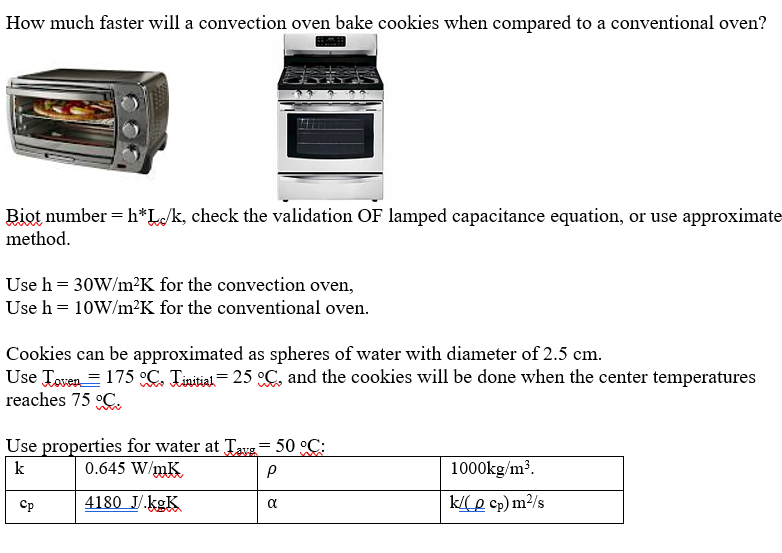 Solved How much faster will a convection oven bake cookies | Chegg.com
The "Air Fryer" Wild Card
Yes, an air fryer is basically a tiny, aggressive convection oven. It’s even faster because the chamber is small. A whole chicken that takes 50 minutes in a full-sized convection oven can cook in 35 minutes in a basket model.
But here’s the thing: you don’t need a dedicated gadget. If your big oven has a convection setting, you already own an air fryer—just a larger, more patient one. You save counter space and cooking time.
Fun fact: The word “convection” comes from Latin convectio, meaning “to carry together.” The fan carries the heat to your food. It’s basically a tiny, passionate delivery service.
When Not to Use Convection
Delicate items like custards, soufflés, or sponge cakes hate convection. The constant air movement can deflate their fragile structure. Save the fan for roasts and cookies.
Bread loaves in loaf pans also struggle. The outer crust can set too fast, preventing the inside from rising fully. You’ll get a rock-hard top and a gummy middle.
And never use convection for proofing dough. You want still, warm air for that, not a windy hurricane. Your yeast will get stressed out and stop working.
A Final Reflection on Time
Think about your daily rhythm. You’re likely juggling work, children, or just the endless scroll of life. Thirty minutes saved on dinner isn’t just a statistic—it’s a small gift to yourself.
That extra quarter-hour can be a deeper breath while you set the table. It can be finishing one last chapter of a book. It can be actually tasting your food instead of inhaling it.
Convection cooking won’t change your world. But it will change your Wednesday night. And sometimes, a quicker, crispier dinner is exactly the kind of small victory we need.
So set the fan on, lower the dial, and give yourself permission to be done earlier. Your oven is ready when you are.