
Think back to the last time you guiltily microwaved a frozen burrito. Now, picture a plant calmly photosynthesizing in a sunbeam. They are both made of cells, but their lives are wildly different. Understanding those differences is like learning the secret menu of life itself.
Two Worlds, One Basic Blueprint
Every living thing, from your pet iguana to that sad basil plant on your windowsill, is built from cells. But peel back the microscope, and the differences between plant and animal cells are as stark as a nightclub and a monastery. Both have nuclei, mitochondria, and the usual internal machinery, but the vibe is completely different.
The key difference? Plants make their own food, while animals must hunt, gather, or order takeout. This fundamental lifestyle choice dictates everything else about their structure. It’s the difference between being a self-sufficient homesteader and a hungry urbanite.
Must Read
The Green Kitchen: Chloroplasts
The most obvious party trick of a plant cell is the chloroplast. These little green factories are the ultimate DIY kitchen, turning sunlight, water, and air into sugar. Animals lack these entirely; we have to eat our energy pre-made, which is why brunch feels like a spiritual event.
Here’s a fun fact: chloroplasts used to be free-living bacteria that got cozy inside ancient plant cells billions of years ago. It’s the original Airbnb success story. So next time you bite into a salad, you’re eating solar-powered bacteria leftovers.
The Fortress Wall: The Cell Wall
While an animal cell is a squishy, flexible blob, a plant cell wears a rigid suit of armor. That suit is the cell wall, made mostly of cellulose—the same stuff that makes celery crunch and paper strong. It gives plants their structure, letting them stand tall without a skeleton.
Animal cells don’t have this wall; we have a flexible membrane that lets us move, change shape, and, you know, dance. Without a cell wall, an animal cell is like a water balloon at a rock concert—energetic but structurally vulnerable. A plant cell is more like a brick in a wall: stable, but immobile.
The Water Tower: The Vacuole
Have you ever noticed how a wilted lettuce leaf perks up in water? That’s the central vacuole doing its job. Plant cells have one enormous, water-filled vacuole that acts like a water tower, providing pressure (turgor) to keep the cell firm. When it’s empty, the plant droops.
Animal cells have tiny vacuoles, more like small storage closets than a main water tank. They use them to transport snacks or digest waste. It’s the difference between owning a massive pantry for survival versus a small cooler for the road trip.
Shape-Shifters vs. Architects
Because of that rigid cell wall, plant cells are usually rectangular or boxy—think of a perfectly cut brick. Animal cells, free from that constraint, can be anything: round, star-shaped, or long and spindly like a nerve cell. This flexibility allows animals to build complex tissues like muscles and brains.
This explains why you can’t just “grow” a new arm, but a plant can regrow an entire branch from a cutting. Plant cells are totipotent, meaning nearly any cell can become a whole new plant. Your arm cells are specialists—they have a job and they stick to it.
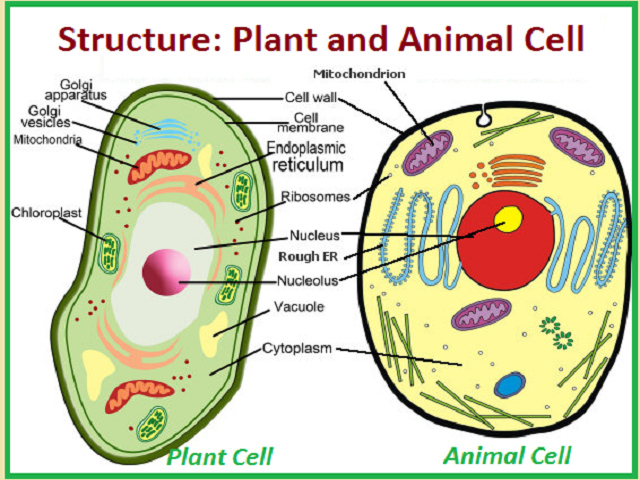 Animal Cell Structure And Plant Cell Structure
Practical Tips from the Cellular World
Tip: Feed your cells right. Animal cells need fats and proteins for their membranes; plant cells need minerals for their walls. A balanced diet mirrors the needs of your own squishy cells. Eat a rainbow of plants to get the full spectrum of building blocks.
Tip: Water is life. Notice how a plant droops? That’s vacuole deflation. You get the same feeling when you’re dehydrated. Drink water to keep your own “turgor pressure” up—it helps your skin and brain function better. Think of yourself as a fancy, mobile plant.
Tip: Sun matters. Even though you don’t have chloroplasts, your animal cells need vitamin D from sunlight to function. But don’t overdo it. A 15-minute walk is like a gentle dose of solar energy without becoming a sunburned cactus.
Cultural Crossovers
Remember the movie The Martian? Matt Damon survives on potatoes because their cell structures store starch. He’s literally eating cellular storage units. Or think of horror films like The Thing—that shape-shifting creature is pure animal cell chaos, with no rigid walls to keep it in check.
Even in fashion, we borrow from plants: cotton is basically purified plant cell walls. And your favorite vegan leather? Often made from cellulose. We are literally wrapping ourselves in dead plant cells for comfort and durability.
A Quick Cheat Sheet
Here is the high-speed summary for your next trivia night. Plant cells have: a cell wall, chloroplasts, and one big vacuole. Animal cells have: none of those, but they have flexibility, multiple small vacuoles, and the ability to move.
Bonus fact: Some animal cells, like those in sponges, actually look a bit like plant cells. But sponges don’t photosynthesize. They just sit there, filtering the ocean, living their best minimalist lives. We could all learn a little from that.
The Reflection: What This Means for Your Morning
When you wake up and stretch, you are activating animal-specific structures: flexible membranes, dynamic mitochondria burning coffee fuel. When you water your houseplant, you’re helping its vacuoles fill up and its chloroplasts get to work. It’s a quiet collaboration between two cellular kingdoms under your own roof.
So next time you crunch into an apple, remember you’re eating a structure that was once a sunbathing, water-filled fortress. And when you feel stuck in your routine, remember you have the animal superpowers of movement and adaptability. Embrace that flexibility. You are not a brick in a wall—you are a beautiful, shape-shifting bag of water with a complex social life.