Let’s talk about pyramids. Not the magic kind or the ones in your cereal box. I mean the giant, ancient, built-by-hand kind in Egypt.
You’ve seen the pictures. Massive triangles poking the desert sky. But how did they actually do it? No cranes. No power tools. Just sweat, genius, and a whole lot of stubbornness.
Here’s the crazy part: it wasn’t aliens. Sorry to burst that bubble. It was regular humans with some seriously clever tricks.
Step 1: Get Your Rocks Together
First, you need stones. Lots of stones. Each block for the Great Pyramid weighs about 2.5 tons. That’s like stacking a small car over and over.
Where did they get them? Quarries. Workers chiseled limestone blocks using copper tools. Yes, copper. Softer than steel, but they made it work. Talk about patience.
Fun fact: Some blocks came from 400 miles away. They floated them down the Nile on massive barges. Who needs Amazon Delivery when you have a river?
The Wet Sand Trick
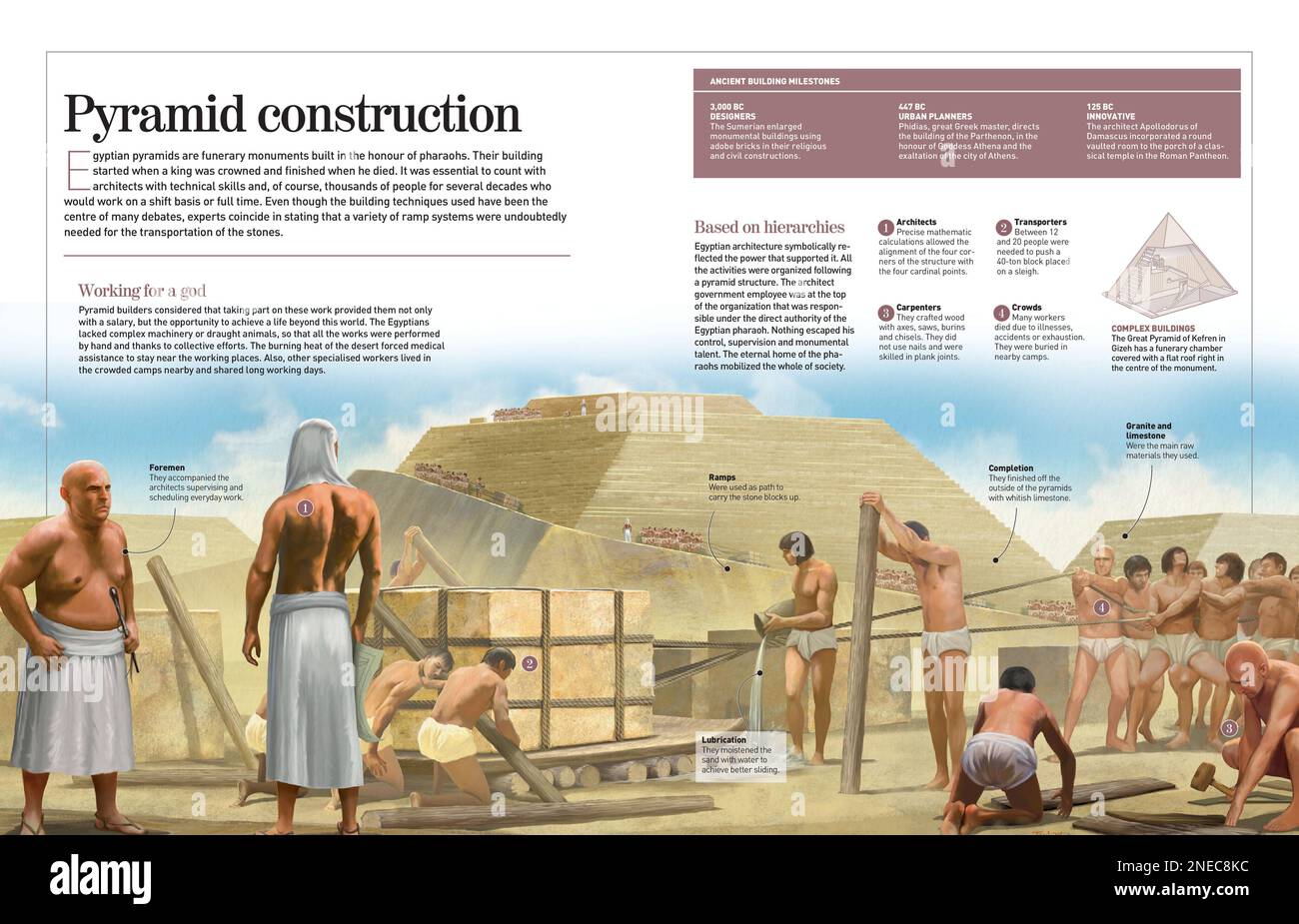
How did they move these blocks over land? They poured water on the sand. Wet sand makes it easier to drag heavy stuff. It’s like sledding, but for boulders.
Scientists tested this in a lab. A team of workers could pull a 2.5-ton block on a wooden sled. Add water, and the friction drops by 50%. Simple, effective, and weirdly satisfying.
One historian called it “the first lubricant in history.” The Egyptians basically invented WD-40, but with Nile water.
Step 2: Build a Ramp (Or Several)
You can’t just levitate stones upward. You need a ramp. But not your dinky wooden ramp from a skateboard park. These were massive earthen slopes wrapped around the pyramid.
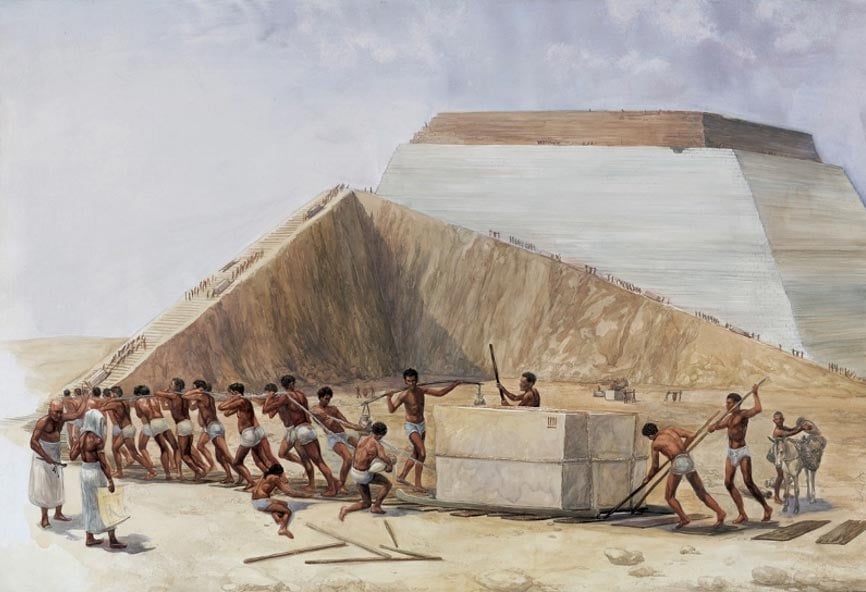 Demystifying the Egyptian Pyramids with Hard Facts | Ancient Origins
Here’s the debate: Was it one straight ramp? A zigzag ramp? Or a spiral ramp that went inside the pyramid? Archaeologists still argue about this at parties. Yes, that’s a real party topic.
My favorite theory? A corkscrew ramp. Workers dragged blocks up a dirt path that wound around the pyramid like a snake. Every time the pyramid grew, the ramp got longer. It’s like building a staircase while you’re already walking up it.
Why This Is Hilarious
Picture this: You’re an Egyptian foreman. A worker slips, and a 2-ton block rolls down a mud ramp. Everyone screams. The block smashes into a lunch tent. Oops. That’s why they probably used levers and wooden rollers too.
Wood was expensive in Egypt. So they reused the rollers. This means the same log might roll ten different blocks before splintering. Recycling before recycling was cool.
Step 3: Precision Like a Laser Surgery
Now for the mind-blowing part. The Great Pyramid’s base is level to within half an inch. That’s across 13 acres of stone. How did they measure that? With water and string.
They dug a trench around the site, filled it with water, and marked the level. Then they cut the rock to match. It’s like using a giant bubble level, but made of dirt and water.
The blocks fit together so tightly you can’t slide a credit card between them. Some joints are thinner than a human hair. This isn’t luck. It’s geometry and grit.
What About the Peak?
At the very top? A capstone (called a pyramidion). Often covered in gold or electrum. It would blaze like a miniature sun across the desert. Imagine that view.
 Egyptian Pyramids: How Long Did It Take To Build a Pyramid? | TheCollector
Lifting that final block must have been terrifying. One wrong move and your boss sends you to the afterlife early. But they did it. Because of course they did.
Who Actually Built These?
Not slaves. Paid workers. They were farmers during the Nile flood season. When fields were underwater, they worked on pyramids. It was a seasonal job with beer rations.
Beer was a big deal. Workers got about 4 to 5 liters of beer a day. Low-alcohol, nutritious, and more sterile than the river water. So the pyramids were built on a foundation of bread, onions, and beer buzzes.
Graves near the pyramids show well-fed workers with healed injuries. They were cared for. That’s a nice detail. Even ancient bosses had to offer health benefits.
Why This Still Blows Our Minds
We have skyscrapers and drones. Yet we can’t fully replicate a pyramid’s construction. We’ve tried. In 1997, a team built a small pyramid using ancient methods. It took 21 workers three weeks to move one block. For the whole Great Pyramid? That’s 2.3 million blocks.
Do the math. It’s absurd. It’s gloriously absurd. That’s what makes it fun to talk about.
So next time you see a pyramid, don’t think “mysterious tombs.” Think: “a bunch of clever humans, some wet sand, and a whole lot of ancient elbow grease.”
They didn’t just build pyramids. They built a middle finger to time itself. And we’re still staring at them, scratching our heads. Honestly? Good for them.