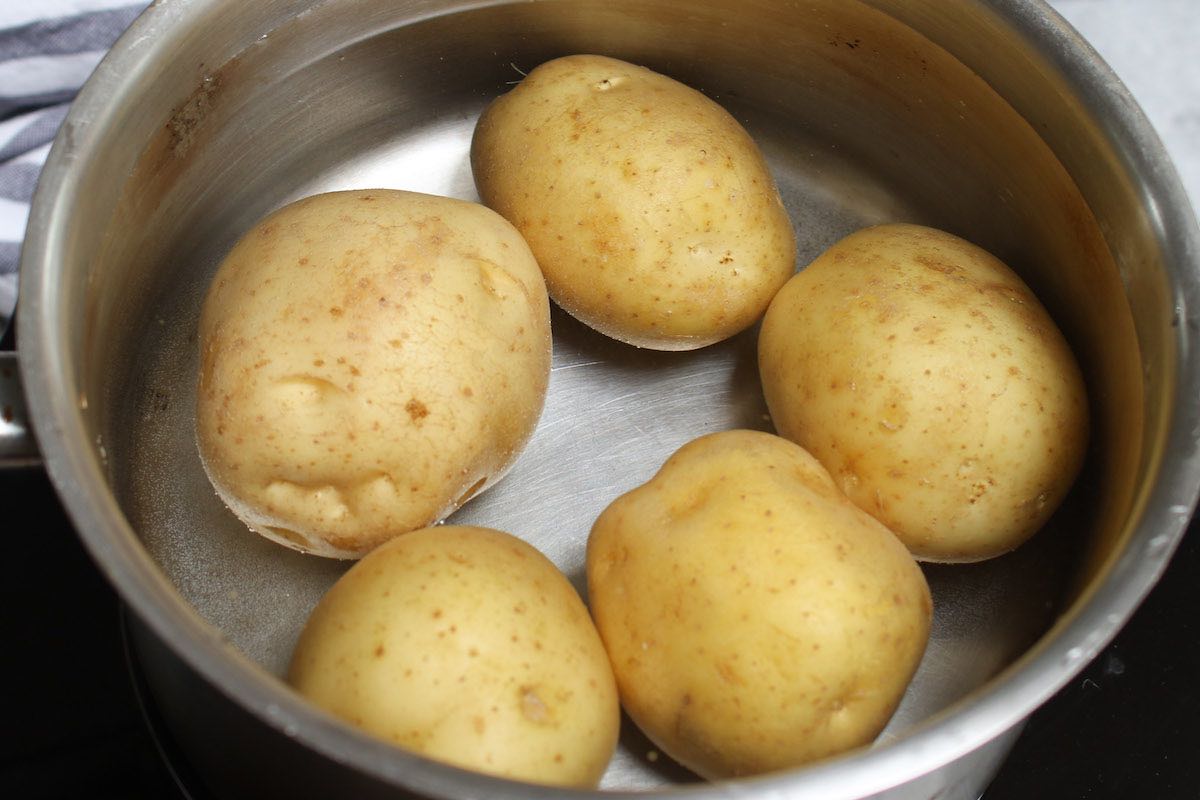
So there I was, staring at a lone russet potato on my counter. It had been rolling around in the back of the pantry for weeks, looking sad and slightly dusty. I was hangry, tired, and convinced I was about to ruin it. Spoiler alert: I didn’t, but only because I finally stopped overthinking and remembered the one rule of boiling a potato.
Let’s be real: boiling a potato sounds like the easiest thing ever. It’s just water, heat, and a tuber, right? Wrong. I’ve seen perfectly good spuds turn into soggy, waterlogged bricks because someone (okay, me) thought they could wing it. Trust me, a little technique goes a long way here.
This isn’t rocket science, but it’s also not a free-for-all. You want a russet—sturdy, starchy, and forgiving—not some fancy fingerling that’ll fall apart like a drama queen. Starch is your friend for fluffy results, but only if you treat it right.
Must Read
Step One: Pick Your Potato (And Wash It, You Monster)
First, grab a russet that feels firm and heavy for its size. No green spots, no weird sprouts that look like alien tentacles. Yes, I’m talking to you, thrifty grocery shoppers.
Now wash it under cold water. Scrub it with your fingers or a brush, because that skin is going straight into the pot (unless you plan to peel it later). Dirt tastes like earth, not in a good way.
I’ve forgotten to wash potatoes before. Biting into a gritty, boiled potato is a sensory nightmare. Don’t be me.
Peel or No Peel? A Philosophical Question
Here’s the deal: you can boil a russet with the skin on or off. Leave it on if you want a rustic mash or potato salad that holds its shape. Peel it if you’re aiming for silky mashed potatoes (and you’re okay with a little extra work).
I’m lazy, so I keep the skin on most of the time. It adds a tiny bit of chew and saves me from crying over a peeler. You do you, though.
Just make sure you cut it into uniform chunks—about 1.5 inches thick. Uneven pieces mean some bits turn to mush while others stay hard like rocks. Sad.
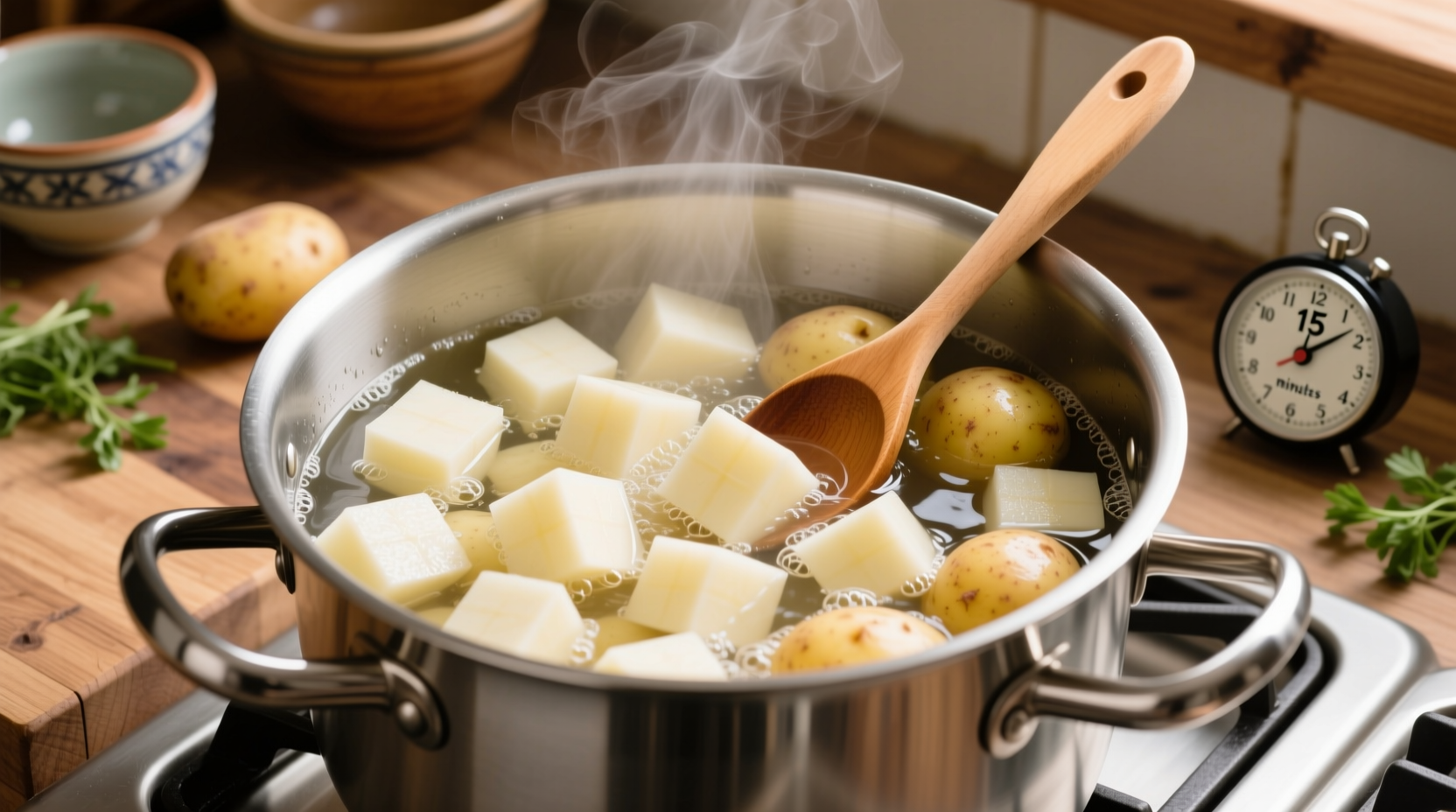 Russet Potatoes Boiling Time for Perfect Potato Salad
Step Two: Cold Water, Not Hot. This Matters.
Put your potato chunks in a pot and cover them with cold, salted water (about a tablespoon of salt per quart). Yes, cold water, not boiling. Starting with hot water cooks the outside too fast and leaves the center raw.
I learned this the hard way after serving a “boiled” potato that cracked my tooth. Not my finest moment. The salt seasons the spud from the inside out—trust the process.
Bring that pot to a gentle boil over medium-high heat. Don’t crank it to max and then walk away. Gentle means bubbles breaking the surface, not a volcanic eruption.
The Whiskey Test for Doneness (No, Really)
After about 15-20 minutes (depending on chunk size), start testing. Slide a paring knife or fork into a piece—it should slide in with zero resistance. If you feel a crunch, it’s not done.
Here’s a weird tip I stole from a chef: hold the potato chunk against your wrist. If it feels warm but not hot, it’s still raw inside. I don’t know why this works, but it does. Science, I guess?
Alternatively, just use a knife like a normal person. The wrist thing is for showoffs and bloggers with bad timing.
 Russet Potatoes Boiling Time for Perfect Potato Salad
Step Three: Drain Immediately (Or Suffer the Consequences)
Once those potatoes are knife-tender, drain them right away in a colander. Don’t let them sit in hot water—they’ll absorb it and turn into a gluey mess. I’ve seen it happen; it’s tragic.
If you want them dry for mashing, spread them on a baking sheet for a minute. Let the steam escape. Heat rises, but so does hope for fluffy potatoes.
Now you have perfectly boiled russet potatoes. You can mash them, chunk them into a stew, or eat them straight with butter and salt (no judgment here). I once ate an entire bowl with just pepper and felt like a king.
The Ironic Part: Overcooking Is Worse Than Undercooking
Here’s the curveball: undercooked potatoes are fixable (just boil longer). Overcooked ones are waterlogged wreckage that turn into wallpaper paste. I’ve cried over a pot of gluey mashed potatoes before.
So pull them out at the first sign of tenderness. Err on the side of slightly under if you’re nervous—you can always nuke them for 30 seconds. Microwave shame is real, but it beats sadness.
One last thing: don’t throw away that cooling water. It’s packed with starch and makes amazing bread or soup stock. But that’s a story for another day, when you’re not just trying to eat a potato before your hangriness destroys your kitchen.
Boiling a russet is about respect. Respect the cold start, respect the salt, and respect the clock. Do that, and you’ll never have to wonder why your potato tastes like a wet sponge again. Go forth and boil, my friend. I’ll be over here, eating my third potato of the day and not regretting a thing.