
Let’s be honest—your electric hob has seen things. It’s endured that midnight pasta explosion and the pancake batter that got a little too ambitious. But keeping it clean isn’t just about vanity; it’s about saving your sanity next time you cook.
A grimy hob heats unevenly, smells funny, and makes you feel like you’re cooking in a science lab. Plus, a clean surface means your food won’t pick up that mysterious, burnt-on flavour from last Tuesday’s stir-fry. Trust me, your taste buds will thank you.
The Golden Rule: Cool Down First
I once learned this the hard way—by slapping a wet cloth on a scorching hob and creating a very dramatic steam cloud. My kitchen looked like a foggy morning in London, and I looked like a cartoon character.
Must Read
Always let your hob cool completely before cleaning. A hot hob can turn spills into stubborn, welded-on crust, and it’s a quick way to burn your fingers. Patience is a virtue, especially when you want a crispy crêpe, not a crispy thumb.
Your Everyday Toolkit
You don’t need fancy chemicals—just a few things from your cupboard. Grab a soft microfiber cloth, some mild dish soap, white vinegar, and a plastic scraper (the kind you get with replacement blades). That’s your cleaning squad.
Forget steel wool or abrasive pads; they’ll scratch your hob’s glass top like a cat on a new sofa. Treat that surface like your favourite phone screen—gentle and with love.
The Quick Daily Wipe
After dinner, once the hob is cool, take a damp cloth with a drop of soap and give it a quick wipe. It’s like brushing your teeth—a small, boring habit that saves you from a huge mess later.
Do this every day, and you’ll dodge the dreaded “burnt-on-pasta-water halo.” That halo is real, and it’s the enemy of a peaceful morning coffee routine.
Dealing with the Stubborn Stains
So you forgot to wipe last night—or three nights ago—and now you’ve got a brown, crusty patch that looks like a fossilised pancake. Don’t panic. This is where vinegar swoops in like a superhero.
 How to Clean Your Gas, Ceramic, Electric or Induction Hob | Beko Ireland
Spray a 50/50 mix of water and white vinegar onto the stain, let it sit for five minutes, then wipe. For tougher spots, use your plastic scraper at a 45-degree angle—think of it as scraping a sticker off a window, not a car’s paint job.
If vinegar smells too strong for you, add a drop of lemon juice. Your kitchen will smell like a cheap spa, but your hob will shine like new money.
The Sugar Dilemma
Never, ever let sugar or sugary spills sit on a hot hob. They melt into a sticky, caramel-like goo that hardens into cement. I learned this after a jam tart rebellion left a sticky mess that took three rounds of scrubbing.
If it happens, turn off the hob immediately and let it cool. Then scrape gently with a razor scraper (the kind for glass hobs). You’ll feel like a tiny demolition expert, and honestly, it’s weirdly satisfying.
When Life Gives You Burnt Milk
Burnt milk is the charcoal of the kitchen—it laughs at regular cleaning. But here’s a trick: sprinkle baking soda over the burnt area, add a few drops of water to make a paste, and let it sit for ten minutes. Then wipe with a damp cloth.
That paste will lift the burnt bits like a gentle exfoliant. It’s the same magic you use on your face, but for your hob. Your hob deserves a little pampering too, right?
For extra shine, finish with a drop of vinegar on a clean cloth and buff the surface. That mirror-like gleam? Pure chef’s kiss.
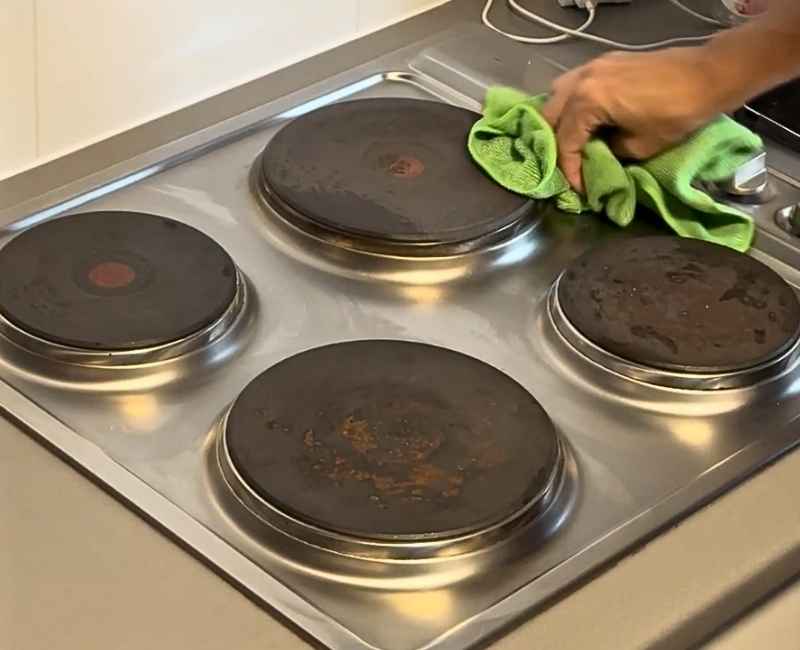 How To Clean A Electric Stove Top | Detroit Chinatown
Don’t Forget the Edges
Crumbs love hiding in the corners of electric hobs, like tiny hobbits in a greasy Shire. Use a soft brush or an old toothbrush to sweep them out every few weeks. It’s a five-minute job that prevents a slow buildup of burnt, smoky smells.
I use a clean paintbrush from a craft store—it feels fancy and reaches every crevice. Plus, it makes me feel like a hob artist, which is exactly the energy I want in my kitchen.
A Note on Induction Hobs
If you have an induction hob (the magical kind where the pan heats but the glass stays cool), the same rules apply. Just avoid abrasive cleaners because induction glass is extra sensitive to scratches.
And remember, induction hobs don’t get hot, so spills often burn onto the surface from residual heat. Wipe them quickly after cooking, and you’ll keep that sleek, expensive look without the panic.
Why Bother? Because It’s Your Space
Your hob is the star of your kitchen—it’s where breakfast happens, where you experiment with weird dinners, and where you’ve probably burnt toast at least once. A clean hob makes you feel like a capable adult, even if you’re just boiling an egg.
Plus, a gleaming surface makes leftovers look gourmet. That sad container of pasta? Suddenly it’s dinner at a fancy bistro, just because your hob sparkles. That’s free confidence right there.
So next time you spill, see it as a tiny invitation to care for your space. You’re not just cleaning—you’re resetting your canvas for tomorrow’s masterpiece. Or at least for tomorrow’s grilled cheese.