Let’s be real for a second: you bought that bag of fresh frozen pasta on a whim, and now it’s staring at you from the freezer like a frozen alien. Don’t panic. Cooking it is actually easier than convincing your friend that you “totally meant to buy the frozen one.”
First, Let’s Understand What You’ve Got
Fresh frozen pasta—like tortellini, ravioli, or pappardelle—is the superhero of weeknight dinners. It’s been made fresh, then flash-frozen to lock in that tender, eggy goodness. Unlike dried pasta, it cooks in minutes, not minutes that feel like hours.
The biggest mistake? Treating it like dried pasta. Don’t. You’re not making a science project here.
Must Read
The Golden Rule: Do Not Thaw
I repeat: do not thaw. Just drop that frozen block of pasta right into boiling water like a culinary daredevil. Thawing turns it into a sticky, sad mess—think of it as the pasta equivalent of a melting snowman.
You want it to go from freezer to pot in one smooth move. Your freezer’s job is to keep it safe; your job is to set it free.
Step 1: Boil That Water Like You Mean It
Fill a large pot with water—big enough that the pasta has room to dance. Add a generous handful of salt. Not a pinch. A handful. Salting the water is like giving the pasta a personality; it makes it taste like something other than cardboard.
Bring it to a rolling, angry boil. No half-hearted bubbles allowed. We need full-on volcanic activity.
Step 2: Drop the Frozen Pasta in Gently
Take the pasta straight from the freezer. No, you don’t need to separate the pieces—they’ll untangle themselves faster than a toddler in a ball pit. Drop them in, give it a gentle stir, and set a timer for 2 to 4 minutes.
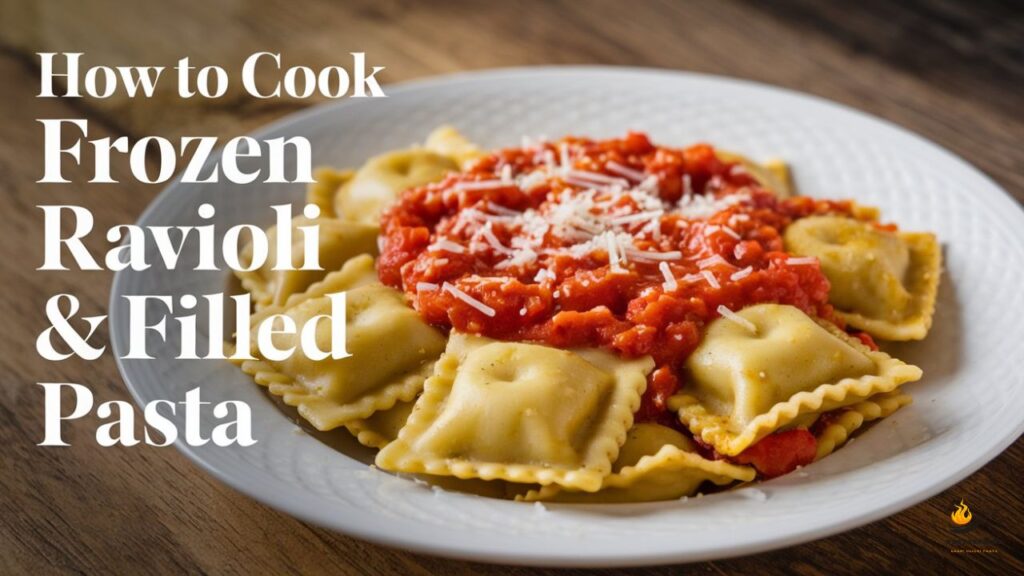
Frozen ravioli? Try 3 minutes. Fresh frozen spaghetti? Maybe 2.5 minutes. The pasta will float to the top when it’s close, like a little edible buoy saying, “I’m ready!”
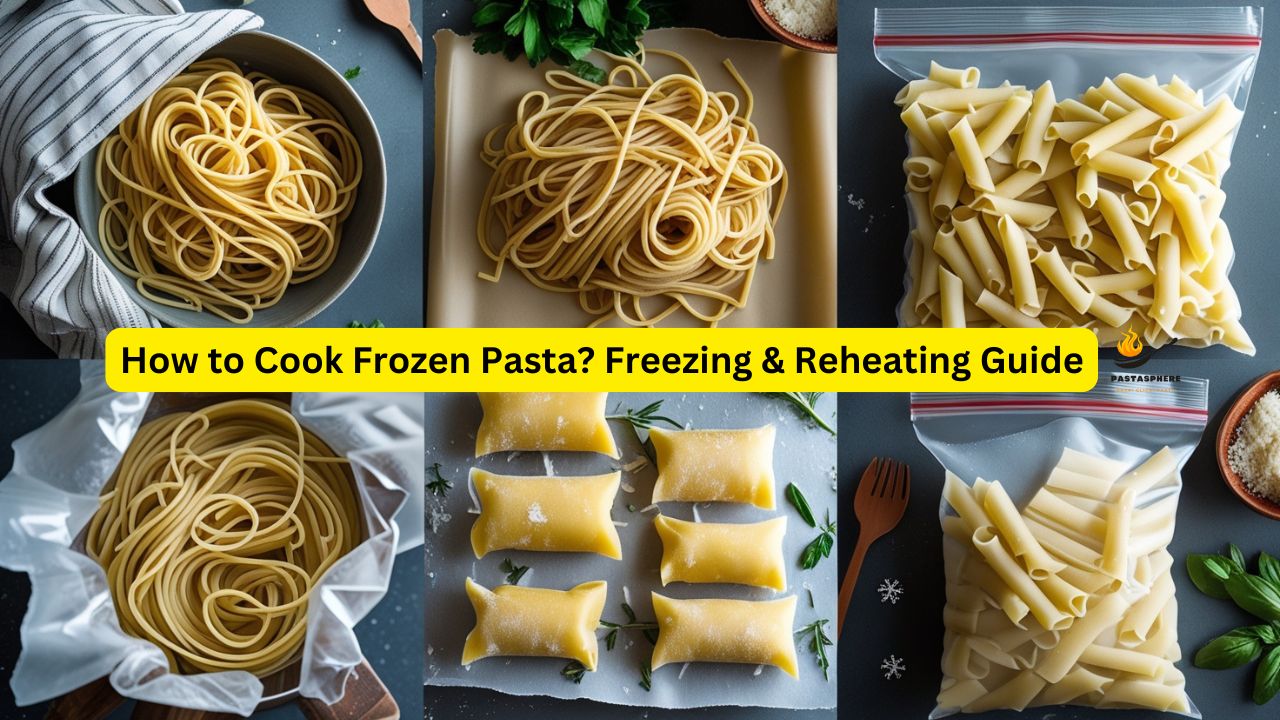
 How to Cook Frozen Pasta? Freezing & Reheating Guide
The Taste Test: Your New Best Friend
Here’s the secret: always taste one before draining. It should be tender but still have a little bite—like a firm handshake from a friendly giant. Overcooked frozen pasta is a crime against texture. Undercooked is a crime against your patience.
If it’s perfect, drain it immediately. But save a cup of that starchy water—it’s liquid gold for making sauce cling like a clingy ex.
Step 3: Sauce Strategically
Don’t just dump sauce on top like you’re painting a wall. Toss the pasta in a pan with a little butter or olive oil, then add your sauce and a splash of that pasta water. The starch helps the sauce coat every nook and cranny.
Pro tip: If you’re using jarred sauce, warm it first. Cold sauce on hot pasta is a tragedy Shakespeare could have written about.
What About the Extra-Fancy Stuffed Pastas?
Stuffed pastas—like truffle ravioli or cheese tortellini—are the VIPs of the freezer aisle. They need gentle love. Boil them as directed, but when they float, give them an extra 30 seconds to ensure the filling is heated through.
No one wants a cold cheese surprise in the middle of dinner. That’s not a surprise; it’s a letdown.
Don’t Forget the Finishing Touch
After you’ve sauced it, finish with something crunchy or fresh. Grated parmesan? Yes. A drizzle of good olive oil? Absolutely. A handful of chopped parsley or basil? Now you’re cheffing.
 How To Cook Frozen Fettuccine
Even a squeeze of lemon can elevate frozen pasta to “I made this, and I’m proud” status.
Common Mistakes (And How to Laugh Them Off)
If you cooked it and it’s gummy, you probably overcrowded the pot. Pasta needs room to breathe—like teens at a concert. Next time, use a bigger pot.
If it’s still crunchy, your water wasn’t boiling hard enough. Water shy of a boil is sad water. Make it furious next time.
And if you forgot to salt the water? Just whisper “sorry” to your taste buds and add more salt to the sauce. Everyone makes mistakes. Even I once dumped frozen pasta into cold water and waited. It didn’t go well.
Uplifting Conclusion: You’ve Got This
So here’s the truth: cooking fresh frozen pasta is almost impossible to ruin if you follow these steps. You’re not a gourmet chef—you’re a time-saving genius who knows that a freezer bag can lead to a beautiful, warm bowl of comfort in under ten minutes.
Every time you nail it—and you will—you’re not just feeding yourself; you’re giving a little victory to your past self who bought that bag. So go ahead, boil that water, drop in the frozen wizards, and let them turn into a meal that makes you smile.
You’re not just cooking. You’re conquering… one perfect, tender bite at a time.