
You know that feeling when you eat a giant, cheesy slice of pizza, and an hour later you’re wondering if a small gremlin is staging a rebellion in your stomach? For most of us, that’s just a bad pizza. But for someone with celiac disease, that feeling is their everyday reality after eating even a single breadcrumb. It’s not a "fad diet" thing; it’s a serious autoimmune condition where your body declares war on gluten—a protein found in wheat, barley, and rye.
So, how do you know if that grumpy tummy is just a one-time thing, or a sign of something bigger? The tricky part is that celiac disease is a master of disguise. It doesn’t always show up as a dramatic belly ache. It can whisper as brain fog, a mysterious rash, or even persistent fatigue that makes your morning coffee feel like a lie. Think of your immune system as a very overprotective bouncer. For a healthy person, gluten is just a friendly guest. For someone with celiac, that bouncer mistakes gluten for a burglar and trashes the nightclub—that’s your small intestine—to get it out.
The "Wait, That’s Not Normal?" Clues
Let’s get specific. You might be reading this while sitting on the couch after a sandwich, feeling a little bloated. That alone doesn’t shout "celiac!" But if you’re also dealing with chronic diarrhea or constipation that your doctor keeps calling "IBS," pay attention. Many people live for years thinking they just have a "sensitive stomach" when their body is actually screaming for help.
Must Read
Then there are the weird, unrelated symptoms. Ever have a friend who gets a horribly itchy, blistery rash on their elbows or knees after a pasta dinner? That’s called Dermatitis Herpetiformis, and it’s celiac’s calling card. Or maybe you just feel bone-achingly tired all the time, even after eight hours of sleep. When your small intestine is damaged, it can’t absorb nutrients properly, leaving you iron-deficient, anemic, and running on empty.
The "Uh Oh, I’m Eating for Two (Wrongly)" Red Flag
This one is especially sneaky. You know that person who eats a full meal and still feels hungry or loses weight without trying? In children, it can show up as a failure to thrive—they just don’t grow like their friends. For adults, unexplained weight loss or persistent mouth ulcers can be clues. Imagine your body is a house, and gluten is termites. You might not see the damage in the living room, but the foundation is being eaten away.
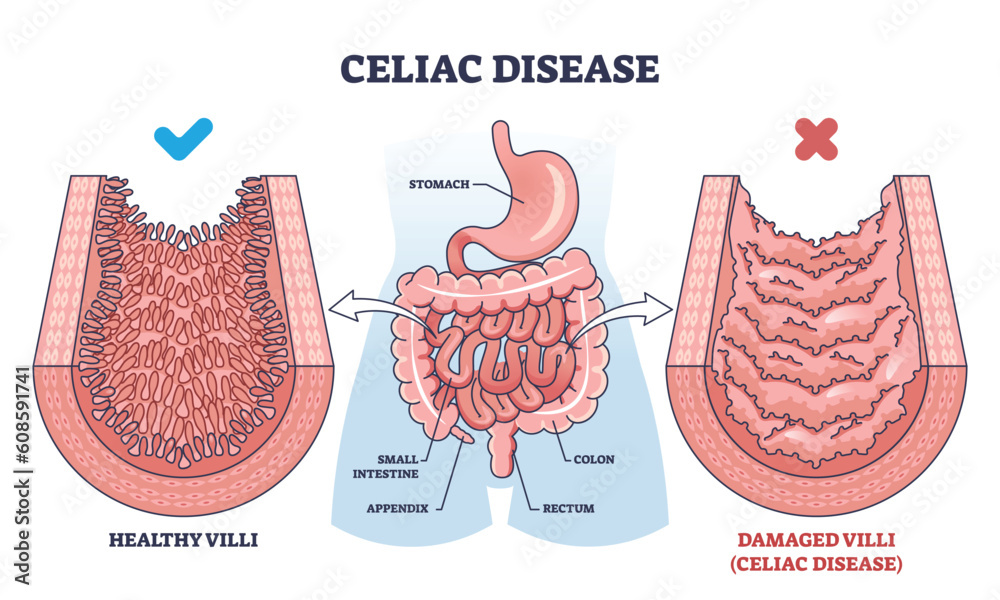 Celiac disease as chronic digestive and immune disorder outline diagram
It’s also a family affair. If your mom, dad, sibling, or even your second cousin has it, your chances go up significantly—about 1 in 10 first-degree relatives will develop it. It’s like inheriting a weird family heirloom you never asked for, except this one makes you hate birthday cake. But here’s the kicker: you can have zero symptoms and still have it. That’s called "silent celiac," and it can quietly lead to osteoporosis or other issues over time.
Don’t Play Doctor (Even on WebMD)
Here’s where we take a deep breath. If you’re nodding along thinking, "That sounds like me," the worst thing you can do is start a gluten-free diet before seeing a doctor. I know, I know—cutting out bread sounds like a quick fix. But doing that will mess up your test results. The blood test looks for antibodies that only show up if you’re eating gluten. If you go gluten-free first, you’re basically turning off the smoke alarm before the fire crew arrives.
Your first step is a simple blood test (the tTG-IgA test is the standard). Your doctor will check for those tell-tale antibodies. If they’re elevated, the next step is usually a biopsy of your small intestine—a tiny scope with a camera that takes a little pinch of tissue to look for damage. It sounds scary, but it’s usually done under light sedation, and it’s the gold standard for a definitive answer.
 PPT - Celiac Disease PowerPoint Presentation, free download - ID:2272240
The "But I Love Pizza!" Dilemma
Let’s be real: the thought of giving up croissants, pasta, and beer is enough to make anyone weep into a bagel. But here’s the good news—knowing changes everything. A diagnosis isn’t a life sentence of sad salads. It’s the key to feeling like a human again. Once you stop eating gluten, the small intestine heals, and those mysterious symptoms often vanish within weeks. You get your energy back, your brain clears up, and you stop planning your day around bathroom breaks.
Plus, the food world has exploded with delicious gluten-free options. You can find amazing breads, pastas, and even pizza that are safe and tasty. It’s like being given a secret map to a new, healthier kingdom. The hard part isn’t the diet—it’s the not knowing. People who ignore celiac disease are at higher risk for stuff like infertility, anemia, and even certain cancers. So caring about it isn’t just about avoiding a tummy ache; it’s about protecting your whole body.
So, Should You Care?
Unless you’re a doctor or someone with celiac, you probably don’t need to obsess over it. But if you’re reading this and thinking, "Huh, that explains a lot," then please—talk to your primary care provider. Bring a list of your weird symptoms. Don’t let anyone tell you it’s "just stress" or "all in your head." Your body is trying to send you a postcard, and it might be written in gluten. Trust your gut, literally. Because the best thing you can eat for your health is the truth.