
Ever held a piece of ice and watched it turn into a puddle? That is a melting point in action. It’s the exact temperature where a solid decides it just can’t hold itself together anymore and flows into a liquid. For chemists, this number isn’t just trivia—it’s a fingerprint for every pure compound. Figuring it out is way easier and cooler than you might think.
Why Should You Even Care?
Let’s be honest: knowing melting points sounds like a boring chemistry lab chore. But picture this: you’ve cooked up a batch of crystals in your kitchen or garage lab. Is it pure sugar or something else entirely? A melting point test tells you instantly. If your compound melts at a sharp, single temperature, it’s pure gold. If it turns to goo over a range, you’ve got impurities partying inside.
It’s also a detective tool. Have two white powders that look identical? A quick melt test can tell them apart faster than any taste test (please don’t taste chemicals). Even better, if you mix your mystery compound with a known reference, the combo will depress (lower) the melting point if they’re different. That’s a “mixed melting point” trick that professional chemists love.
Must Read
The Classic Setup: Capillary Tube Magic
You don’t need a billion-dollar lab. The classic method uses a thin glass tube, smaller than a coffee stirrer. You tap one end into your powdered sample until a tiny bit (like a grain of sand) packs inside. Then, you tape that tube to a thermometer and lower it into a heated oil bath or a special metal block.
Here’s where the fun begins. You watch closely as the temperature climbs. When the crystals start to sweat at the edges, you record that temperature. When the last solid speck vanishes into clear liquid, you record that too. A pure compound gives you a tight range—maybe just one or two degrees. Impurities give a long, sad slump.
Why Slow Heating is Your Friend
Rushing is the #1 mistake. If you crank the heat like a frantic chef, your thermometer will lag behind reality. You’ll think the melting point is higher than it actually is. Instead, heat gently—aim for about one to two degrees per minute near the expected temperature. It takes patience, but it rewards you with accuracy.
Think of it like popping popcorn. If you blast the heat, some kernels burn before others even open. A steady rise gives every crystal a fair chance to melt at its true temperature. Plus, you get to watch the show up close. The way crystals “pre-melt” and soften is oddly mesmerizing.
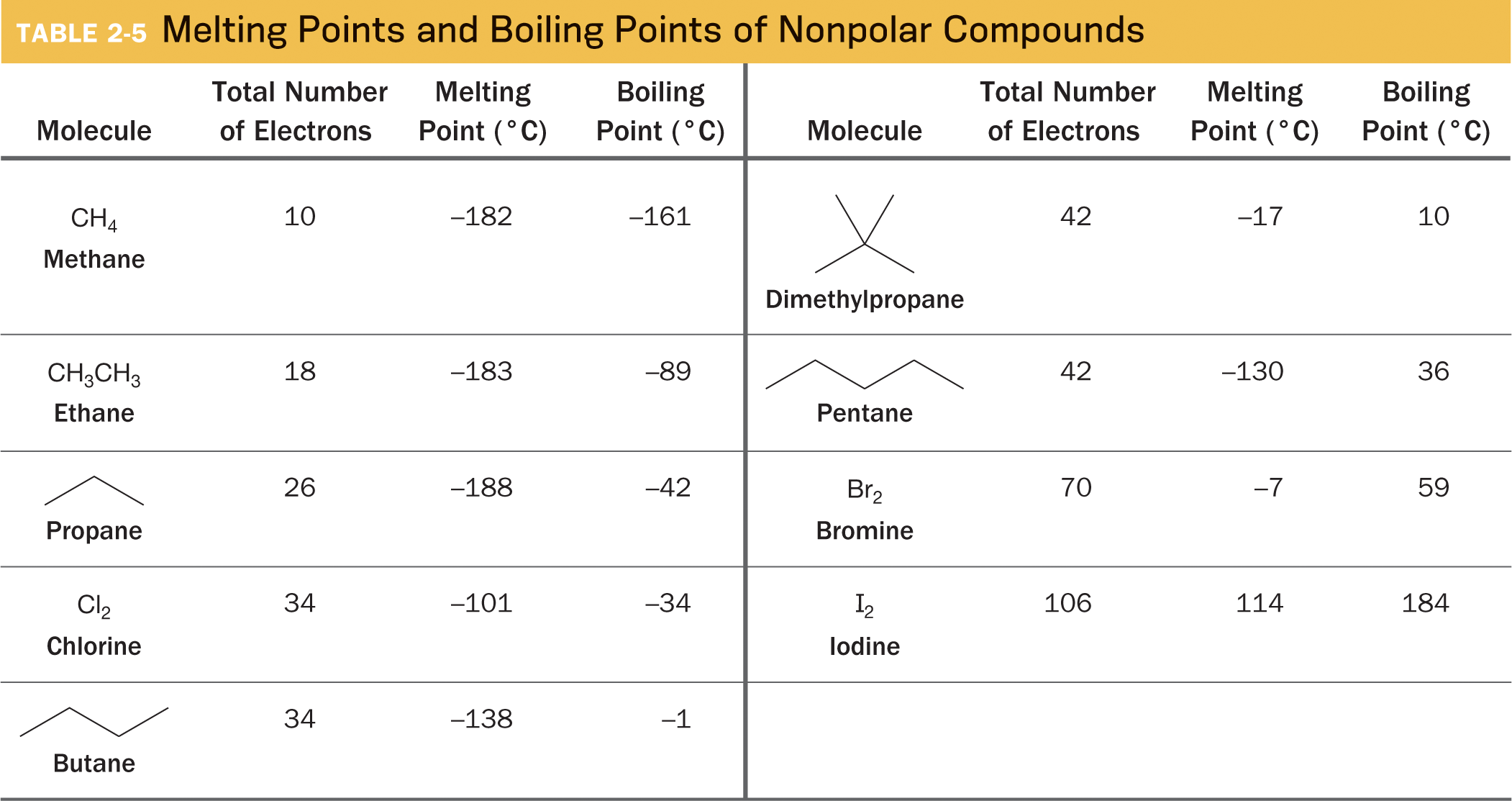 2.6 Melting Points, Boiling Points, and Intermolecular Interactions
Fancy Tools for the Modern Science Fan
If capillary tubes feel too old-school, there’s high-tech gear. Digital melting point apparatuses look like tiny toaster ovens with a magnifying window. You load your sample, press a button, and watch the display count up. Some even have cameras to record the exact moment of melt. They’re faster and remove some guesswork.
But even the fanciest machines rely on the same principle: you need to see the solid-to-liquid transition with your own eyes. It’s a tiny, personal show. And let’s be real—feeling like a scientist peering into a machine just feels cool, doesn’t it? It’s like having a superpower to see inside matter.
What Can Go Wrong? (And Why That’s Fun)
Melting points are picky. If your sample is wet with solvent or water, it will melt too low. If you pack the tube too tight, heat can’t reach the inner crystals evenly. If your thermometer hasn’t been calibrated (checked against pure ice or known standards), all your numbers will be off. It’s a gentle reminder that science demands attention to detail.
But when you get it right—when that narrow, perfect melt range pops up—you feel a little spark of satisfaction. It’s like solving a tiny puzzle. And you can brag that you’ve determined a fundamental property of a substance. Need a conversation starter at a party? Probably not. But for your own curiosity? Absolutely.
So next time you see ice melting in your drink, remember: that simple change is a powerful key to identity and purity. With a bit of glass, oil, and patience, you can unlock the secret melting personalities of any solid. Go on, give it a try. What’s the first compound you’d test? I’d go for chocolate—but that’s a messy experiment for another day.