
So, you’ve started a diary. Good for you. You’ve bought that fancy leather-bound notebook with the ribbon bookmark, and you’ve written exactly three sentences before your phone buzzed with a meme of a cat wearing a tiny hat. Now you’re staring at a half-finished entry, wondering if your life is really this boring. This is the moment where most diaries die—abandoned like a forgotten gym membership. But fear not. I’m here to teach you the lost art of finishing a diary entry, with the grace of a drunk flamingo and the authority of a life coach who owns ten cats.
The Panic of the Blank Page
Every diary entry starts with a burst of enthusiasm. You write about your boss’s terrible haircut, the sandwich that changed your mood, or that weird noise your refrigerator made at 3 AM. Then, disaster. You run out of steam. You’ve got three lines, and the rest of the page mocks you with its pristine whiteness. This is the “diary limbo”—a place where socks go missing and dreams of being a novelist die. The trick is to recognize that you are not writing a novel. You’re just scribbling for an audience of one future, probably embarrassed, you.
The “Future Archaeologist” Technique
Here’s a surprising fact: the average person writes 37 diary entries before giving up forever. You don’t want to be average, do you? No, you want to be the weirdo who leaves behind a cryptic time capsule for your descendants. Pretend you’re an archaeologist 200 years from now, digging through your digital footprint. That future weirdo won’t care about your existential crisis—they want details. Did you eat a bagel? Describe its texture. Was the dog barking? Mention the specific pitch of the bark. Suddenly, your entry becomes a historical document. Finish it with a line like: “If you’re reading this in 2224, know that I paid $8 for a coffee and cried twice.” Boom. You’ve given future historians a laugh and a data point.
Must Read
How to End on a High Note (Or a Low One)
Diary entries don’t need conclusions like a high school essay. You don’t need to write “In summary, today was mediocre.” Instead, use the “Micro-Punchline”. Kill the entry with one weird observation. For example: “Today, I saw a pigeon wearing a tiny scarf. I think it was judging me.” Or: “I spent 45 minutes trying to decide if my avocado was too ripe. It was perfect, but I ate it wrong.” Endings should be a cliffhanger for nobody. You’re literally the only reader, so you can stop mid-sentence if you want, but that feels lazy. Instead, close with a question you won’t answer: “Will I ever find the matching sock? Probably not. But I’ll look tomorrow.” That’s a finish. You’ve given closure to absolutely nothing.
The “Pretend You’re Signing a Contract” Method
This is my favorite. Every diary entry must end with a fake signature. Not your real name—that’s boring. Sign it “Captain Awkward,” “The Sleepy Philosopher,” or “Pizza Lord 2024.” It forces you to put a period on the page. You can’t just trail off into oblivion when you have to sign off as “Baron von Grumpy Pants.” It’s silly, but it works because it’s a deliberate act. Plus, future you will find it hilarious when you’re reviewing your teenage angst. Surprising fact: some Victorian diaries ended with intricate drawings of flowers or a single word like “Exhausted.” You’re continuing a grand tradition of weird, personal closure.
 Template For Diary Entry
The Nuclear Option: The “I Give Up” Ending
Let’s be real. Some days, you’ve got nothing. Your brain is a bowl of cold oatmeal. On those days, don’t force a masterpiece. Use the “Punctuation Escalation” technique. Write one sentence, then a period. Then another incomplete thought. Then a comma. Then just a question mark. Then end with an ellipsis and a drawn potato. Like this: “Today was weird. I ate cereal for dinner. Why is the cat staring at me… 🥔” Congratulations, you’ve finished an entry. You’ve acknowledged that you had a day, and that the day was absurd. This is actually more honest than trying to write a deep reflection.
One more tip: always leave a dangling thread for tomorrow. Write: “I’ll explain the thing about the mailman tomorrow.” You won’t. But it tricks your brain into thinking the story isn’t over, and that makes finishing today’s entry easy. You’re basically lying to yourself for motivational purposes. It’s called “adulting,” and it works.
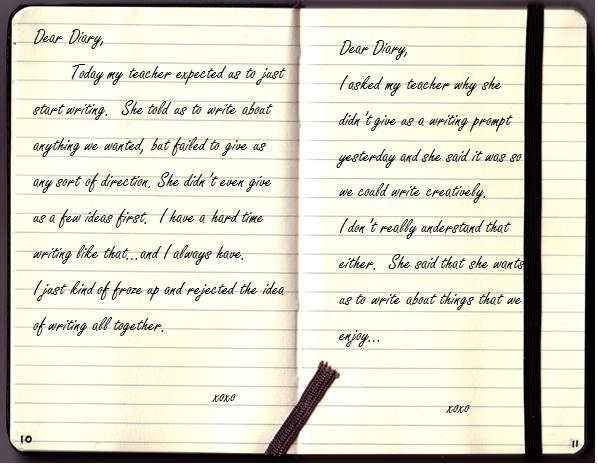 How Can We Write A Diary Entry
The Final, Foolproof Strategy
If all else fails, lie through your teeth. Diary entries don’t need to be true. Write that you saved a baby from a burning building. Write that you discovered a new species of snail in your backyard. Write that a celebrity winked at you from across a parking lot. Future you will be confused, but also impressed. The goal is to write the last sentence, not to be factual. So finish with a bang: “And that’s how I accidentally became a minor celebrity in Paraguay. Goodnight.” Then sign it “Gandalf’s Cousin” and close the book. You’ve done it. You’ve conquered the blank page. Now go eat a bagel and write about it tomorrow.
And remember: the only wrong way to finish a diary entry is to not finish it at all. So go ahead—end this article in your own diary right now. I’ll wait. Just don’t forget to sign it as “Lord of the Lost Socks.” Because you are. We all are.