
So you’ve decided to make a cheesecake. Or maybe you’re just feeling dangerous and want the world’s best bagel spread. Either way, you’ve run into the problem: a brick of cream cheese that feels like it was mined from an arctic glacier.
You can’t just slap it into a mixer. Trust me, I’ve tried. The result is a cloud of white powder that’ll make you look like a baker who lost a fight with a flour sack.
You need softened cream cheese. Room temperature. Pliant. Ready to party. And you need it now, not in three hours when your cookies have already met their tragic, hockey-puck-shaped end.
Must Read
The Microwave Gambit: Speed with a Side of Risk
This is the classic “I-have-zero-patience” move. Cut your cream cheese into one-inch cubes. Yes, get out the knife. No, using your teeth is not acceptable. (Have you seen the price of dental work?)
Place those cubes on a microwave-safe plate. Do not pile them like a tiny pagan altar. Spread them out like they’re socially distancing at a cheese party.
Zap them for 10 seconds. Just 10. Then check. If it’s still hard, do another 5-second burst. Not 15, not 30. I know you’re tempted. But you are not a chef in a 1980s action movie; you are a person who wants soft cheese, not lava cheese.
The Surprising Science of Melted Catastrophe
Here’s a fun fact: cream cheese is an emulsion of fat, water, and dairy solids. Overheat it, and the structure breaks. You get greasy puddles and rubbery chunks. It’s like the cheese version of a break-up—messy, sad, and you’ll cry into your mixer.
The magic number is about 70°F (21°C). That’s “pleasantly warm spring day” temperature, not “surface of the sun” temperature. If you accidentally melt the edges, you’ve made a delicious mistake but a baking tragedy.
The Hot Water Bath: For the Patiently Impatient
This is the gentle persuasion method. Take your cream cheese block. Leave it in its foil wrapper. Do not unwrap it—that’s the first rule of plastic-wrap club.
Fill a bowl with warm tap water. Not hot. Not boiling. Warm, like what you’d wash a baby in if you trusted babies near food. Submerge the sealed block for 10 minutes.
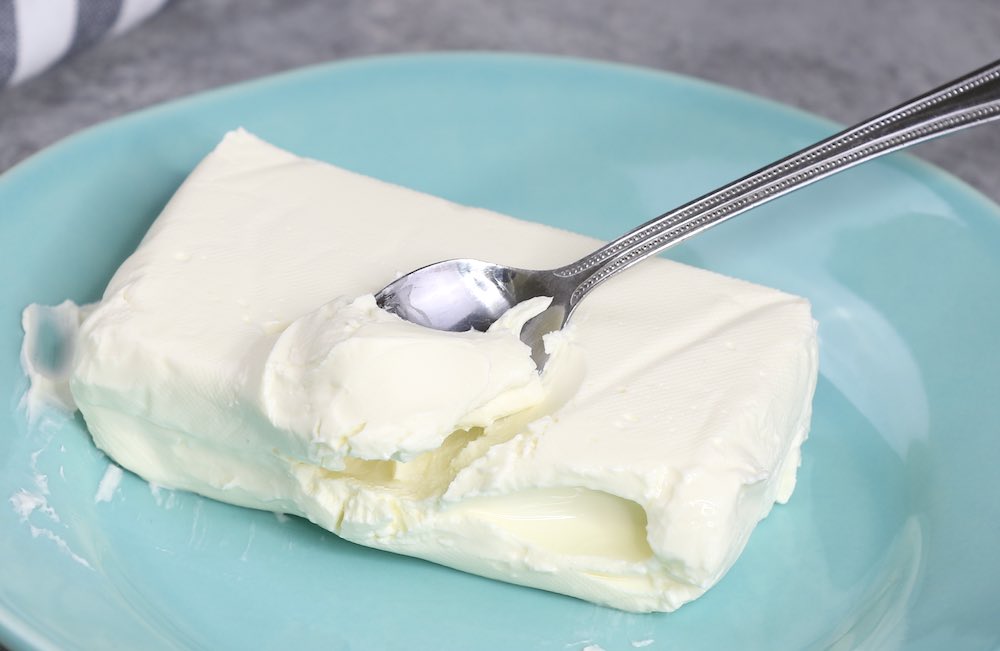 How to Soften Cream Cheese (4 Best Ways to Soften Cream Cheese) - TipBuzz
Flip it halfway through. The cheese will soften evenly, like it’s in a cozy spa. Surprising fact: cream cheese has a lower thermal conductivity than aluminum foil, so the water works slower than you think. That’s fine. You’re building character.
A Word on “Stovetop Sabotage”
Do not put cream cheese in a pan on the stove. I don’t care if you “just want to hurry it along.” You will create a brown, burnt, science-experiment mess that smells like regret and old sneakers.
Stovetop cream cheese is for savages and people who want to repaint their kitchen ceiling. Don’t be that person.
The Countertop Classic: Ancient Wisdom
This is the zero-effort, maximum-dignity method. Take your cream cheese out of the fridge. Unwrap it. Place it on a plate. Walk away.
Let it sit for 30 minutes to 1 hour. Yes, an hour. I know you’re busy. I know you have Instagram to scroll. Use the time to wonder why butter comes in sticks but cream cheese comes in blocks, then question all of life’s mysteries.
Pro tip: If you’re in a hurry, flatten the block with your hand (still wrapped) before unwrapping. More surface area equals faster softening. It’s like giving the cheese a little pancake makeover. Very satisfying, slightly violent.
Desperate Measures: The Rolling Pin of Desperation
You’ve tried everything. The microwave is a war zone. The water bath is now cold. You’re sweating. The cream cheese is still solid.
 How to Soften Cream Cheese Quickly
Seal the block in a zip-top bag (squeeze out all air or it’ll explode like a sad party balloon). Grab a rolling pin or a wine bottle—we don’t judge. Gently pound the bag until the cheese flattens and begins to soften from the impact.
This is called mechanical softening. It’s also called “getting your aggression out on breakfast ingredients.” Just avoid cracking the bag. Cream cheese on the ceiling is a look nobody wants.
The Final, Foolproof Trick: The “Cheese Sandwich”
Place your cold cream cheese between two plates that have been run under hot water and dried. The latent heat from the plates will do the work while you do literally nothing.
Check after 15 minutes. If it’s still stiff, swap the plates for new hot ones. This method is nearly impossible to screw up, which is perfect for you—and me.
Surprising fact: this same technique is used by professional chocolatiers to temper chocolate. You are now a professional cream-cheese-temperer. Put that on your résumé.
What If It’s Still Not Soft? (The Cry-for-Help Section)
If you’ve tried all this and your cream cheese still has the structural integrity of a brick, check your fridge temperature. Some fridges are colder than a politician’s smile. Aim for 38–40°F (3–4°C).
Also, never soften cream cheese in the freezer. That’s not softening; that’s betrayal. Frozen cream cheese becomes grainy and sad, like a breakup text you didn’t want.
Remember: soft cream cheese is forgiving. Hard cream cheese is a villain. You, my friend, are the hero who just needs to wait ten seconds more or use warmer water. Go forth, soften, and bake like the glorious procrastinator you are.