
Let’s be real. Hot chocolate is not just a drink. It’s a warm hug in a mug.
But here’s the million-dollar question: what is the ideal temperature for this liquid gold? You might think hotter is better. Wrong.
Science says the perfect sip lives between 136°F and 140°F (about 58°C to 60°C). Why that range? It’s the sweet spot where your tongue feels warmth without pain. Your taste buds are alive, not screaming.
Must Read
Go above 140°F, and you enter “burn zone.” Your mouth will punish you. You’ll miss the chocolate flavor entirely. All you taste is regret.
Go below 120°F, and you’re drinking chocolate-flavored milk. It’s fine. But it’s not magic.
The Physics of Your Mug
Your mug is a heat-sucking villain. A thick ceramic mug keeps liquid hotter for longer. A thin glass mug? It loses heat like a leaky bucket.
Pro tip: Preheat your mug. Boil some water, swirl it around, dump it. Then pour your hot chocolate. You just gained an extra four minutes of perfect temperature.
Steel mugs are for camping. They cool your drink too fast. Save them for coffee—not your soul-warming cocoa.
The Tongue’s Secret Rules
Your tongue has about 10,000 taste buds. They are drama queens. Anything above 150°F destroys them temporarily. You can’t taste sweet or rich anymore.
At 136°F to 140°F, the fat in the milk or cream melts perfectly. The cocoa butter releases its full aroma. That’s why the first sip tastes like heaven.
Fun fact: Professional chocolate tasters warm samples to exactly 98.6°F—body temperature. That’s for pure chocolate, not your drink. Your hot chocolate needs a little more fire.
Let’s talk about the “Marshmallow Effect.” A cold marshmallow drops the liquid temperature by about 5°F instantly. So if you start at 140°F, the marshmallow pulls it to 135°F. Perfect.
 Tempering Chocolate Temperatures Chart - Minimalist Chart Design
But a frozen marshmallow? That’s a crime. It nukes your temperature below 130°F. You lose the magic.
Whipped cream is worse. It’s cold and airy. It cools your drink fast. So drink first, then add cream.
Microwave vs. Stovetop: The Temperature War
Microwaves heat unevenly. You get a 180°F hot spot on one side. And a 100°F pool on the other. That is chaos.
Stovetop heating is the king. It warms everything evenly. Use low heat and a whisk. You hit exactly 140°F without boiling.
Boiling hot chocolate is a tragedy. It breaks the milk proteins and burns the sugar. You get a grainy, flat taste. Don’t boil it.
What if you’re using water instead of milk? Water has a lower specific heat. It cools faster. Your ideal temperature jumps to 138°F because you need to drink it quicker.
Milk-based drinks hold heat better. You can sip slowly over 15 minutes. The temperature drops only about 8°F in that time in a preheated mug.
Dark chocolate powder requires slightly higher heat—around 142°F—to dissolve fully. White chocolate? Lower, around 130°F, because it’s delicate.
The Quirky History of Temperature
Ancient Aztecs drank cacao cold. Yes, cold. They mixed it with chili and corn. It was a bitter, icy paste. Gross, but brave.
The Europeans fixed this in the 1600s. They added sugar and heated it up. They discovered that warmth releases vanilla and cinnamon notes. The world cheered.
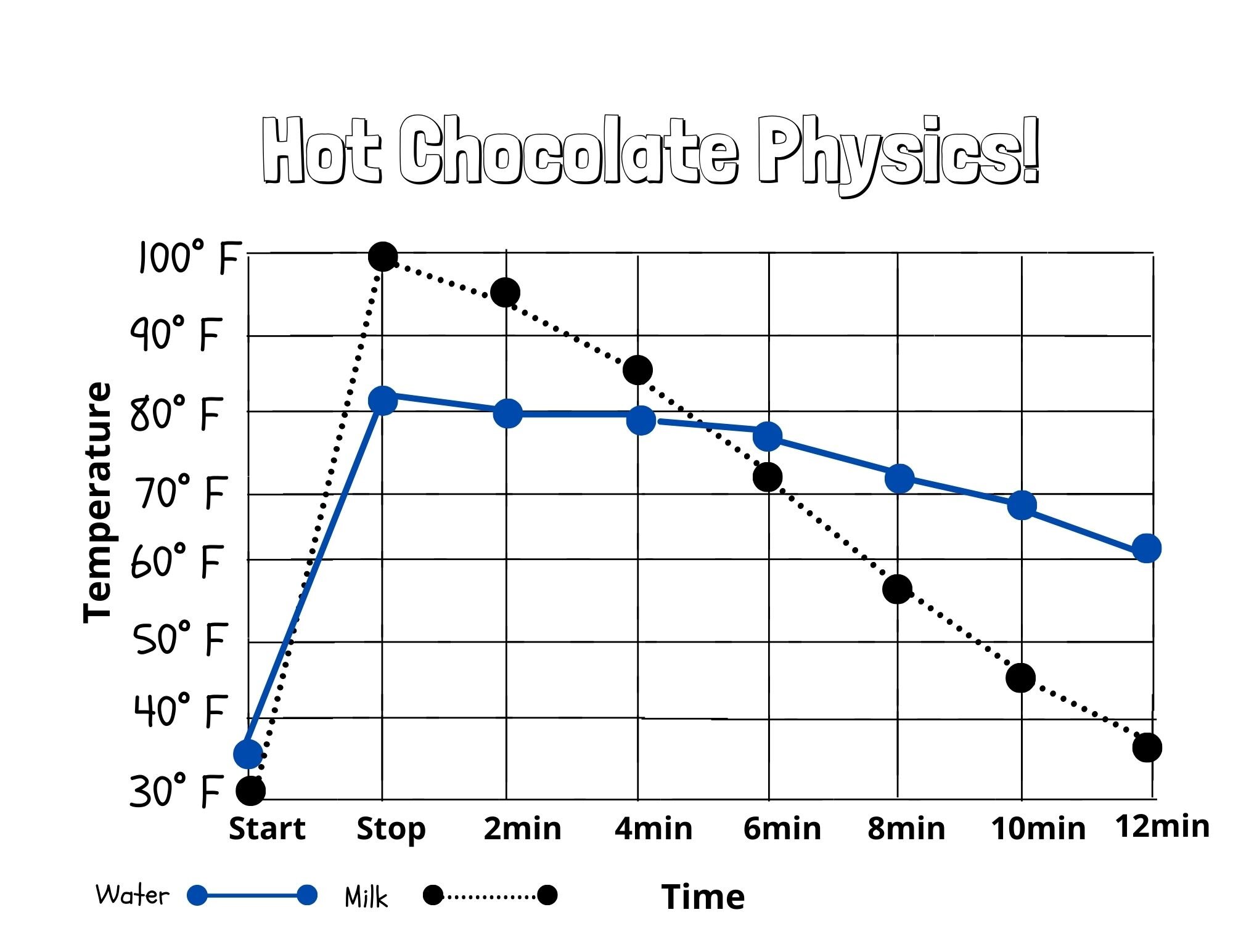 Hot Chocolate Physics — STEMSpark LLC
In the 1800s, Swiss inventors added milk. Then they realized milk burns easily. So they invented the thermometer for chocolate. We’ve been chasing 136°F ever since.
Here’s a weird experiment you can do at home. Heat your milk to 140°F. Pour it over a block of dark chocolate. Stir. The temperature drops to about 134°F. Wait 90 seconds. Now it’s exactly 138°F. That’s your moment.
Or just microwave in 15-second bursts. Stir each time. Stop when it’s hot but not painful on your wrist. If your wrist says “ouch,” it’s too hot. If it says “nice,” you’re in the zone.
Why This Matters in Winter
Cold weather makes your mouth less sensitive. You might accidentally pour 150°F liquid and not notice until it’s too late. The burn comes later. Always test with a clean finger or a thermometer.
Altitude changes everything. At 5,000 feet, water boils at 202°F. Your hot chocolate will be cooler because it’s harder to maintain heat. You need to start at 145°F to end up at 138°F.
And if you’re drinking outside in snow? The cold air steals heat fast. You have about two minutes of perfection. Sip quickly, like a squirrel finding a nut.
The Final Sip
Hot chocolate is a relationship. It’s patient. You can’t rush it. You can’t ignore it.
Remember: 136°F to 140°F is the golden zone. It’s where flavor dances. It’s where memories stick.
So next time you make a cup, pause. Check the temp. Wait those extra 30 seconds. Your tongue will throw a party. And the marshmallows will thank you.
Now go forth. Heat wisely. Drink happily. You’ve earned it.