
Let’s be real: most of us don’t spend our Sunday mornings pondering the pH of our dish soap. We’re too busy scrubbing baked-on cheese from a lasagna pan while half-listening to a true-crime podcast. But the question has a surprising amount of culinary and cultural weight.
So, is that green, citrus-scented liquid in your sink an acid or a base? The short answer is: it’s almost always a base. Specifically, it’s an alkaline solution designed to wage war on grease.
Think of it like a chemical tug-of-war. Acids (like lemon juice) donate hydrogen ions; bases (like soap) accept them. Your dish soap is a surfactant, a clever molecule with a water-loving head and a grease-loving tail, but its high pH—typically between 9 and 10—is the real hero.
Must Read
Why Your Soap Needs to Be a Bully
Grease and oil are chemically acidic or neutral, meaning they’re stubborn and don’t like to mix with water. A base, however, reacts with those fatty acids to create soap and glycerin—a process called saponification. It’s the same chemistry that made your grandmother’s lye soap so effective.
This alkaline punch breaks down the molecular bonds in food residue, making it easy to rinse away. Without that high pH, you’d be left with a greasy film that makes your wine glasses look foggy and your plates feel slippery.
It’s also why your hands can feel dry after washing up. A base strips away natural oils, which is great for your dishes but tougher on your skin. That’s why hand creams exist.
Practical Tip: The Wine Glass Test
Want to know if your dish soap is truly basic? Look at the bubbles. If the suds feel thick and dense, that’s a sign of a strong base. If they’re thin and disappear fast, your soap might be diluted or too neutral.
Better yet, check the pH on the bottle—though most brands don’t list it. A quick internet lookup for your favorite brand will reveal the number. For reference, tap water is a neutral 7, baking soda is around 8, and bleach is a harsh 12.
If you’re worried about damage, opt for pH-neutral soaps for delicate items like wooden cutting boards or cast iron. But for daily greasy pots? Bring on the base.
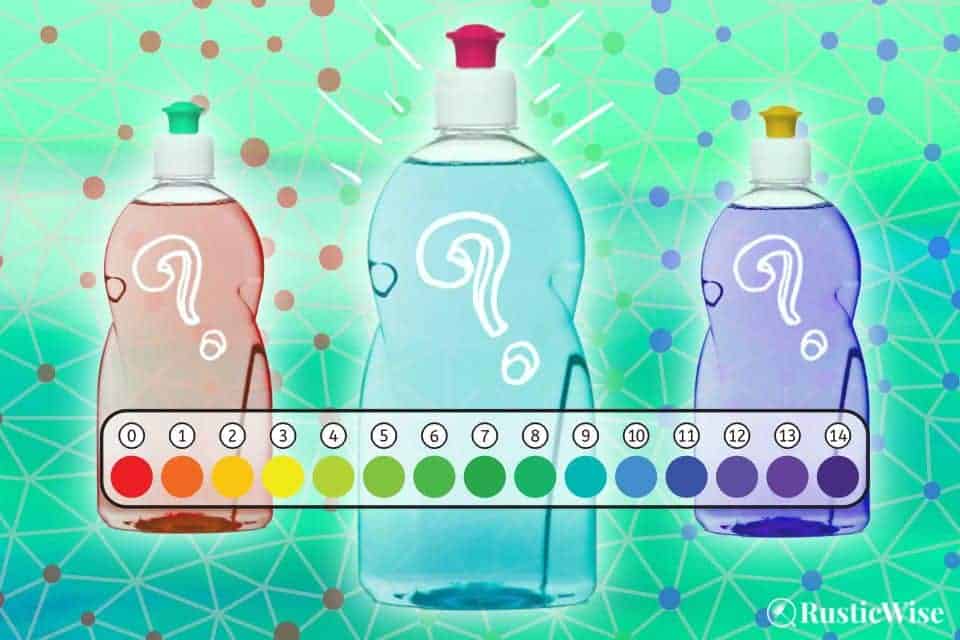 The pH of Dish Soap: How It Affects Cleaning Power and Your Skin
Cultural Crossroads: From Ancient Lye to Modern Luxe
The history of soap as a base is literally ancient. Babylonians boiled fats with ashes (a strong base) over 4,000 years ago. Today, your Dawn or Mrs. Meyer’s is just a fancier, scented version of that same idea.
In pop culture, think of the iconic scene in Fight Club where Tyler Durden makes soap from human fat. That’s saponification in its rawest, most unsettling form—a base (lye) reacting with fat. Disturbing, but chemically accurate.
Meanwhile, your average Japanese household might use a mildly acidic soap for face washing because skin has a lower pH. But for dishes? The base reigns supreme across the globe.
Fun Little Fact: The Lemon Myth
You’d think lemon-scented soap is acidic because lemons are acidic. Wrong. The lemon is just a fragrance. The actual soap base is still alkaline, usually around pH 9 to 10.
Even “natural” or “organic” soaps are bases because oil and lye are non-negotiable ingredients. The only exception is a product labeled specifically as acidic cleaner, often used to remove hard water stains—a completely different job.
So next time you smell that citrusy soap, remember: it’s a chemical wolf in sheep’s clothing.
 Ácidos y bases domésticos | Acids bases and salts, Acid base, Chemistry
How to Use This Knowledge Like a Pro
Because your soap is a base, don’t mix it with acidic ingredients like vinegar. Doing so creates a neutralization reaction that cancels out the cleaning power. You’ll just get salt water and wasted scrub time.
Instead, use a base + warm water + elbow grease for the best results. Cold water slows the reaction, making the soap less effective. Hot water speeds it up—hence the classic “hot, soapy water” advice.
And here’s a pro-tip shared by a Michelin-star chef I once interviewed: add a pinch of baking soda to your soapy sink for extra alkaline power. It’s a cheap, gentle boost for stubborn pans.
A Moment of Reflection
Standing at the sink, hands in warm suds, you’re participating in a chemical dance that is older than written language. Every plate you clean is a small victory of base over acid, of order over chaos.
It’s oddly comforting—knowing that this simple liquid is doing a complex job with quiet precision. You’re not just washing dishes; you’re performing a tiny, essential act of science that keeps your life running smoothly.
So next time someone asks you about dish soap chemistry, you can answer with a smile. It’s a base. And honestly, in a world full of acidity, isn’t it nice to have something that gently, reliably, and sudsily stays a little basic?