Let’s be honest: when you’re standing in an appliance showroom, staring at a row of shiny stoves, they all start to look like the exact same metal box with different knobs. It’s like trying to pick a favorite blender—overwhelming and slightly ridiculous. Then you get home, and your new stove doesn’t fit in the spot where your old one lived. Suddenly, you’re having a very personal conversation about inches with your tape measure.
Why Your Grandma’s Stove Wasn’t a Wild Card
Here’s the funny thing: kitchen stoves are the least spontaneous appliances in your house. The standard width in North America is 30 inches, a number so sacred it might as well be chiseled into the kitchen gods’ stone tablet. My grandmother’s stove from 1972 was 30 inches, and yours probably is too. It’s the yoga pants of appliances—universal, comfortable, and nobody gets weird about it.
If your stove is 30 inches, you’re basically in the Toyota Corolla of kitchens. Reliable, boring, and everyone has one. You can swap it out without calling a contractor, which is the closest a homeowner gets to a spontaneous dance party.
Must Read
The 36-Inch “Look at Me” Stove
Then there’s the 36-inch stove. This is for people who want their stove to look back at them while they cook. It’s like driving a pickup truck into a compact parking spot—you can do it, but you’ll be sweating the whole time. A friend of mine bought a 36-inch range because it had six burners, and now his kitchen island is basically a hostage negotiator, wedged between the fridge and the wall.
If you’re tempted by a 36-inch stove, ask yourself: are you actually feeding a marching band, or do you just like the idea of having four pots boiling at once? Because the reality is you’ll be cooking ramen on burner one and wondering why you can’t open your oven drawer all the way.
The Depth Dimension: The Backsplash Betrayal
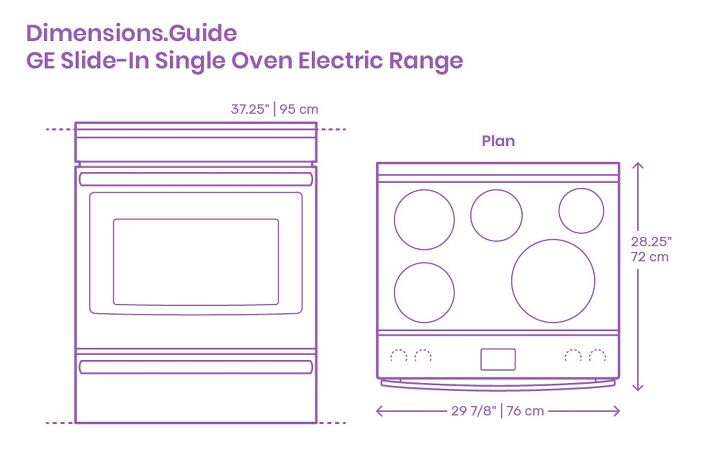
Height and depth are where things get hilariously tragic. Standard stoves are about 36 inches tall (with leveling legs) and 25 to 27 inches deep. That sounds simple until you realize your countertop overhang is like a snarky friend who moves right when you sit down. If your stove sticks out three inches past the counter, you’ll catch your hip on it every single afternoon for the next decade.
I once watched a neighbor try to install a “slide-in” range into a spot meant for a “freestanding” model. It was like forcing a square peg into a round hole, but with more colorful language. The stovetop was an inch taller than the counter, creating a miniature ski slope for spaghetti sauce to slide off.
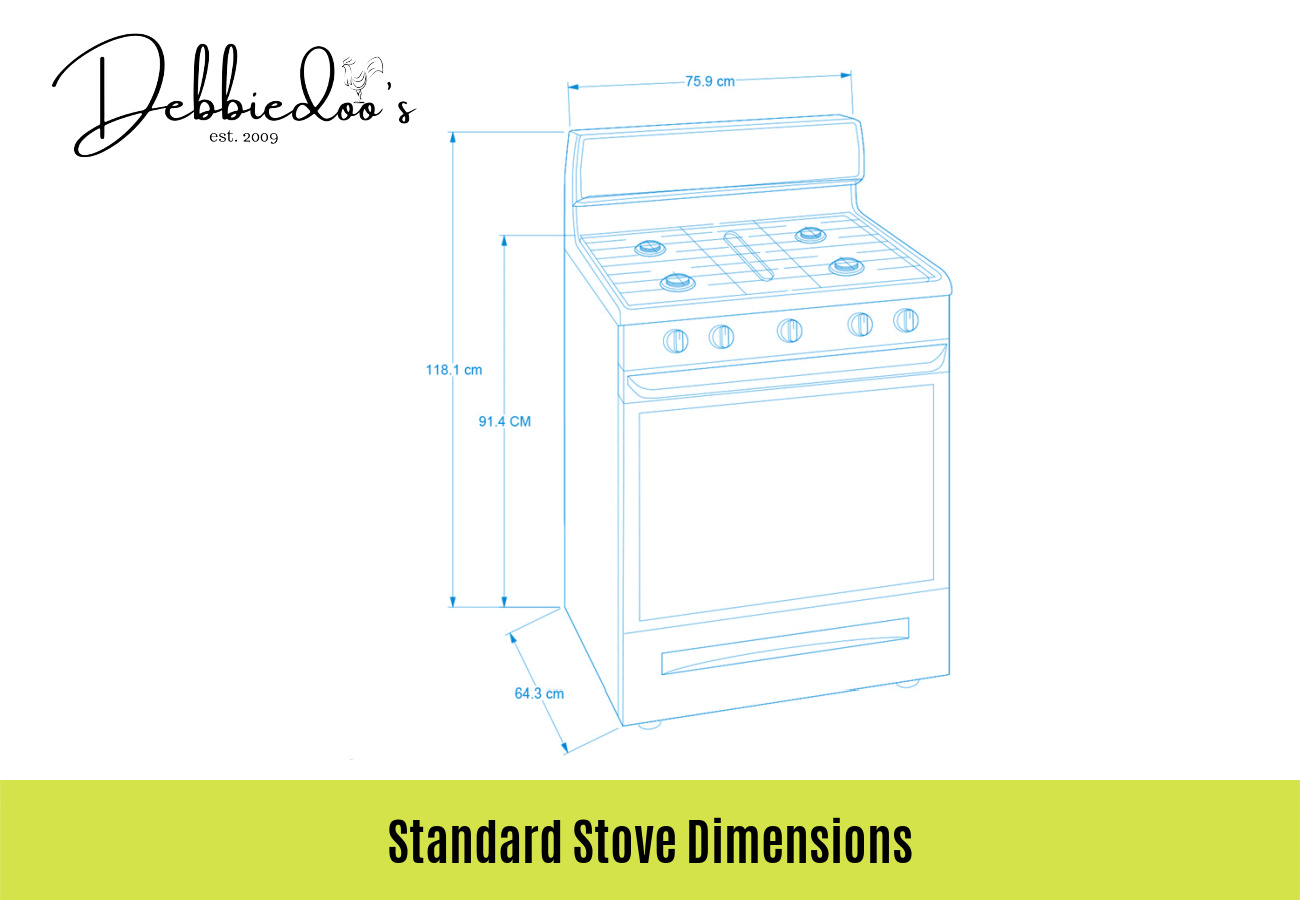
 Standard Stove Dimensions
Compact and Slender: The Apartment Stove Blues
If you live in an apartment, you probably have a 20-inch or 24-inch stove. This is the chihuahua of the stove world—small, yappy, and surprisingly powerful if you don’t expect too much. I had one that was exactly 20 inches wide, and I once baked a turkey by having to cut the bird in half. The drumsticks ended up in the toaster oven.
These little stoves are fine for single people or couples who eat a lot of frozen pizza. But if you try to cook a full Thanksgiving dinner on one, you’ll be playing a cruel game of hot plate Tetris with a very sad timer.
The “Wait, My Stove Doesn’t Have to Be Standard?” Moment
Here’s the secret: most stoves are not actually “standard” in the way your heart hopes. European stoves are often 60 or 90 centimeters wide (which is roughly 24 or 36 inches), so if you order a fancy Italian range, your tape measure needs a therapist. I met a woman who bought a beautiful Bertazzoni stove only to discover it was 35.4 inches wide. She had to rip out her cabinets with a crowbar and a lot of tears.
So before you fall in love with a stove’s sleek lines or wifi-enabled burner, remember: measure twice, cry once. It’s a boring dad joke, but it’s true. I ignored that advice once and ended up with a stove that sat 2 inches away from the wall, leaving a crevice where onion peels and stray Cheerios built a tiny civilization.
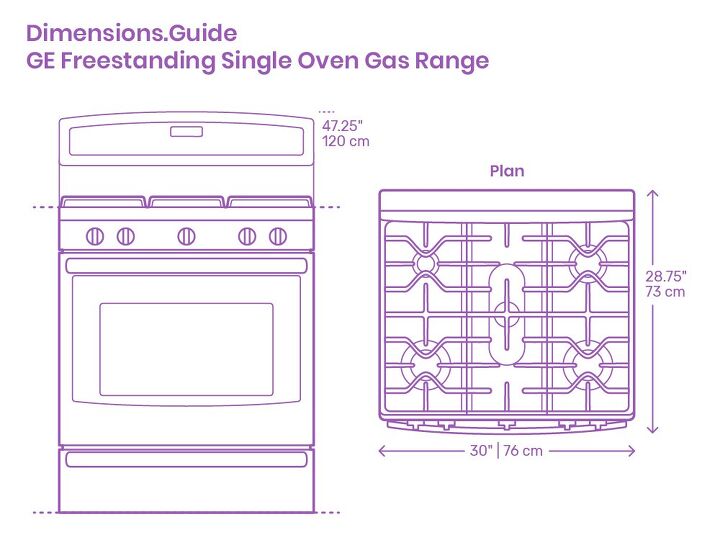
 Standard Size For A Stove
What About Ventilation? (The Unsexy Part)
You might think width is the only thing that matters, but no—height and depth also love to betray you. The standard stove sits flush with the counter, but a pro-style range often sits higher, turning you into a t-rex when you try to stir a pot. If you have low-hanging cabinets above your stove, a tall range means your exhaust hood will live a lonely life, disconnected from actual usefulness.
My cousin installed a 36-inch stove under a standard 30-inch hood. The hood now works as a decorative hat for his stove, not a vent. Every time he cooks bacon, the smoke alarm sings the song of his people.
The Takeaway (Without the Burner)
Look, the kitchen stove size standard is basically 30 inches wide, 36 inches tall, and 25 inches deep. It’s the Goldilocks zone of cooking. If you stick with that, you’ll sleep well at night knowing your stove fits, your cabinets are fine, and your only weird problem is deciding between gas and electric.
But if you venture off the beaten path—say, a 48-inch range with a griddle and a pasta cooker—you are now in custom cabinetry territory. That’s a place where dreams go to die and contractor bills go to get very, very fat. My advice? Embrace the 30-inch life. It’s boring, but so is a fire hazard, and I know which one I’d rather have in my kitchen.
So next time you’re shopping for a stove, remember: measure your space like you’re a detective on a crime show. Write it down, check it twice, and don’t assume the salesman knows what “standard” means (they usually don’t). Your future self—the one who isn’t crying over a dented countertop—will thank you.