
Summer sausage is one of those foods that feels both rustic and effortlessly sophisticated—like a leather satchel you actually use. You slice it for picnics, pack it for hikes, or just stand over the kitchen counter at 10 p.m. nibbling on cubes with a gherkin. But where did this sturdy, tangy, shelf-stable staple actually come from? It’s not named for the weather, though it does love a sunny day.
The European Roots of a Meat Legend
To understand summer sausage, you have to travel back to rural Europe, where farmers needed a way to preserve meat without refrigeration. Long before freezers existed, they relied on fermentation and smoking—techniques that naturally killed bacteria and extended shelf life. This style of sausage was traditionally made in the cooler months and then aged through spring so it was ready to eat when summer arrived. That’s where the name comes from: it’s a summer-ready sausage, not a sausage made in summer.
German and Eastern European immigrants brought these curing methods to America in the 1800s. They settled in the Midwest, where the drier climate and open farming spaces were perfect for making fermented sausages. The result? A hearty, smoky log that could be stored in a cellar or hung in a barn without spoiling—a true pioneer’s protein bar.
Must Read
What Makes Summer Sausage… Summer Sausage?
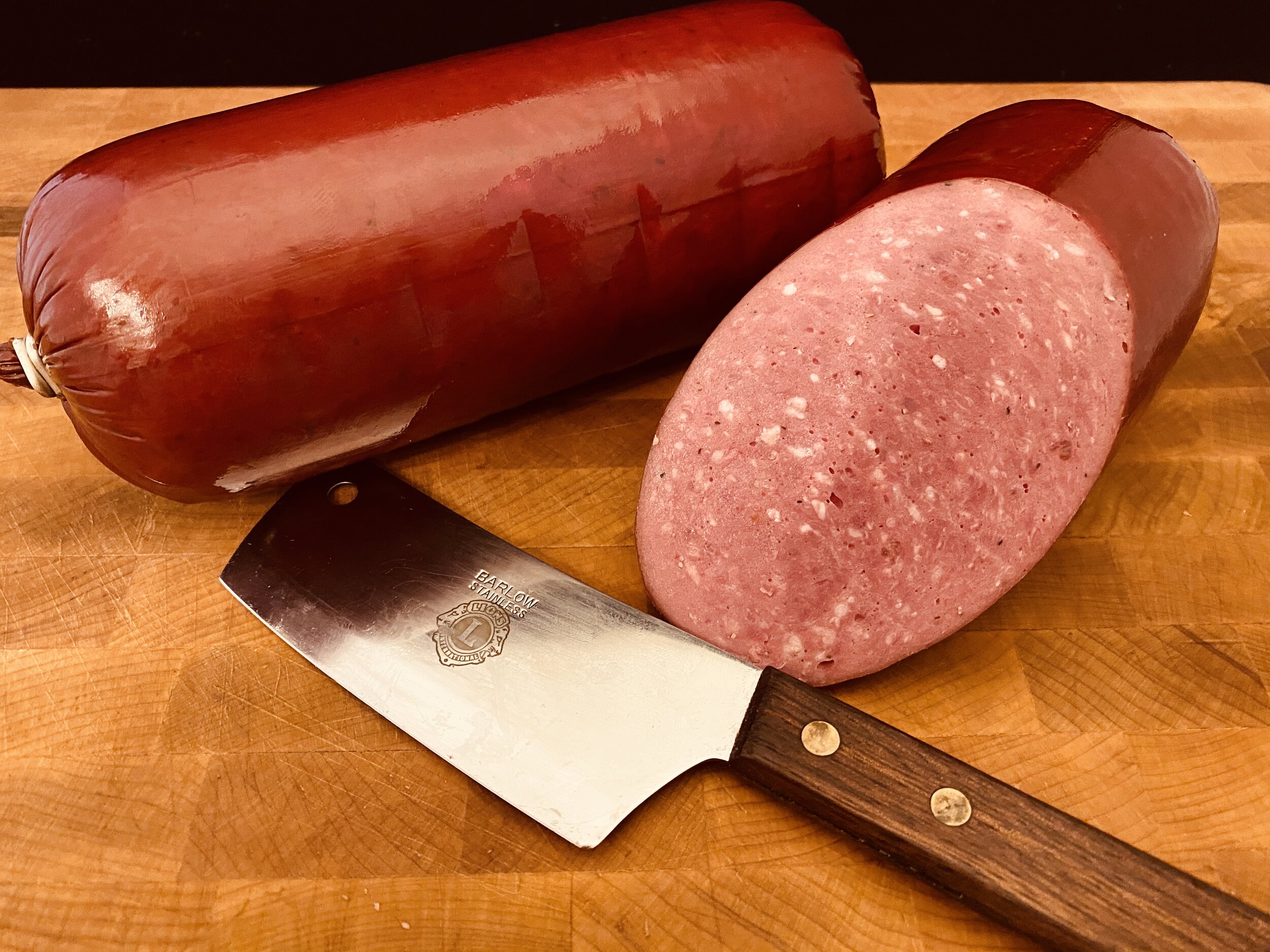
Unlike fresh sausages that need cooking, summer sausage is semi-dry and fully cooked through fermentation and smoking. The key ingredient is a starter culture—often a lactic acid bacteria—that gives it that signature tangy kick. The fermentation process not only creates flavor but also lowers the pH, making the meat too acidic for harmful bugs to survive. It’s science you can taste, wrapped in a casing.
Traditional recipes use beef, pork, or a blend—sometimes with garlic, mustard seed, and black pepper. But here’s a fun fact: the reddish tint you see on many commercial summer sausages comes from sodium nitrite, a curing salt that also prevents botulism. In old-world versions, they’d use a bit of saltpeter, but today’s nitrites are carefully measured and perfectly safe. So yes, that rosy color is both tradition and chemistry having a picnic.
Cultural Crossroads: From Oktoberfest to Tailgate
Summer sausage became a star in German-American communities, especially during Oktoberfest and holiday gift baskets. But it really hit mainstream American culture in the 1950s, with the rise of convenience foods and outdoor recreation. Suddenly, everyone wanted a snack that could sit in a cooler for hours and still taste good—this sausage was the original road-trip MVP.
 Buy online and pick up in store or from one of our conveniently located
Today, you’ll find it at backyard barbecues, ski lodges, and even in high-end charcuterie boards, often paired with sharp cheddar and a dollop of grainy mustard. It’s a crossover artist: humble enough for a kid’s lunchbox, elegant enough for a wine-and-cheese night. Pro tip: let the sausage come to room temperature before slicing—it’s far more flavorful and soft, like butter meets beef jerky.
Practical Tips for Choosing and Storing
Looking to buy the best summer sausage? Check the label for “fermented” or “cultured celery powder”—these indicate natural fermentation, not just a flavor spray. Whole logs are better than pre-sliced packs, which lose moisture faster. And always sniff before you slice: a clean tang is fine, but a sour or ammoniac smell means it’s past its prime.
Storage is surprisingly forgiving. An unopened summer sausage can last months in the fridge, and even weeks in a cool pantry. Once you cut into it, wrap the cut end tightly in plastic wrap or wax paper—it’ll stay good for two to three weeks. If you see beads of liquid on the surface, just pat it dry; that’s just fat and moisture sweating, not a sign of spoilage.
 Summer Sausage: History, Ingredients, and How to Enjoy It - Insightwrites
Fun Little Facts to Impress Your Friends
Did you know that summer sausage is often called cervelat or saveloy in other parts of the world? In Switzerland, it’s considered the national sausage. And according to food historian Andrew F. Smith, the first commercial summer sausage in the U.S. was produced by a German immigrant named John B. Kuhn in Ohio in the 1840s. He basically invented the Midwest snack aisle.
Another quirky tidbit: because summer sausage is shelf-stable, it was included in Apollo 11 astronauts’ emergency food rations. Yes, the same astronauts who walked on the moon may have nibbled on summer sausage while contemplating the lunar horizon. That’s a fun fact to drop at your next cookout.
Connecting to Daily Life
Some foods are just there—a steady presence in our fridges, road trips, and holiday spreads. Summer sausage is one of those quiet companions: it doesn’t demand attention, but for generations, it has reliably shown up when we need a sturdy snack, a quick appetizer, or a little taste of old-world ingenuity. The next time you slice into a log, you’re not just eating—you’re sharing a tradition that’s been preserved without a freezer, passed down from European farms to your own kitchen counter.
Whether you pair it with cold beer on a hot July afternoon or cube it for a winter charcuterie board, remember that every bite carries a bit of history. And honestly, isn’t that the kind of easy-going magic we all need more of? Summer sausage reminds us that the best things in life don’t need to be complicated—they just need to last long enough to enjoy with good company.