
Let’s settle this kitchen drama once and for all. You’ve got a beautiful fillet of salmon, a hot pan ready, and a nagging voice whispering: “Shouldn’t it be room temp first?” It’s one of those cooking questions that sounds like a secret handshake, a rite of passage for home chefs. But is it a must-do, or just another piece of culinary myth-making? Grab a glass of something crisp, and let’s wade into the tepid waters of salmon physics.
The Great Temperature Debate
The conventional wisdom sounds so sensible: cold meat shocks the pan, leading to uneven cooking. A room-temperature steak is a trophy; surely the same logic applies to our favorite pink fish. And honestly, it’s not totally wrong—just a little overblown. The goal here isn’t to turn your counter into a fish spa, but to take the raw chill off.
Here’s the real catch: Salmon is not a steak. It’s a delicate fish that can go from perfectly flaky to dry sawdust in about thirty seconds flat. The chilling effect from a fridge-cold fillet is minimal because salmon cooks so fast anyway. So, while the theory makes sense, the practical benefit is often smaller than your last Instagram-worthy avocado toast.
But wait—there’s a safety angle we can’t ignore. Leaving raw fish out for hours is a recipe for a bad time. The USDA warns against leaving perishable food out for more than two hours (one hour if it’s a hot day). So if you’re planning a salmon dinner for 8 PM, don’t pop it out at noon. That’s not “tempering”; that’s a bacteria rave.
The "Skip It" Camp
Many top chefs and food scientists actually say skip the room temp step entirely. Why? Because a very cold fillet hitting a very hot pan gives you that glorious, crackling sear. A slightly warmer fillet may actually steam before it sears, leading to a pale, sad-looking crust. Nobody wants a salmon that looks like it just woke up.
Another cool truth: Carryover cooking is your secret weapon. Even after you pull the pan off the heat, the internal temperature of the salmon can rise by 5-10°F. Starting from fridge-cold gives you a wider window of control before you overshoot that perfect 125°F medium doneness. Think of it as a cozy safety net for your dinner plans.
Plus, there’s the pragmatism of modern life. Who has time to wait 30 minutes for a fish to acclimate? You’re busy, your podcast is playing, and your kids want dinner. Pulling the salmon straight from the fridge and into the pan is perfectly fine—just add an extra minute of cooking time. That’s it. No drama, no maître d’ attitude.
The "Do It Anyway" Camp
That said, there’s a middle path for the ritualists among us. If you do want to temper your salmon, aim for just 15 to 20 minutes, not an hour. Take the fillet out of the fridge, unwrap it, and let it sit on a plate. Pat it dry with paper towels—this is actually more important than the temperature. Dry skin equals crispy skin.
Why bother with even this short rest? It reduces the shock factor for ultra-thin fillets. A very thin tail piece might cook unevenly if it’s icy cold in the center. For thick, center-cut fillets, the difference is negligible. It’s a bit like deciding whether to warm your wine glass—a nice touch, but not life-changing.
Fun fact: Salmon is actually one of the most forgiving fish to cook. It has enough natural fat (hello, omega-3s!) to forgive a minute of overexposure. This is why you see it in everything from gym meal prep to Michelin-star plates. It’s the denim jacket of seafood—casual, reliable, and always in style.
Practical Tips for Your Next Dinner
Here’s your cheat sheet for salmon success, regardless of temperature. First, always pat the fish bone-dry with paper towels before cooking. Moisture is the enemy of a good sear. Second, season generously with salt at least 10 minutes before cooking—this helps the flesh become firm and flavorful. Think of it as a tiny hot tub for the fish.
Third, use a hot pan with a high smoke-point oil like avocado or grapeseed. Lay the salmon skin-side down and don’t touch it for 4-6 minutes. Let it release naturally; if it sticks, it’s not ready. Fourth, if you’re nervous about doneness, use a thermometer: 120°F for rare, 125°F for medium-rare, 130°F for medium. No more guessing games.
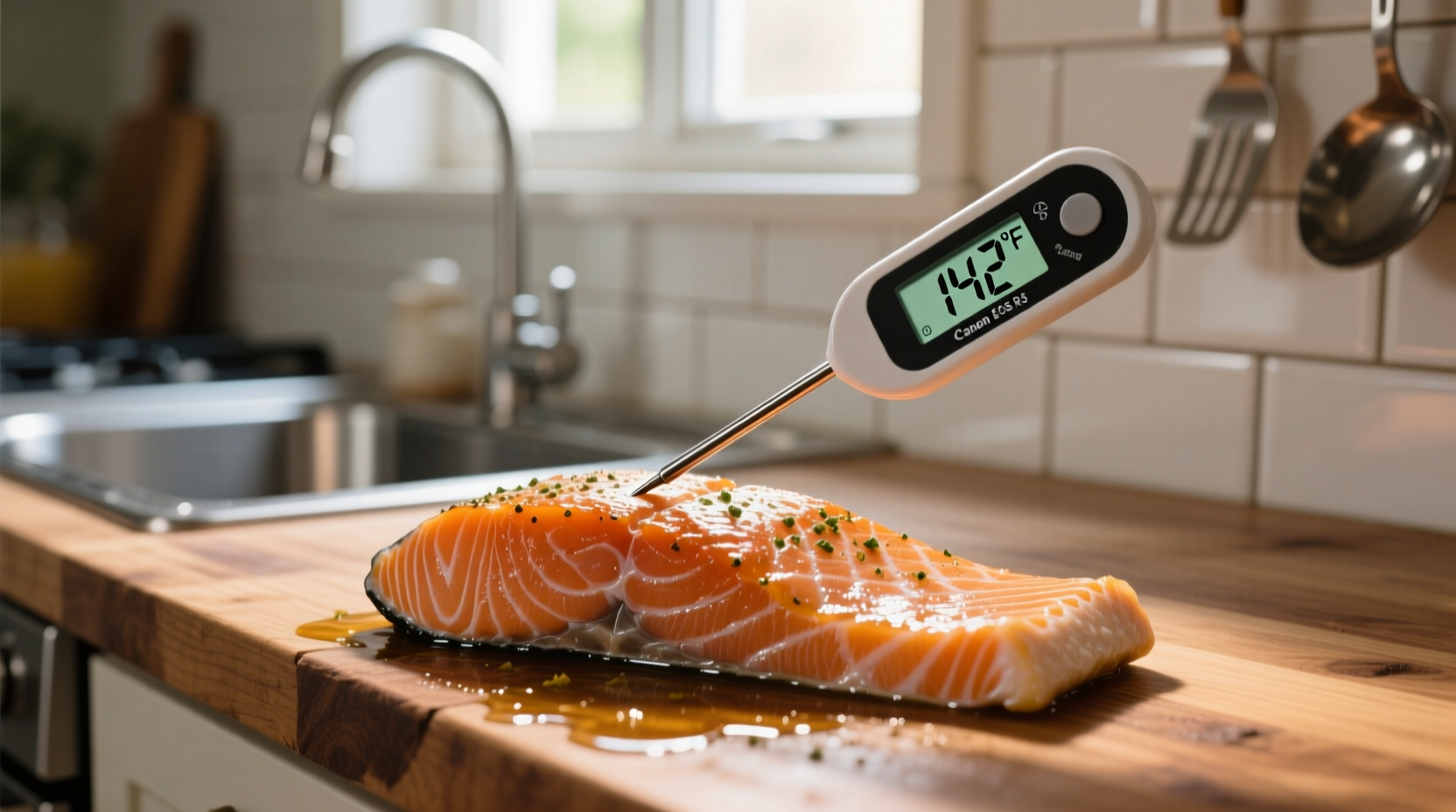 Perfect Salmon Temperature Guide: 125°F to 135°F for Best Results
Finally, embrace the 10-minute rule: cook the fillet for 8-10 minutes per inch of thickness, measured at the thickest part. This method works whether your salmon was fridge-cold or counter-tempered. It’s not sexy, but it’s bulletproof. And honestly, we need more bulletproof in our weeknight dinners.
A Little Cultural Context
In Japan, fresh salmon is often served raw as sashimi, straight from the fridge. No one tempers it, and it’s divine. In Scandinavia, cured gravlax is prepared cold and sliced thin—no heat, no tempering drama. Meanwhile, classic French technique often dictates room-temperature for a uniform cook. The lesson: there’s no one right way—just how you like your fish.
Even your grandmother’s recipe likely didn’t mention tempering. She probably threw the fish in a buttered pan and called it dinner. Our obsession with precise fish temperatures is a pretty modern luxury. It’s a testament to how much we care about the small joys—and how much we love overthinking a simple meal.
Let’s not forget the sushi connection. That pristine slice of salmon on your favorite roll? It was likely sliced cold, directly from a refrigerated block. The texture is firm, clean, and perfect. So, if it’s good enough for a master itamae, it’s probably good enough for your Tuesday night sauté.
A Fun Little Fact
Did you know that wild salmon and farmed salmon have different fat contents? Farmed salmon has about 15-20% fat, while wild can dip to 2-5%. That means farmed salmon is more forgiving of temperature variations. Wild salmon needs a lighter touch—closer to the 12-minute-mark for fridge-cold fillets. Tailor your tempering choice to your fish’s life story.
Also, the old wives’ tale about “room temp fish” probably started in restaurants. Chefs on a line don’t have time to wait, so they’d pull fish from a walk-in, portion it, and let it sit on a tray for 30 minutes while prepping sides. It wasn’t a targeted strategy; it was kitchen logistics. We’ve turned a convenience into a commandment.
If you’re feeling experimental, try a side-by-side test next weekend. Cook two identical fillets: one straight from the fridge, one rested for 20 minutes. Use the same pan, the same seasoning, the same timing. You might be surprised at how similar they turn out. Or you might discover a preference that’s wholly your own.
Connecting to Daily Life
In the end, the question of salmon temperature is really a question about control. We want to master the kitchen, to feel like we’re in charge of the chaos. But cooking, like life, has a beautiful unpredictability. The perfect sear isn’t guaranteed by a rulebook. It comes from paying attention, adjusting, and forgiving yourself when things aren’t perfect.
So, should salmon be room temp before cooking? It’s up to you. If you have the time and the inclination, go for it. If you’re hungry and the clock is ticking, don’t stress. The salmon won’t judge you. It just wants to be loved, seasoned, and eaten with good company. Let that be your guide—not the temperature of your countertop.
Next time you open the fridge, grab that fillet, and hear that nagging question, just smile. You are now equipped with enough nuance to make your own call. Will you temper? Will you skip? Or will you just cook it and enjoy it? That last option is always the right one. Happy cooking, and pass the lemon.