
Let’s be honest: bread is basically a hug in food form. That warm, crusty slice straight from the toaster is comfort, pure and simple. But then that little voice in your head chimes in, “Hey, maybe don’t eat the whole loaf.” We’ve all been there.
You don’t have to swear off sandwiches forever to watch your waistline. The trick is knowing which breads are pulling their weight without adding too many calories to your plate. Think of it as finding the best buddy for your peanut butter, not ditching the friend entirely.
The Usual Suspects: White vs. Whole Wheat
That fluffy, white supermarket loaf is like the fun friend who’s great at parties but offers zero nutritional help the next morning. A single slice can pack around 75-85 calories, and it digests so fast you’re hungry again before your coffee kicks in.
Must Read
Whole wheat is the responsible cousin who shows up early to help you move furniture. It’s usually only about 70-90 calories per slice, but the real win is the fiber. That fiber keeps you feeling full, so you stop at two slices instead of four.
Light Bread: The Sneaky Champion
Have you ever seen those “light” or “thin-sliced” breads at the store? They look almost too good to be true, but they’re actually a secret weapon. With around 40-50 calories per slice, they let you have a proper sandwich without the caloric guilt.
I use light bread for my morning avocado toast. I get all the creamy, delicious goodness, and I still have room in my day for a cookie later. That is the kind of math I can get behind.
Rye and Pumpernickel: The Dark Horses
Rye bread has this rich, slightly sour vibe that makes you feel like you’re eating in a cozy European café. It’s naturally denser, which means you often need less of it to feel satisfied. A slice is typically 65-80 calories.
Pumpernickel, its darker cousin, is similar. It’s made from whole rye berries, so it’s packed with fiber and flavor. You only need one slice for a killer open-faced sandwich, which automatically cuts your calorie count in half.
 Fitbakes Keto Bread : 2g Carbs, 7g Protein, Low Carb Bread Loaf (16
Sourdough: The Friend with Benefits
Sourdough is having a major moment, and for good reason. It’s not the absolute lowest in calories—a typical slice is around 90-110 calories—but it has a superpower: the fermentation process makes it easier to digest.
Because sourdough is so filling and flavorful, you don’t need the same thick layer of butter or cheese. Plus, it has a lower impact on your blood sugar, which means you avoid that mid-afternoon energy crash. It’s the smart choice for a grilled cheese that won’t put you to sleep.
The Wrap Trick (and a Warning)
Many people swap sliced bread for tortilla wraps, thinking they’re automatically healthier. Here’s the truth bomb: most flour tortillas are calorie bombs. A standard 10-inch wrap can pack 200-300 calories before you even add the turkey.
If you love wraps, look for low-carb or “thin” varieties. These usually come in at 50-90 calories each. They’re flexible, fun, and let you roll up all your favorite fillings without the hidden calorie punch.
Beware of the “Health Halo”
Don’t be fooled by fancy labels like “multigrain” or “seven-grain.” Unless the first ingredient says “whole grain” or “whole wheat,” you’re likely eating glorified white bread with some seeds on top. It’s like putting a racing stripe on a minivan.
Always flip the package over. You want at least 2-3 grams of fiber per slice. If it has less than that, you might as well eat the fluffy stuff and really enjoy it.
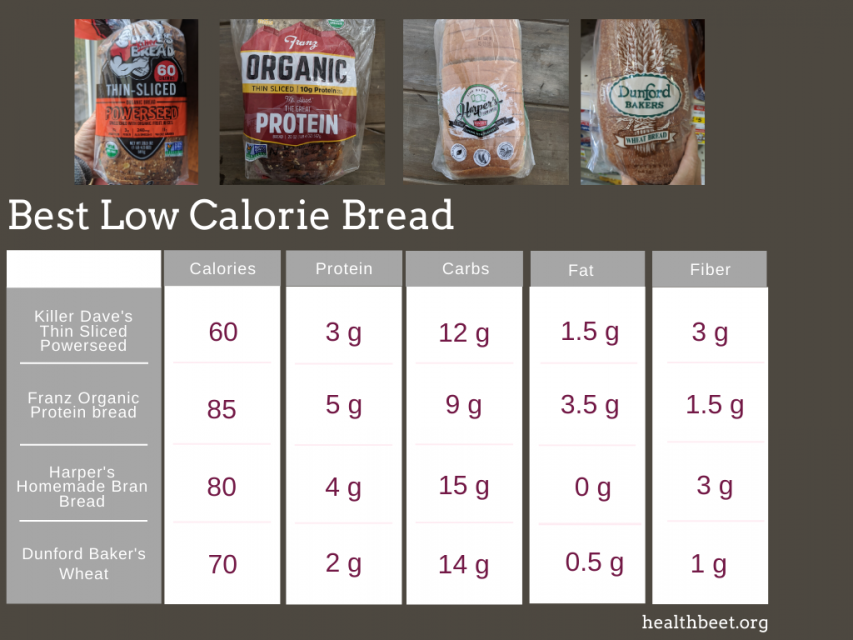 The Best Low Calorie Bread {You can buy at the store} - Health Beet
My Go-To Low-Calorie Breads
For my everyday sandwich, I almost always grab Dave’s Killer Bread (Thin-Sliced). One slice is about 70 calories, it’s organic, and it’s loaded with whole grains and seeds. It tastes like actual food, not cardboard.
When I’m feeling fancy, I get a loaf of light rye from a local bakery. It’s about 60 calories a slice, and it makes a tuna melt feel like a five-star meal. My trick is to toast it first so it gets that perfect crunch.
What About Gluten-Free Bread?
If you have to eat gluten-free, I feel your pain. Most gluten-free breads are actually higher in calories and sugar to mimic the texture of gluten. A slice can easily be 100-130 calories.
Your best bet is to look for smaller slices or brands that use almond or coconut flour. They’re denser and more filling, so you eat less overall. And honestly, a gluten-free bun is often better as an open-faced affair anyway.
The Bottom Line (It’s Not Scary)
You don’t have to live a bread-less life of sadness. Just be a little picky about who you let into your pantry. A few smart swaps can save you 100-200 calories a day, which adds up to a whole extra slice of cake on the weekend.
So go ahead, make that turkey sandwich. Slap on some mustard and lettuce. And enjoy every single bite, knowing you’ve chosen a bread that works for you, not against you. Bread is not the enemy; it just needs the right remix.