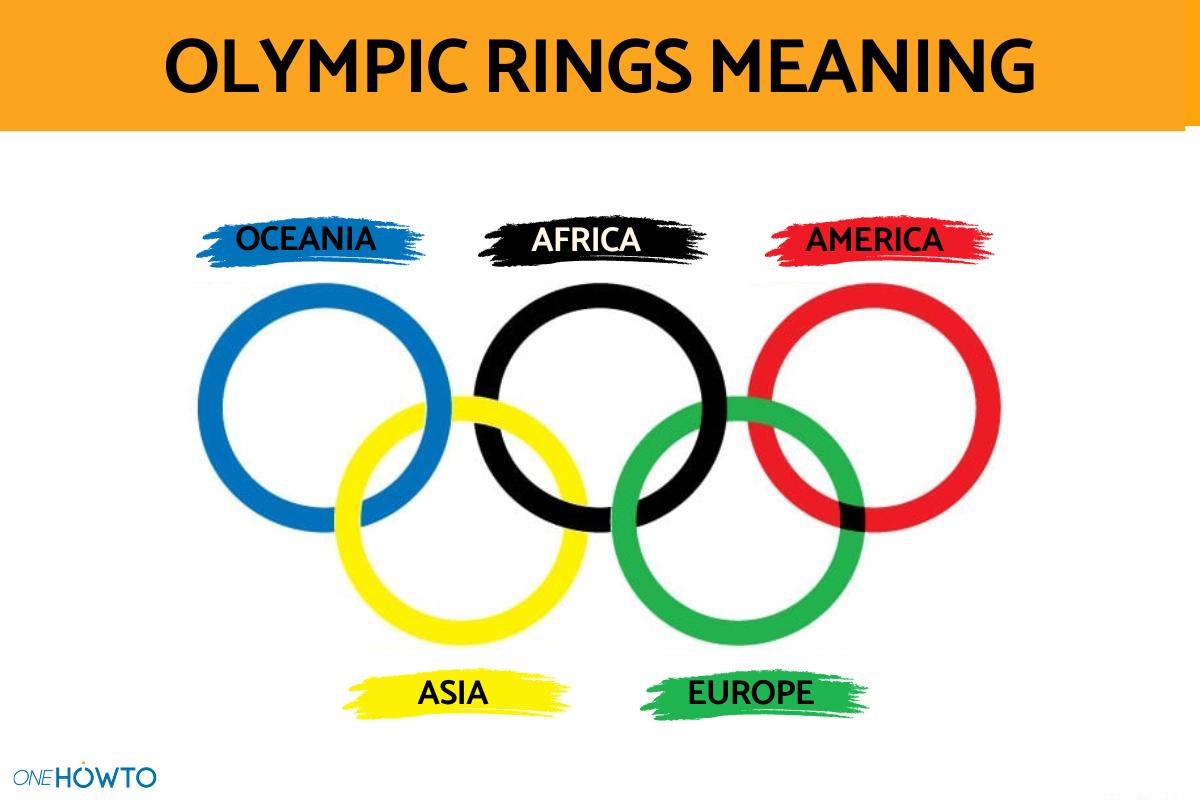
So, you’ve seen the Olympic rings. Five colorful circles linked together like a cosmic bracelet. But what do those colors really mean?
Let’s bust the biggest myth right now. No, each ring does not stand for a specific continent. You heard that right. Africa isn’t the black ring, and Europe isn’t blue.
The colors were not chosen for their deep symbolism. They were chosen for a much simpler reason. Every single nation’s flag has at least one of those five ring colors.
Must Read
Think about it. Red, blue, yellow, green, black—plus the white background. That’s a universal color palette for the world.
Baron Pierre de Coubertin, the founder of the modern Olympics, loved this idea. He designed the rings in 1913. His goal? To make a symbol that everyone could feel connected to.
A Quick Color-Coded History Lesson
The five rings stand for the five inhabited continents. But not by color. The rings just represent Africa, the Americas, Asia, Europe, and Oceania.
So if you look at the bottom row: blue, yellow, black, green, red. That’s a rainbow of global flags. Sorry, Australia—no ring for Antarctica. The penguins don’t compete.
Here’s a quirky detail: the rings are always interlocked. Left to right. The blue ring is top-left, then black, then red. Yellow and green sit below.
Why that specific order? It isn’t random. It’s based on how flags looked in 1913. Blue, yellow, black, green, red—that’s the most inclusive sequence for all nations.
What Each Color Actually Represents
Let’s break it down. Blue isn’t for Europe. But it does appear on the flags of France, Greece, the UK, and over 50 other nations. It’s the color of starry skies and deep oceans.
Yellow isn’t Asia. But it shows up on flags like Germany, Spain, and China. It’s the color of gold medals and sunshine.
Black isn’t Africa. Yet it’s on flags like South Africa, Germany, and the Bahamas. It’s the color of strength and the night sky.
Green isn’t Oceania. But you’ll find it on flags of Brazil, Ireland, and many Arab nations. It’s the color of tropical forests and hope.
Red isn’t the Americas. But it’s on flags from Canada to Chile to China. It’s the color of passion, blood, and victory.
The White Background Is a Sneaky Color
Don’t ignore the white background. It’s part of the official design. Coubertin said, “The six colors combined reproduce those of all nations.”
That means white counts too. It’s on flags like Japan, the USA, and many more. So the Olympic rings are actually six colors in total.
This is a fun party fact. “Hey, did you know the Olympic rings have six colors?” You’ll sound like a genius.
 Olympic Rings Colours Meaning
The Rings Are Weirdly Specific About Size
There are official rules. The rings must be exactly 1/3 the height of the flag they’re on. The rings must also be exactly 1.5 diameters apart.
Is that a bit OCD? Yes. But it’s intentional. The rings look perfect together, like a mathematical hug.
Even the thickness of the lines is fixed. Each ring is 0.5 units wide. That’s the width of a firm handshake.
Why This Symbol Works So Well
The rings don’t need complicated meaning. They just work. You see them, and you think sports, unity, the world.
It’s a pure design. No words. No flags. Just five interlocking circles that say, “We’re all in this together.”
And here’s the best part: they’ve been the same since 1913. No redesigns. No updates. Just timeless simplicity.
Funny Little Known Facts
The rings were almost forgotten after World War I. But Coubertin insisted they stay. Good thing, because they’re now the most recognized symbol on Earth.
In 1914, the rings made their debut. But the Olympics were canceled due to war. So the rings had to wait six years to be seen. Patience is a virtue.
There’s a legend that Coubertin dreamed the rings after seeing a flag. Not true. He just liked the idea of a clean, colorful link.
Today, the rings appear on everything. T-shirts, mugs, tattoos. Even guinea pig racing jerseys. Yes, that’s real.
So, What Do The Colors Mean?
The colors mean inclusivity. Every nation on Earth sees its own flag in those rings. It’s a subtle, clever trick.
They also mean play. Red, blue, green—they’re the colors of childhood crayon boxes. The rings are joyful, not stuffy.
And they mean connection. Each ring touches the others. No continent is left alone. Even Oceania, the smallest, links to everyone.
Next time you see the rings, remember: it’s not about geography. It’s about belonging. And that’s a pretty cool idea for a planet with over 7 billion people.
So go ahead, drop this knowledge at your next watch party. People will think you’re an Olympic historian. You’re welcome.