
So there I was, a freshly minted baking enthusiast, staring at a recipe for chocolate chip cookies. It said, quite simply, “beat the butter and sugar together until light and fluffy.” I grabbed my wooden spoon and gave it a few half-hearted stirs. “Done,” I thought, and threw in the eggs. The result was a dense, flat, sad little hockey puck. My friend, a proper baker, just laughed. “You didn’t beat it,” she said, “you just introduced them.”
That’s when I realized “beat” isn’t just a fancy synonym for “mix.” In baking, it’s a specific action with a very particular goal. It’s about introducing air, creating structure, and physically changing the texture of your ingredients. Think of it less like a casual stir and more like a targeted workout for your batter.
The Secret Life of Air Bubbles
When you beat butter and sugar, you’re not just combining them. You’re forcing tiny air pockets into the fat. Those air pockets are your ticket to a light, tender crumb. They expand in the oven, giving your cake or cookies lift. No beating? No lift. Just a dense, sad pancake.
Must Read
This is especially true for the classic “creaming” method. You beat the fat (butter or shortening) with sugar until it’s pale, fluffy, and looks like a cloud. A stand mixer does this in minutes, but if you’re using a whisk? Your arm will feel what “light and fluffy” really means.
And don’t get me started on eggs. Beating whole eggs or just the whites is a whole other beast. When you beat egg whites, you’re literally denaturing the protein, unfolding it to trap air and form a stable foam. That’s the stuff of meringues and soufflés. It’s basically kitchen magic.
How Hard is “Hard”?
Baking recipes love to give you subjective cues. “Beat until thick and pale.” “Beat until stiff peaks form.” What does that even mean? Let’s break it down, because I’ve been confused too.
“Beat until light and fluffy” usually applies to butter and sugar. You’re looking for a color change (pale yellow) and a texture that looks like soft, aerated sand. If you taste it, you shouldn’t feel any gritty sugar crystals. That’s your cue to stop.
“Beat until stiff peaks” is for egg whites or cream. You dip a whisk or spatula in, lift it up, and the mixture should form a point that stands upright without flopping over. Don’t overdo it, or you’ll get a grainy, weeping mess. Seriously, stop the moment it looks like a firm, glossy cloud.
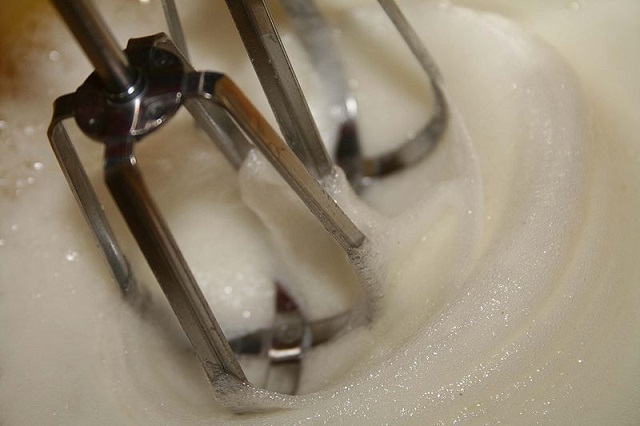 Beat Cooking
Tools of the Trade (and Your Sanity)
You can beat by hand with a whisk or a wooden spoon. It’s great for a small batch and a good arm workout. But for anything larger, a stand mixer is a lifesaver. The paddle attachment is for beating butter and sugar; the whisk is for eggs and cream. Know the difference, and your future self will thank you.
And please, scrape the bowl. I know it’s tedious, but if you don’t, the butter and sugar at the bottom stay un-beaten. That means uneven aeration and a lumpy final product. Use a flexible spatula and give it a few good scrapes halfway through.
The Most Common “Beat” Betrayals
I see people make two big mistakes. First, they under-beat. They give it a quick blitz and move on. That leads to dense, flat baked goods that feel like a brick. I’ve been there—it’s heartbreaking when a cake sinks in the middle because you got impatient.
The second is over-beating, especially after adding flour. Once flour and liquid hit the beaters, gluten starts to form. Beat too much, and you get a tough, rubbery texture. Muffins, pancakes, and biscuits should be mixed just until combined, even if there are a few lumps. Trust the lumps.
So the next time a recipe says “beat,” don’t be lazy. Put your back into it—or let the mixer do the heavy lifting. You’re not just stirring; you’re building a network of air, fat, and structure. That’s the difference between a cookie you’re proud of and one you hide under a napkin.
And if you mess up? Eh, it’s just flour and sugar. You can always try again. But now you know the secret: beating is showing your ingredients who’s boss. Go on, give that bowl a proper pounding. Your future cake will thank you.