We’ve all been there. You’re halfway through a slice of bread, lost in thought about your taxes or that one weird noise your car makes, when your tongue brushes against something… fuzzy. You stop. You pull the bread out of your mouth. There, staring back at you, is a tiny, green-tinged colony of mold. Your brain short-circuits. Did I just eat that?
The Panic That Follows
First comes the freeze. You hold the bread like it’s a crime scene, your eyes wide. Then comes the frantic mental inventory: “How much of it did I swallow?” You start feeling for a phantom lump in your throat, like you’ve just eaten a tiny, fuzzy sock.
Your rational brain says, “Relax, it’s probably fine.” But your lizard brain is already in full alarm mode, screaming, “We’re going to die, and it’s because of a sandwich!”
Must Read
It’s the culinary equivalent of stepping on a LEGO in the dark. The shock is always worse than the actual pain, but for a glorious second, you’re convinced your life is over.
The Great Mold Debate
So, what actually happens if you eat mold? Let’s break it down without the doom-scrolling. The truth is, your body is a gross, resilient fortress. It has seen things. It has handled questionable gas-station sushi at 2 AM. A little bit of blue fuzz on your bread is, for most people, a minor inconvenience, not a health crisis.
Your stomach is basically a pit of hydrochloric acid. It’s a hostile environment where most common molds, like the fluffy green stuff on cheese or the white dust on berries, simply die on arrival. You’ll digest them, they’ll pass through, and your only souvenir will be a funny story to tell at dinner parties.
Think of it like this: eating a small amount of bread mold is a lot like getting a paper cut. Annoying? Yes. Scary? Only if you’re a vampire in a cartoon. Your immune system is a bored bouncer at a nightclub; it kicks out that mold for loitering.
 Penicillium Bread Mold Moldy Food. Colorful Mildew Growing On Surface
When It Gets Real (The “Blergh” Zone)
Now, there are a few exceptions that make this less of a comedy and more of a drama. The first is allergies. If you already sneeze around old basements or hay, eating mold might make you feel like you’ve inhaled a cloud of dust. You might get a runny nose, some itchy eyes, or a general feeling of “bleh.”
The second exception is the mycotoxin situation. Some molds, especially the ones that look like they came from a horror movie – think black, orange, or slimy – can produce nasty little chemical weapons called mycotoxins. This is the “don’t risk it” club. If your food looks like a science experiment gone wrong, don’t sniff it, don’t poke it, just throw it away.
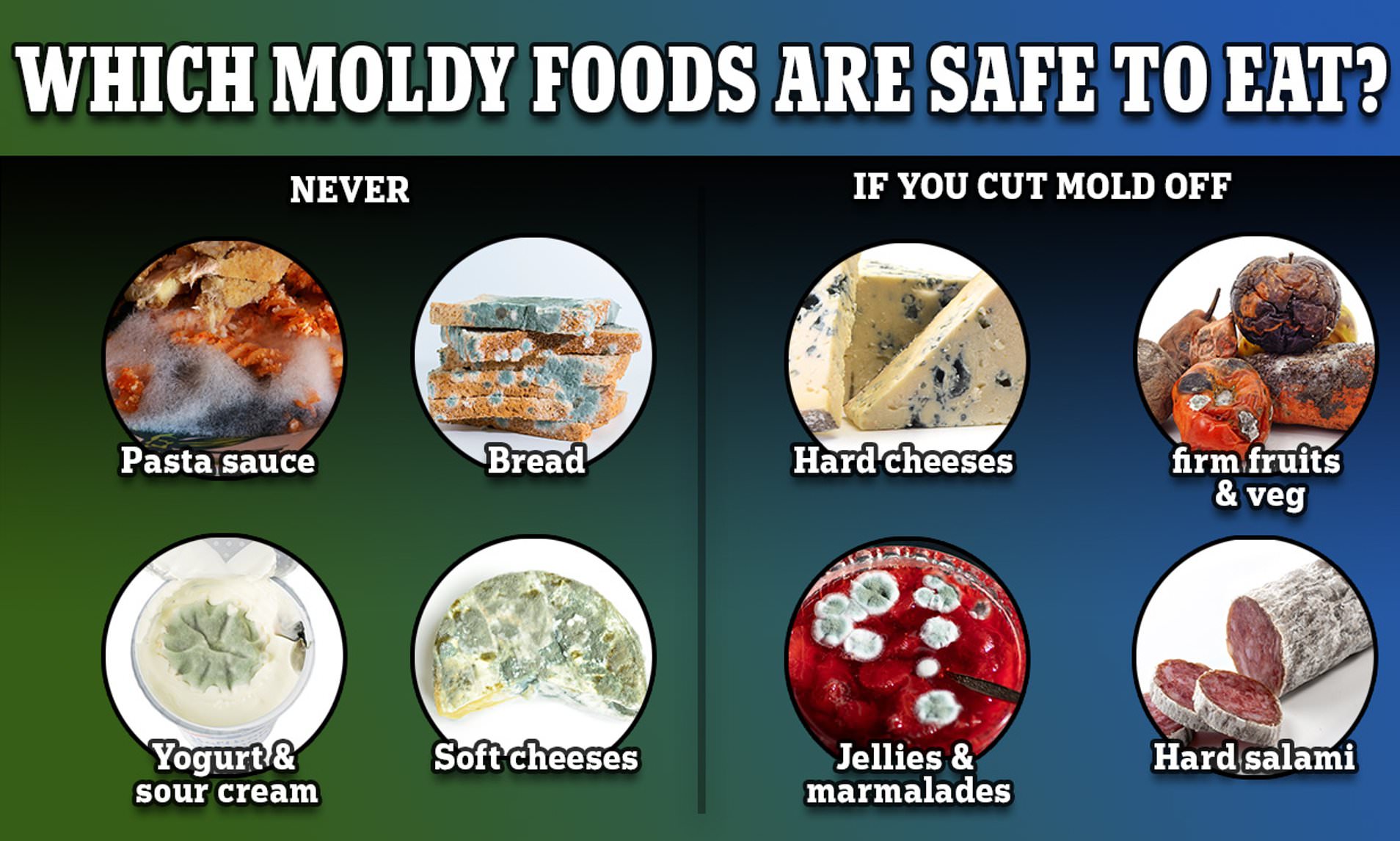
A good rule of thumb is the “Hard vs. Soft” test. On hard foods like cheddar cheese or salami, you can cut an inch around the mold spot and the rest is usually fine. But on soft, porous foods like bread, yogurt, jam, or leftover lasagna? The mold has likely sent its tiny little legs (hyphae, if you’re fancy) deep into the food. That’s a hard pass. You’re not saving that PB&J; you’re inviting trouble to dinner.
The “I’ll Just Eat Around It” Lie
We all tell ourselves this. It’s the biggest lie in the kitchen, right after “I’ll use it before it expires.” You look at a strawberry with one white fuzzy spot and think, “I’ll just cut that part off. It’s fine.” But you know, deep in your soul, that the entire berry now tastes like damp basement.
 What happens if you eat mold?
Let’s be honest: eating mold is often a texture problem more than a health one. That single fuzzy bite ruins the whole experience. Your brain can’t un-see it. Suddenly, every bite of that bagel tastes like you’re licking a windowsill. You’re not sick; you’re just traumatized by the mouthfeel.
And then there’s the “pizza leftover” dilemma. You order a giant pizza. Three days later, you find the box. It’s fuzzy. You debate it for a solid five minutes. You poke it. You smell it (bad idea, as you’re now inhaling mold spores). A small voice says, “Just scrape it off. It’s just cheese.” Don’t listen to that voice. That voice is the same one that convinced you to “taste-test” that ketchup packet from your glove compartment.
The Verdict: You’re Probably Okay
Here’s the final, easy-going truth: If you accidentally eat a tiny bit of mold on a piece of bread or a strawberry, you are not going to sprout a mushroom from your ear. You will not become Patient Zero for a new fungal zombie apocalypse. Your body is a masterpiece of garbage disposal. It will handle it.
You might feel a little gross for a few minutes. You might drink some water and question all your life choices. But by the time you finish that cup of coffee, you’ll have forgotten about it. The only real danger is the psychological scar of the “fuzzy bite.”
So, next time it happens, just laugh at yourself. You are a proud member of the human race, a species that has survived ice ages, plagues, and eating entire jars of questionable pickles. A little bit of jailbreak mold is just a funny story for later. Spit it out, shrug it off, and grab a new slice. Your stomach has already been through worse, I promise.