
So, you've spotted that golden jar of ghee at the store, and now you're wondering what it actually is. Is it some mystical, wizard-brewed butter? Spoiler alert: It’s simpler than you think. Let’s chat about it over our imaginary coffees, because this stuff is pure kitchen magic.
The Short Answer: It's Butter's Overachieving Cousin
At its heart, ghee is just butter that went to the gym and lost all its water weight. Seriously, that’s the whole trick. You take regular butter—the stuff you spread on toast—and you cook it gently until the water evaporates and the milk solids separate.
Then, you strain those solids out. What’s left? A pure, golden fat that smells like toasted nuts and dreams. It’s butter, but better—and way more stable.
Must Read
So, What Exactly Is in That Jar?
Let’s break it down like a science project, but a tasty one. The final product is almost 100% milk fat. No water, no milk proteins (casein or lactose), just the good stuff.
That’s why people with lactose issues often handle ghee fine. Those troublemaking milk solids? Gone. All that remains is a smooth, nutty, golden liquid that chefs and grandmas fight over.
The Raw Ingredients: Butter and Heat
You only need two things to make ghee: unsalted butter and a little patience. That’s it. Oh, and a pot you don’t mind scrubbing. The butter is usually from cows, but you can make it from buffalo or goat milk, too—cow butter is just the superstar.
When you heat that butter, three things happen. First, the water hisses and steams away (drama queen moment). Second, the milk solids sink to the bottom and start to brown—this is where the nutty flavor comes from.
Third, the fat purifies itself. You strain out the browned solids, and poof—you have liquid gold. No weird chemicals, no preservatives. Just fat, heat, and time.
 15 Health Benefits of A2 Gir Cow Ghee You Must Know – Honey and Spice
A Quick Detour: What About "Clarified Butter"?
You might hear people say ghee is the same as clarified butter. Close, but not quite twins. Clarified butter is just heated enough to remove water and milk solids—it stays pale and mild.
Ghee, though? We let the milk solids brown for a few extra minutes. That roasting gives ghee its deep, caramel-like taste. It’s like the difference between plain toast and a perfectly toasted croissant.
Is There Anything Else Hiding in There?
If you buy store-bought ghee, check the label. It should list only one ingredient: "ghee" or "clarified butter." Some cheap brands might sneak in vegetable oils or additives. Don't let them fool you! Real ghee is a one-hit wonder.
If you see "butter oil" or "anhydrous milk fat," that’s also legit—it’s just the fancy food-nerd name for the exact same thing. You’re still getting that pure, toasty fat that makes roasted veggies taste like a hug.
Why Does Ghee Look So Different from Butter?
Butter is about 80% fat and 20% water. Ghee flips that script—it’s 99.9% fat with zero water. That’s why it’s solid at room temperature but melts into a smooth pool on hot food.
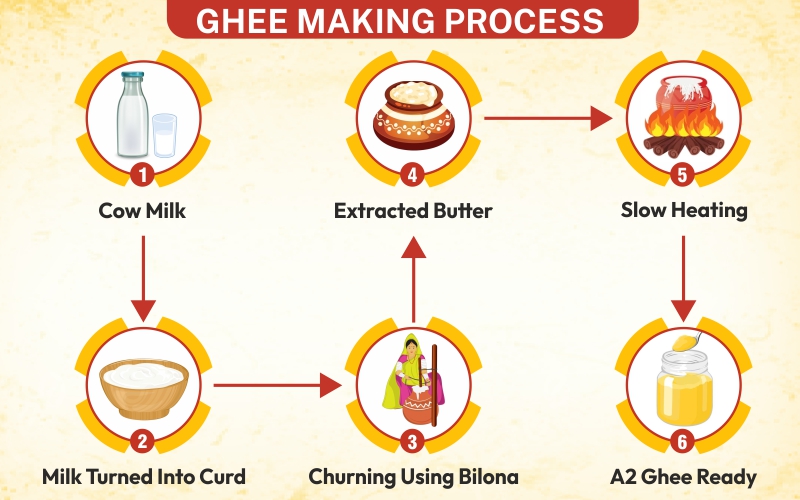 What is A2 Ghee | Benefits, Uses and Types
It also has a crazy high smoke point (around 485°F or 250°C). You can sauté, fry, or bake with it without it burning into a smoky mess. Butter? It cries for help at 350°F. Ghee just laughs.
The Fun Science: Why It's So Good for You (Maybe)
Okay, I’m not a doctor, but ghee is packed with fat-soluble vitamins like A, D, E, and K. Because the water is gone, these nutrients are super concentrated. Plus, the short-chain fatty acids (like butyrate) are great for gut health—allegedly.
Does that mean you should drink it by the spoonful? Please don’t. But using it to cook your eggs? Yes. Drizzling it on popcorn? Absolutely. It’s fat, after all—delicious, but still calorie-dense. Moderation, my friend.
A Final, Very Important Point
If you ever make ghee at home, don’t walk away from the stove. You will forget, the solids will burn, and your kitchen will smell like a tragedy. Trust me—I’ve done it.
So next time you see that jar, remember: ghee is butter’s confident, lactose-free, high-heat-loving cousin. It’s made of nothing but fat, a little heat, and ancient kitchen wisdom. Now go forth and cook something nutty and golden. You’re welcome.