So you’ve bought a ham. Maybe it was on sale. Maybe you’re hosting a holiday and forgot to delegate side dishes. Maybe you just really love salt. Whatever the reason, you are now staring at a hunk of pork that looks like it lost a fight with a smoke machine, and you’re thinking: What temperature do I cook this thing? Let me save you from a dry, rubbery disaster.
The Magic Number: 325°F (163°C) — Yes, That’s It
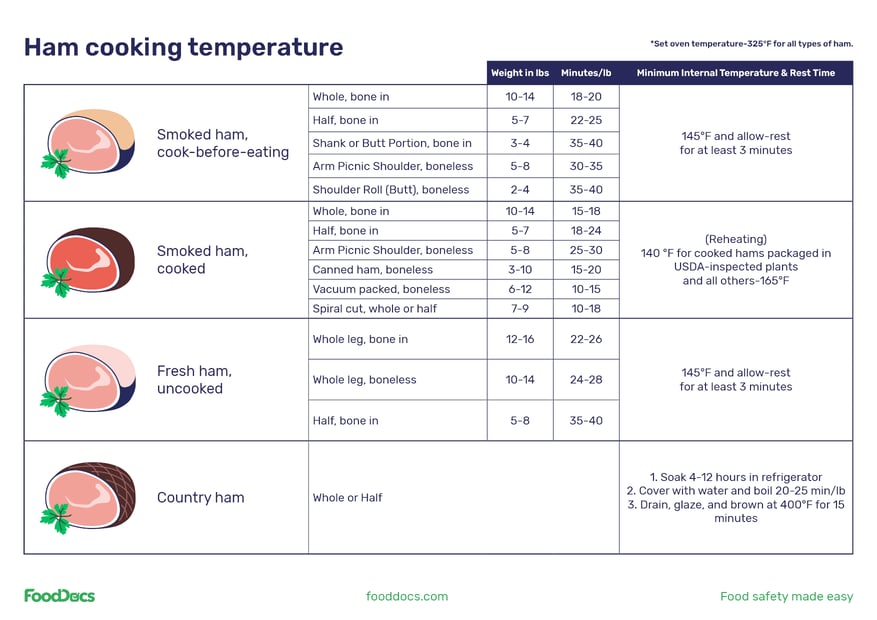
Set your oven to 325°F. This is the Goldilocks zone for ham. Not too hot, because you’ll turn it into shoe leather. Not too cold, because you’ll be eating raw pig at midnight while everyone else has pie. 325°F is your new best friend.
Why 325? Because it’s the temperature that gets the ham just right without drying it out faster than a desert wind. The USDA have declared this the official “ham heating highway.” I swear they have a committee for this.
Must Read
But What About the Internal Temperature?
This is where people panic. You’re supposed to stick a thermometer in there like you’re performing a medical exam on a pig corpse. Calm down. It’s easy. If your ham is pre-cooked (which most store-bought hams are — read the label, lazybones), you only need to heat it to 140°F (60°C).
If your ham is raw (also called “fresh ham”), you need to go to 145°F (63°C). Don’t mess with raw ham — it’s basically a pork shoulder that hasn’t had its coffee yet. 140°F is the “I’m warm enough to party” temp; 145°F is the “I promise I won’t give you food poisoning” temp.
The Great Ham Lie: “Spiral-Cut Hams Are Pre-Cooked”
Yes, they are. But here’s the trick: they dry out faster than a politician’s promise. Spiral-cut hams have all those beautiful slices, which means more surface area for moisture to escape. So you cook them lower and slower. Still at 325°F, but cover them tightly with foil. Foil is your ham’s security blanket.
I once forgot to foil a spiral ham. It looked like a mummy in a sauna — all shriveled and sad. My guests thought it was beef jerky. Don’t be me.
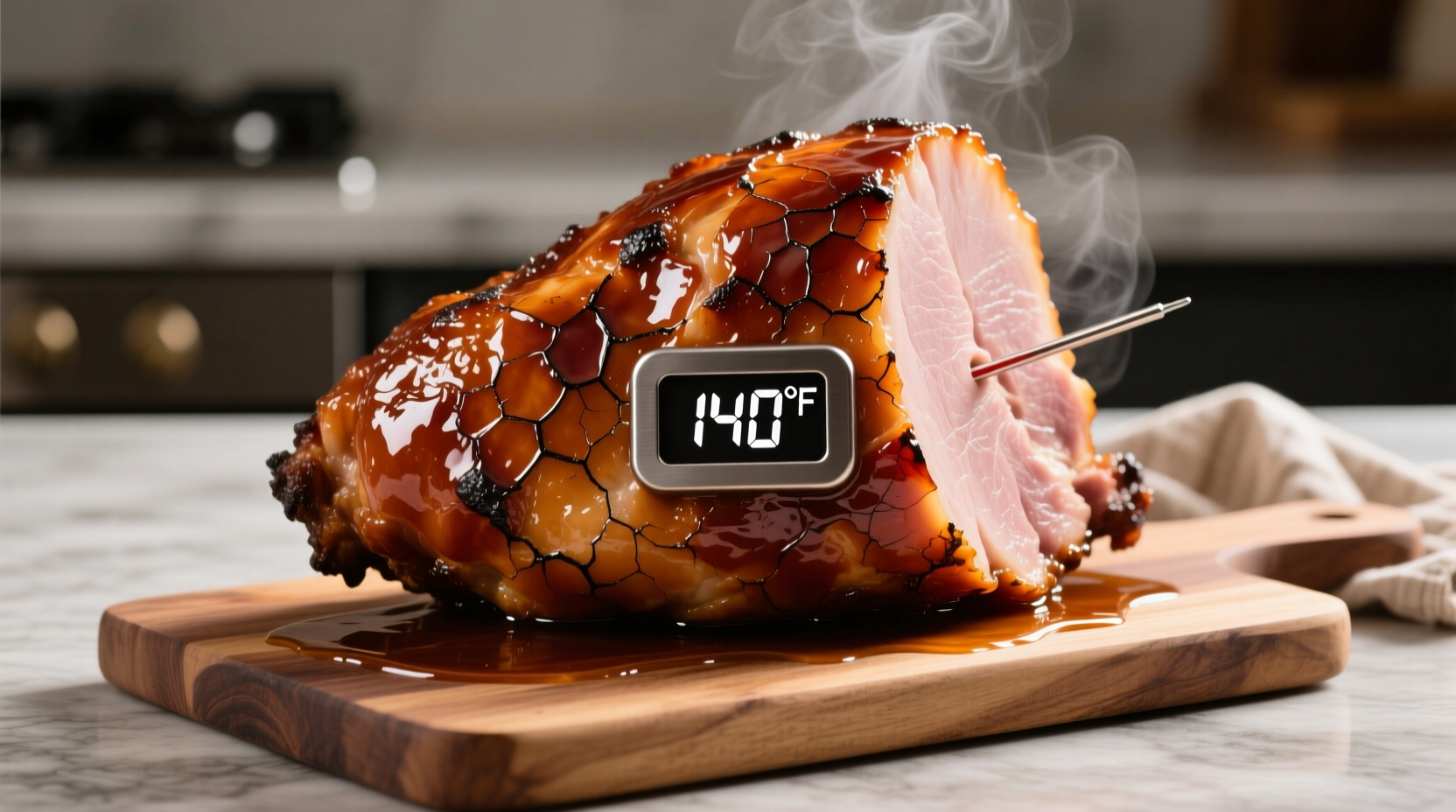 Ham Cooking Temperature Guide: Safe 140°F or 145°F
Time: The Cruel Gamble
How long? Good question. For a pre-cooked ham, plan for 15 to 20 minutes per pound at 325°F. That’s about 2.5 hours for a 10-pounder. For raw ham, bump it to 20 to 25 minutes per pound. But don’t trust the clock — trust the thermometer.
Here’s a shocking fact: ham will keep cooking after you pull it out of the oven. The internal temperature rises by about 5–10°F. So when your thermometer hits 135°F for pre-cooked ham, pull it out and let it rest. It’ll sneak up to 140°F like a ninja with a heat lamp.
The Glaze: A Sticky Betrayal
Everyone wants a glossy, Instagram-worthy ham. So you smear on honey, brown sugar, and mustard like you’re frosting a cake. Don’t put the glaze on too soon. If you do, the sugars burn, and your ham ends up tasting like a campfire marshmallow that fell in the dirt.
Glaze your ham during the last 30 minutes of cooking. Brush it on, crank the heat to 425°F for the final 10 minutes if you want a crisp crust. But watch it like a hawk — I once glazed too early and my ham looked like Darth Vader’s helmet. Not a good look for Easter brunch.
The Surprising Truth About “Ham” in Cans
Yes, you can buy a canned ham. It looks like a giant metal Spam. It is already fully cooked. You just need to heat it to 140°F. But here’s the wild part: canned hams are often so full of water and salt they barely count as ham. They’re like the diet soda of pork products. Don’t tell your guests — they’ll never know if you glaze it heavily.
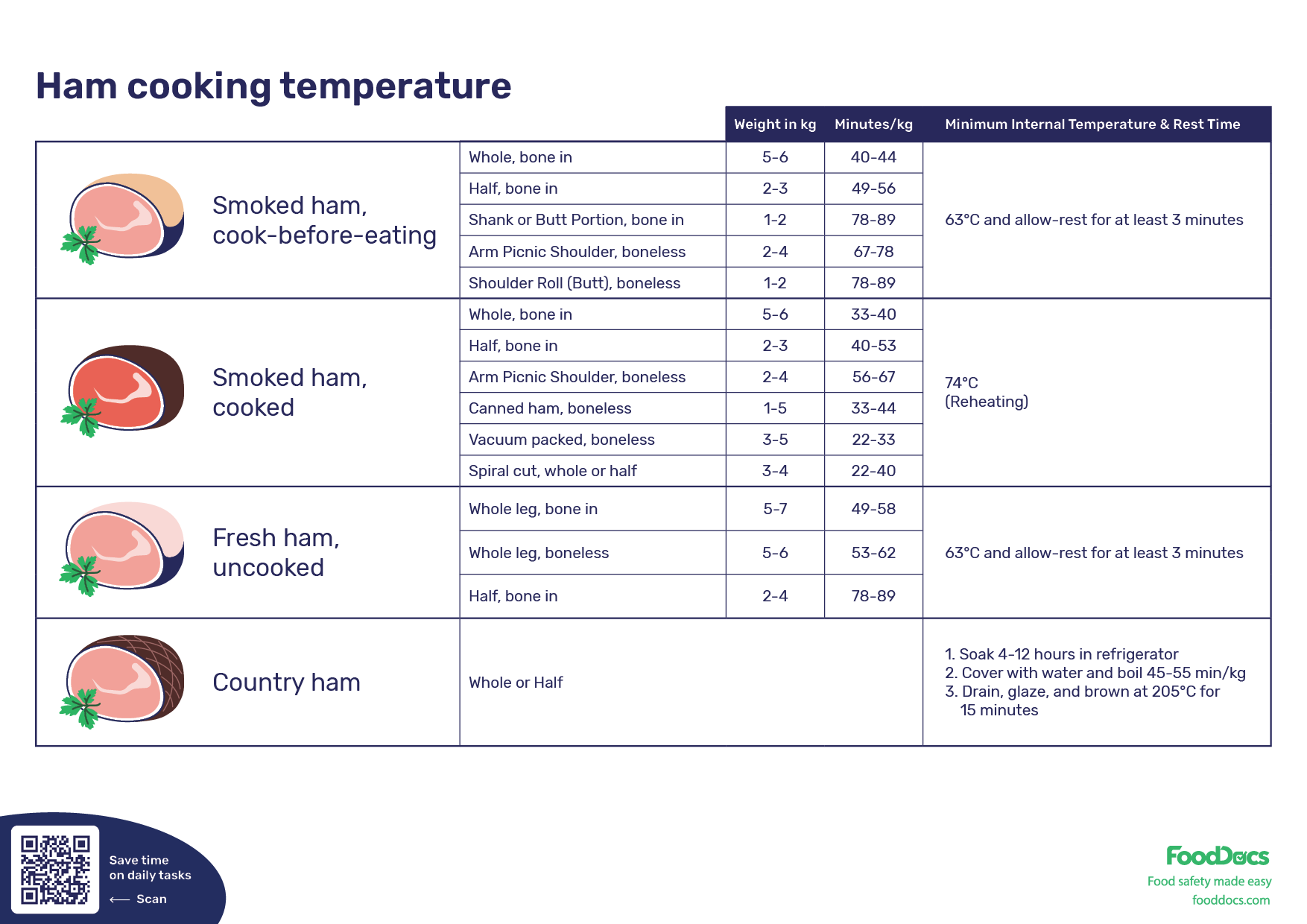 Ham Cooking Temperature Chart | Free Download
One time I heated a canned ham without rinsing it first. The glaze turned into a salty, syrupy horror show. My uncle said it tasted like a “sea cow’s tears.” Learn from my mistakes, people.
Let It Rest: The Forgotten Step
When the ham is done, let it rest for 15–20 minutes. Do not slice it immediately. That’s like waking a sleeping baby — you’ll get nothing but screaming (or, in this case, dry meat). Resting allows the juices to redistribute, so every bite is moist and flavorful.
I once sliced a ham straight from the oven. The juices ran out like a cheetah fleeing a lion. My ham became a desert. I had to serve it with a side of gravy to apologize. Rest your ham. Your taste buds will thank you.
Final Nonsense Fact
Did you know that ham is technically not pork? Just kidding — it is. But the word “ham” comes from Old English “hamm,” meaning the back of the knee. So you’re essentially cooking a pig’s butt-knee. And you’re worried about temperature? You’re doing fine.
Now go forth, heat that ham to 325°F, check that internal temp, and glaze like a boss. And if all else fails, blame the weather. That’s what I do.