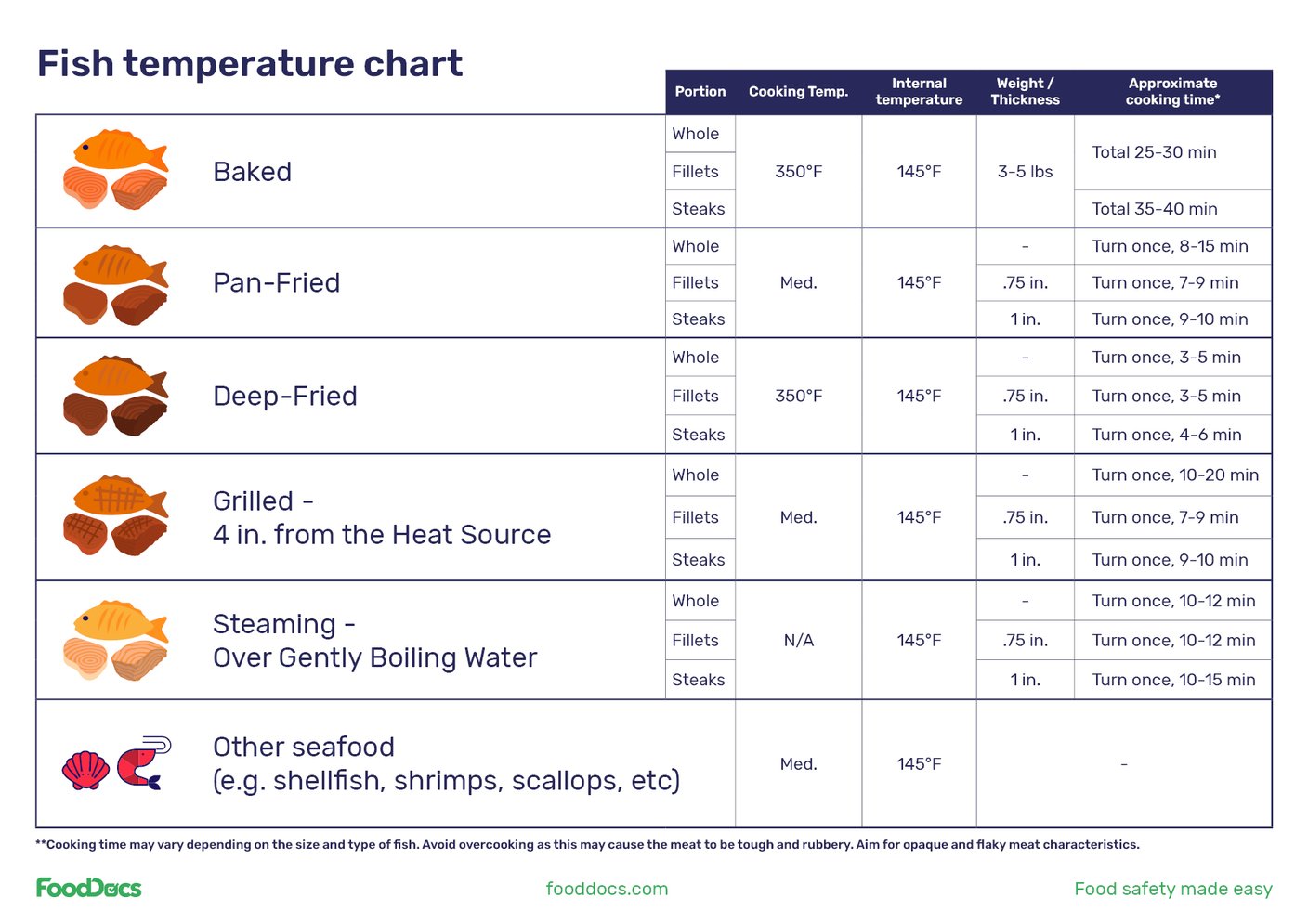
So, you’ve got a beautiful piece of fish in your kitchen. Maybe it’s a flaky cod, a buttery salmon, or a fancy tuna steak. Now you’re staring at it, wondering, “What temp does this thing need to be?” Don’t worry—I’ve got you. Let’s dive in, no life jacket required.
The Magic Number: 145°F
The official answer from the food safety folks is 145°F (63°C). That’s the internal temperature where fish is fully cooked and safe to eat. But here’s the kicker: that’s for standard fish—think cod, haddock, or tilapia.
If you cook it to exactly 145°F, it’ll be firm, flaky, and totally done. No raw centers, no “is this sushi?” debates. You can check with a trusty instant-read thermometer. Stick it in the thickest part, like you’re giving the fish a tiny, harmless hug.
Must Read
But wait—what about those fancy restaurants? They serve salmon that’s medium-rare and still glistening. Yeah, that’s a whole different party. Let’s talk about that.
Salmon: The Rebel of the Sea
If you’re cooking salmon, you have options. The USDA says 145°F is safe, but many chefs pull it at 120°F to 125°F for a medium cook. At that temp, it’s still silky and moist, not dry and sad.
I personally like mine at 125°F. It’s pink in the center, flakes beautifully, and makes you feel like a gourmet chef—even if you’re just wearing pajama pants. But if you’re cooking for kids or anyone with a weaker immune system, stick to 145°F. Safety first, flavor second (but both are totally achievable).
Pro tip: Let the salmon rest for three minutes after cooking. It’ll coast up to about 130°F, which is the sweet spot. You’re welcome.
Tuna, Swordfish, and the “Steak” Fish
These guys are denser, like the bodybuilders of the fish world. For tuna, you actually want it rare—like, just seared. Aim for 115°F to 120°F internal. If you cook it to 145°F, it’ll be dry and crumbly, and you’ll cry a little.
Swordfish is more forgiving. Cook it to 135°F to 140°F for a moist, steak-like texture. It’s okay to be a little medium here. Your thermometer is your best friend—don’t be shy about using it.
And please, don’t guess. Guessing is why we have sad, rubbery fish. You deserve better.
What About White Fish? (Cod, Halibut, Tilapia)
These are the “flaky” team. They need to hit 145°F to be safe and delicious. Unlike salmon, you don’t want them undercooked—it’s weird and mushy, like a wet sponge.
Cook them until they’re opaque and flake easily with a fork. If you press the fork into the thickest part and it separates like a stack of papers, you’re golden. If it resists, keep going.
Also, watch out for the carryover cooking effect. Fish keeps cooking after you pull it from the heat. So if you take it off at 145°F, it might climb to 148°F. That’s fine—just don’t panic.
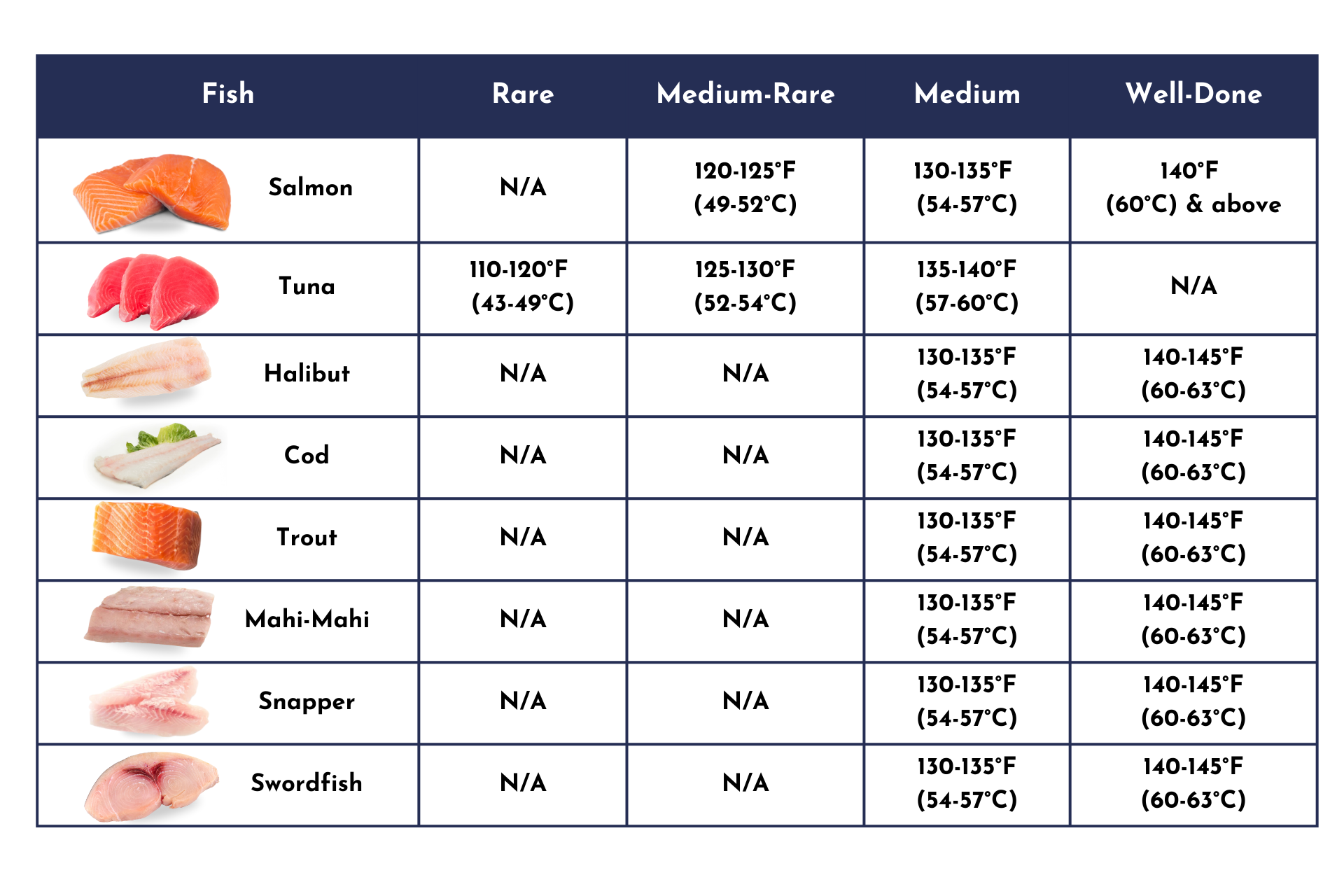 Fish And Seafood Internal Temperature Chart – EILBI
Shrimp, Scallops, and the Little Guys
These aren’t fish, but we love them anyway. Shrimp should be cooked to an internal temp of 120°F—they’ll turn pink and curl into a C shape. If they curl into an O, they’re overcooked and rubbery. You want a “C,” not an “O.” Think of it as alphabet pasta with benefits.
Scallops? Same deal. Cook them until they’re 120°F inside, golden brown on the outside. Overcook them and they become chewy little erasers. Nobody wants a school supply dinner.
Quick cheat sheet: For most fish, 145°F is the safe zone. For tuna and salmon, you can go lower if you’re feeling adventurous. And always, always use a thermometer. Your eyes can lie; a thermometer is brutally honest.
The “Don’t Ruin It” Checklist
1. Pat the fish dry with a paper towel. Wet fish steams, not sears. We want sear, not steam bath.
2. Season generously with salt, pepper, and maybe some lemon. Fish is a blank canvas—paint it well.
3. Preheat your pan until it’s hot enough to make water droplets dance. Then add oil, then the fish.
4. Don’t move the fish for the first 3-4 minutes. Let it form a crust. If you poke it, it will stick and tear. Be patient—this is meditation with dinner.
5. Check the temp at the thickest part. Pull it off, rest it, and enjoy your victory.
And if you mess up? It’s okay. I once served salmon that was 160°F and dry as a desert. I ate it with a gallon of lemon juice and a smile. We all have bad fish days.
A Little Science (But Make It Cute)
Fish cooks fast because it has less collagen than meat. That’s why it goes from raw to rubber in a blink. The proteins in fish denature (fancy for “unravel”) at around 140°F, which is why 145°F is the sweet spot.
Think of it like a hot tub for the fish. It’s relaxing its proteins. At 120°F, the tub is warm and cozy. At 145°F, the tub is steamy and done. At 160°F, the tub is boiling, and the fish is screaming “help.” Don’t boil the fish.
So, what have we learned? 145°F is your safe baseline. Salmon can go a little lower. Tuna almost stays raw. And always, always trust your thermometer more than your gut (unless your gut is a certified chef).
The Uplifting Conclusion (You Knew This Was Coming)
You’ve got this. Whether you’re cooking for a fancy date or just yourself on a Tuesday night, you now know the perfect temp. Fish is forgiving if you treat it with love and a little heat. And if you mess up, that’s what takeout is for.
But here’s the real secret: Cooking fish isn’t just about the temperature. It’s about the moment—standing over the stove, watching the edges turn golden, knowing that you’re nourishing yourself or someone you love. That flaky, moist bite you’re about to take? It’s a small celebration of being alive. And you deserve every delicious, perfectly cooked morsel.
So preheat that pan, grab that thermometer, and cook like the kitchen hero you are. You’re not just making dinner—you’re making magic at 145°F. Go get ‘em, fish whisperer.