
So there I was, a few weekends ago, staring at a ball of dough I’d spent the whole afternoon proofing. My kitchen looked like a flour bomb had gone off, and my cat was trying to eat a stray piece of pepperoni. I’d done everything right—kneaded it, let it rise, stretched it into a perfect, uneven circle. Then came the moment of truth: I slid it onto the preheated stone and just… stared at the oven dial. What temp to cook a pizza? Not for the first time, I felt like I was trying to solve a delicious, cheesy riddle.
Trust me, I get it. We’ve all been there, sweating over that number like it’s a secret handshake to pizza greatness. You want that perfect crust—crispy on the outside, chewy on the inside—without burning the toppings. So let’s cut the mystery and talk about the one temperature that will save your pizza night: 500°F (260°C). Yeah, that’s the sweet spot for home ovens, and here’s why it’s non-negotiable.
The Science of Sizzle (And Why 500°F is Your Best Friend)
Here’s the deal: pizza is a race against time. You need the heat to be so intense that the dough puffs up and gets those lovely blistered spots before the cheese turns into a greasy mess. At 500°F, the water in the dough turns to steam super fast, creating that airy, crunchy structure. It’s like giving your dough a sugar rush—but in a good way.
Must Read
If you go lower—say, 375°F—you’re basically baking a bread bowl with sauce on top. The crust will be dense, and the cheese will overcook before the bottom even thinks about browning. I learned this the hard way, with a pizza that tasted like a sad, salty cracker. You don’t want that.
And if you go higher, like 550°F or above? That’s volcanic territory. Most home ovens can’t maintain that heat evenly, so you’ll get a burnt edge and a raw center. Unless you’ve got a fancy wood-fired oven in your backyard (and if you do, invite me over), stick to 500°F.
What About the Stone or Steel? (Yes, It Matters)
Now, here’s a little secret: the temperature you set on the dial isn’t the whole story. Your oven might say 500°F, but your pizza stone or steel needs time to catch up. Preheat that thing for at least 45 minutes to an hour. I’m not joking—set a timer, then ignore it. The stone acts like a heat battery, storing energy so it can blast your crust the second you slide the pizza on.
If you use a cold stone, you’ll get a soggy bottom. And nobody—nobody—wants a soggy bottom pizza. Pro tip: Put the stone on the lowest rack, right near the bottom heating element, to mimic a wood-fired oven’s floor.
 How To Cook Pizza Dough Temperature
The Cheat Sheet: Different Pizzas, Same Temp
Okay, so you’ve got your 500°F oven ready. But what if you’re making a thin-crust, a deep-dish, or a frozen pizza? Don’t overthink it. The principle stays the same: high heat for a short time. For a classic Neapolitan or New York-style slice, bake for about 8 to 12 minutes at 500°F. Keep an eye on it—the cheese should bubble and brown slightly, not weep.
For a thicker, Chicago-style deep dish? Lower the rack to the middle and add 5 extra minutes at the same temp. The goal is to avoid burning the bottom before the top dough cooks through. And frozen pizza? Always follow the box, but crank it up to 450°F max—those flimsy crusts burn faster than your enthusiasm after a long day.
When to Break the Rules: The Broiler Hack
Here’s where I get a little rebellious. If your oven runs weak (like mine does), you can cheat: preheat at 500°F, then finish under the broiler for 30 seconds. It gives the top a char that tastes like a pizzeria’s. But careful— I once forgot a pizza under the broiler and ended up with a charcoal frisbee. Your bacon bits will cry.
The key is to watch, not wander off to check your notifications. Pizza is a high-drama cooking event—it demands your full attention. You can scroll Instagram while the oven preheats, but once the pizza goes in, become a statue.
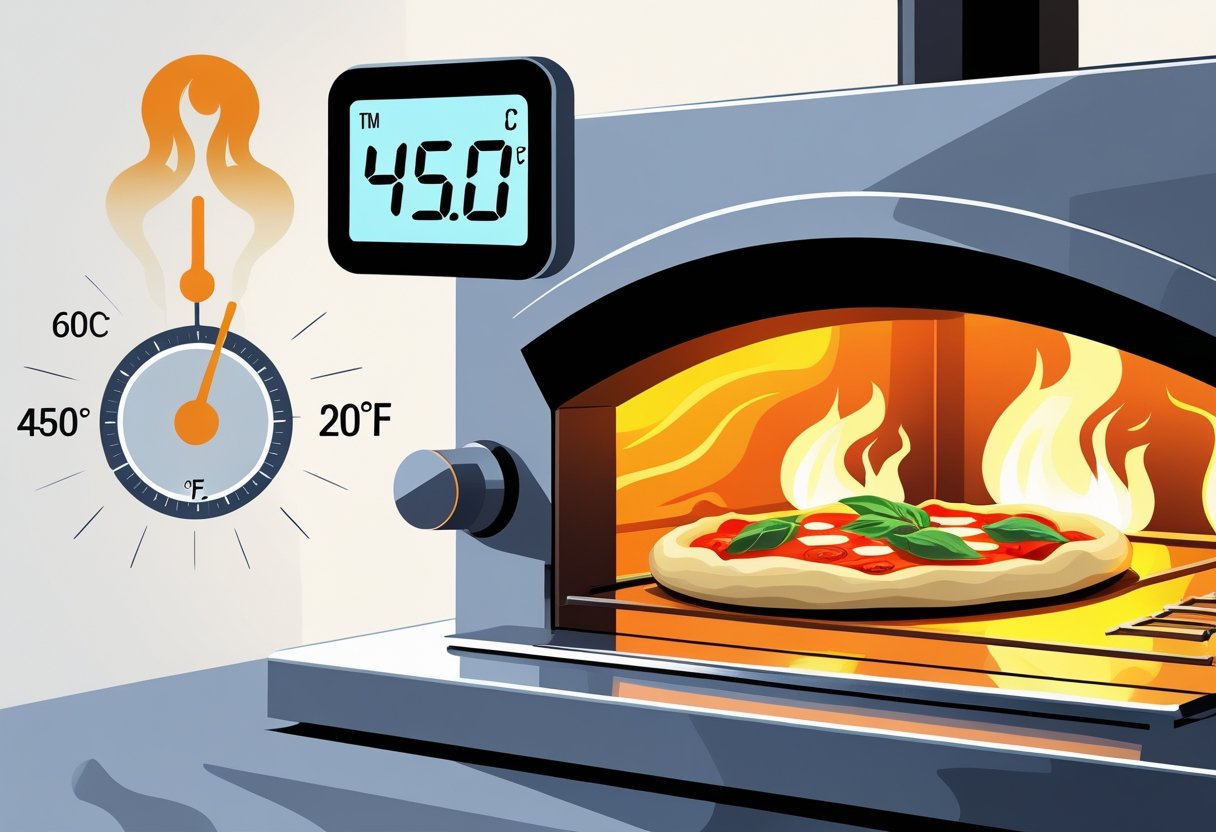 What Temperature To Cook Pizza Dough For Perfect Crispiness Every Time.
But What If I Don’t Have a Stone?
No stone? No problem. Just flip a baking sheet upside down and preheat it as your “stone.” It works surprisingly well—better than a cheap pan. Or use a cast-iron skillet, which gets screaming hot and gives you a cornbread-like crust. Anything metal will work, as long as it’s preheated to 500°F.
Do not use a perforated pizza pan, unless you want a limp, pale crust. Those are for reheating leftovers, not making magic. You deserve magic.
The Final Slice: Trust Your Eyes, Not Just the Thermometer
Look, temp guides are great, but your senses are better. When the crust is golden-brown with dark spots and the cheese is melted with tiny brown bubbles, it’s done. Pull it out. Let it rest on a wire rack for two minutes—that stops the steam from making the bottom soggy.
And if you see a slightly burnt edge? Perfect. That’s called leoparding, and it’s the sign of a well-baked pie. You didn’t mess up; you achieved artisan status. Pat yourself on the back, slice it up, and enjoy the fact that you just conquered the eternal question: what temp to cook a pizza. Spoiler: it was 500°F all along.