I remember the first meatloaf I ever made. It was a Tuesday, I was twenty-two, and I thought I’d nailed adulting. I pulled it out of the oven, and the outside was a blackened, charred brick—the inside, a cold, pink horror show. That's when I learned the hard way that temperature is not a suggestion for meatloaf; it is a commandment.
Let’s be real: nobody wants a meatloaf that’s either a hockey puck or a bacteria farm. So, what’s the magic number on that dial? You’re looking at a 350°F (175°C) oven. It’s the Goldilocks zone—hot enough to brown the outside and give you those delicious crusty edges, but gentle enough to cook the middle through without drying it out. (Yes, your grandma was right, but for totally scientific reasons, not just “because I said so.”)
The Sweet Spot: 350°F Isn’t Just a Number
That 350°F mark is your best friend for a few reason science-y reasons. At this temperature, the fat in the ground meat renders slowly, keeping the loaf moist and tender. Go hotter, say 400°F, and you’ll get an amazing crust but risk turning the inside into sawdust by the time the center hits safe temp.
Drop it down to 325°F, and you’ll have a more uniform cook, but you’ll lose that glorious caramelized top we all fight over. So, 350°F is the compromise that makes everyone happy, including your oven. (And honestly, can you trust an oven that’s trying to compromise? Usually yes, actually.)
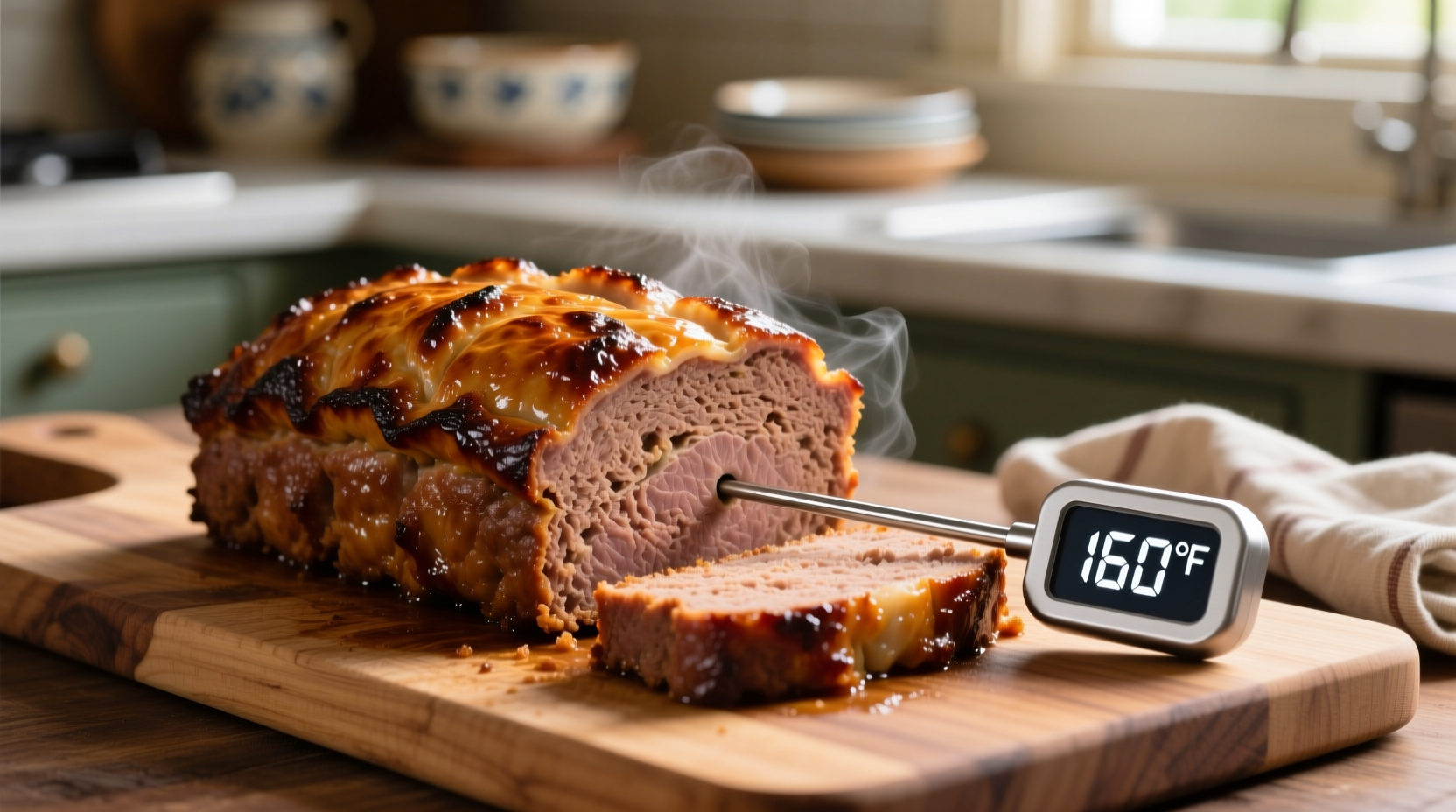
Of course, the oven temp is only half the story. The internal temperature of the meat itself is the real hero here. You must, must, use an instant-read thermometer. It’s not fancy; it’s survival. Poke it into the center of the loaf, and you’re aiming for 160°F (71°C) for beef, pork, or a blend.
Why 160°F Isn’t Negotiable (Sorry, Medium-Rare Lovers)
I know, I know. You like your steak blushing pink. But meatloaf isn’t a steak. It’s a mix of ground meat, breadcrumbs, eggs, and your sweaty hands—a perfect playground for bacteria. The USDA and common sense say 160°F is the kill-zone for E. coli and Salmonella. Don’t fight the man on this one; fight him about taxes instead.
Here’s a little trick: pull the meatloaf out when it hits 155°F. Yes, you read that right. As it rests (and you must let it rest for 10 minutes), the carryover cooking will bump it up to the safe 160°F. This keeps it from turning into a dry sponge. Resting is like a spa day for your dinner—let it unwind.
But what about your loaf pan? That’s where things get spicy. If you use a deep metal pan, you’re basically steaming the meatloaf. Let it bake in a loaf pan: 350°F, but expect a longer bake time, and the top won’t brown well. For a crusty, dark exterior, form it free-form on a sheet pan. More surface area = more delicious edges. (Sacrilege? Maybe. Delicious? Absolutely.)
 Easy Meatloaf Recipe
A Few Curveballs (Because Life Is a Jerk Sometimes)
If you’re using ground turkey or chicken, drop the target internal temp to 165°F. Poultry needs that extra heat safety-net. Also, your oven’s idea of 350°F might be off by 25 degrees. Oven thermometers are cheap and ruin fewer dinners than guessing. Trust the gadget, not the knob.
One more thing: shape matters. A flat, wide loaf cooks faster than a thick, tall one. Adjust your time accordingly. And don’t overmix the meat. Mix it just until combined; overworking it makes it tough. You’re building a loaf, not a cardboard box.
And let’s talk about a glaze—ketchup, brown sugar, mustard, whatever your heart desires. Add it in the last 15-20 minutes of baking. Slap it on too early, and the sugar burns into black tar. Treat it like a late-arriving guest: welcome, but not there from the start.
So here’s your cheat sheet: Oven at 350°F. Internal temp to 160°F (155°F + rest). Free-form for crust, loaf pan for soft. Thermometer is king. That’s it. No mystery, no voodoo. Just a hot box and some patience.
My second meatloaf? It was a masterpiece. Golden brown, moist, and safe enough to feed a cardiologist. I served it with a knowing smile, because I finally understood that the magic wasn’t in the recipe—it was in the temperature. You’ve got this. Go preheat your oven, and remember: 160°F is your date, 350°F is your venue. Don’t stand them up.