Let’s talk ham. Not just any ham, but the holy grail of holiday centerpieces. You want it juicy, not a desert-dry disaster, right? The secret is all in the temperature. Trust me, this is way more fun than it sounds.
Why Temperature Is Your Ham’s Best Friend
Think of your ham like a sunbather. Too much heat, and it gets crispy and sad. Too little, and it’s a cold, raw mess. The perfect ham is a goldilocks situation.
But here’s the kicker: most hams you buy are already fully cooked. Yes, really! That means you’re not cooking it to “make it safe”—you’re just reheating it to glory. Mind-blowing, right?
Must Read
The Magic Number: 140°F (60°C)
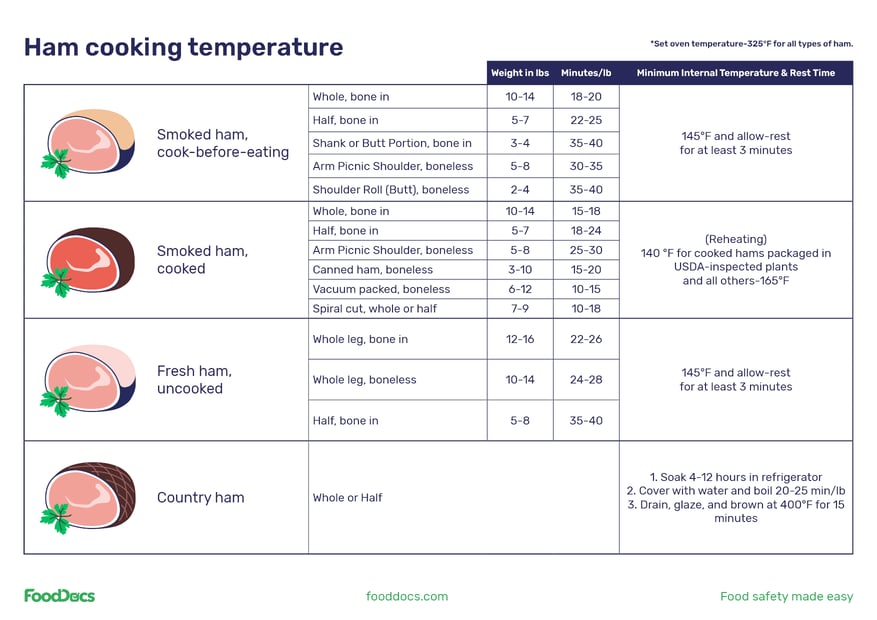
Set your oven to 325°F (163°C). That’s the sweet spot for even heating. But your ham’s internal temperature? Shoot for 140°F (60°C). That’s the finish line.
Why 140? Because it’s hot enough to melt your butter glaze and kill any lurking bacteria from handling. But it’s low enough to keep the meat tender and juicy. It’s the ham equivalent of a warm hug.
Fun fact: If you go past 150°F, your ham will start to dry out and get tough. Don’t do that. It’s a tragedy.
But Wait—What About a Raw Ham?
Did you buy a raw, uncured ham? (You’re a brave soul.) Then you need to hit 145°F (63°C) for safety. That’s the USDA’s rule for pork. Then let it rest for three minutes before carving. That rest is non-negotiable.
That raw ham is a rare beast. Most supermarket hams are “city hams”—already smoked, cured, and cooked. Check the label: if it says “fully cooked,” you’re on easy street. If it says “cook before eating,” you’re on adventure mode.
The Quirky Ham Thermometer Dance
You need a meat thermometer. Not a fork. Not a guess. A thermometer. Stick it into the thickest part of the ham, avoiding the bone. The bone lies—it’s hotter than the meat.
Imagine you’re a ham detective. The thermometer is your magnifying glass. You’re solving the mystery of “Will this be delicious?” And the answer is yes—if you hit that 140.
Silly truth: Some people swear by the “pop-up” plastic timers that come with cheap hams. Those are like fortune cookies—sometimes right, often wrong. Use a real digital thermometer. Be a pro.
Glaze Like a Boss (But Watch the Clock)
You can slather on a brown sugar glaze. Or a honey mustard one. Or even a maple syrup and Dijon concoction—we don’t judge. But here’s the rule: add the glaze only in the last 20-30 minutes of cooking.
Why? Because sugar burns. If you glaze too early, you’ll get a black, bitter crust. That’s not “caramelized”—that’s “tragedy.” Wait until the ham is almost at 140, then paint it on. Then crank the heat to 400°F for a few minutes to get that sticky, glossy finish.
That final burst of heat is theatrical. Your kitchen will smell like a holiday dream. Your neighbors will knock on the door.
 What Temperature Should Cooked Ham Be? A Guide to Safely Cooking Ham
The Great Ham Size Debate
Big ham? Little ham? Cooking time changes, but the internal temp stays the same. A 10-pound ham might take 2.5 hours. A 4-pound ham might take 1 hour. Always trust the thermometer, not the clock.
Here’s a weird one: if you buy a spiral-sliced ham, it cooks faster. The slices create air gaps, so heat penetrates quicker. Check it at 45 minutes per pound, but don’t be shy—poke it early.
Spiral hams are also way more fun to carve. They’re pre-sliced. You can pull off a perfect spiral ribbon and pretend you’re a culinary Picasso. Just don’t overcook it, or those slices turn into ham-flavored cardboard.
What Happens If You Mess Up?
If you undercook (below 140 for a pre-cooked ham), you’re fine—just heat it more. It won’t make you sick; it’ll just be cold. If you overcook, you get a dry, salty brick. That’s the real danger.
Here’s a confession: I once forgot a ham in the oven for an extra hour. It was like chewing on a leather shoe with honey. My grandma still brings it up. Don’t be me.
But hey, if you do mess up, drown it in gravy. Gravy fixes everything. It’s ham’s get-out-of-jail-free card.
Why This Topic Is Actually Hilarious
Think about it: we argue about ham temperatures the way people argue about pineapple on pizza. It’s a silly, passionate debate over a dead pig’s thigh. And yet, it matters.
There’s a whole subreddit dedicated to “ham temp fails.” People post photos of blackened hams and weep in the comments. It’s oddly wholesome. You never want to be a star in that subreddit.
Also, ham is the only meat that smiles at you. Those slices with the little pink ring? That’s the ham saying, “I’m ready, let’s feast!” Respect that smile.
The Final, Juicy Takeaway
So, to recap: pre-cooked ham at 140°F, raw ham at 145°F, oven at 325°F. Use a thermometer. Glaze late. Rest before slicing.
Now go forth and be the ham hero your family deserves. You’ll get applause. You’ll get high-fives. You’ll get that one uncle who says, “This is the best ham I’ve ever had,” and then asks for seconds. That’s the real win.
And if anyone questions your temperature choices, just tell them you learned from a highly scientific, slightly goofy article written by a ham enthusiast. They’ll nod, confused, but they’ll eat it anyway. Because ham is magic.