
If you’ve ever seen a tarantula hawk, you probably didn’t forget it. Picture a big, iridescent blue-black wasp with bright orange or rust-colored wings. It’s like nature decided to make a superhero insect, but one that gives you a serious case of the heebie-jeebies. The good news? You’re unlikely to meet one on your morning coffee run.
So, where exactly do these winged wonders live?
Tarantula hawks are mostly found in warm, dry places around the world. Think deserts, scrublands, and grasslands where tarantulas—their favorite prey—dig burrows. In the United States, they’re a common sight in the Southwest: Arizona, New Mexico, southern California, Texas, and Nevada.
If you’ve ever taken a road trip through the Sonoran Desert, you might have spotted one buzzing along a dusty trail. They’re also found in parts of South America, Africa, Asia, and Australia. So yes, they’re kind of a global squad, but they stick to hot, sunny spots—like that friend who only vacations in tropical climates.
Must Read
Why you should care (besides the cool color scheme)
Here’s the thing: tarantula hawks have a reputation for having one of the most painful stings on the planet. Entomologist Justin Schmidt, who created the Schmidt Pain Index, described it as “blinding, fierce, shockingly electric.” Ouch. But before you panic, remember they’re not aggressive toward people—they’re much more interested in hunting tarantulas.
They’re actually beneficial to have around. As pollinators, they visit flowers just like bees, helping plants reproduce. Plus, they keep tarantula populations in check. Imagine them as the polite but intense neighbor who just asks to borrow sugar—but also happens to be a professional spider wrangler.
Everyday places you might (or might not) see one
You’re most likely to encounter a tarantula hawk during the monsoon season in the Southwest, usually from July to September. They’re active during the day, especially near water sources like a dripping hose or a birdbath. If you live in a desert city like Tucson or Phoenix, you might spot one sipping from a puddle in your driveway.
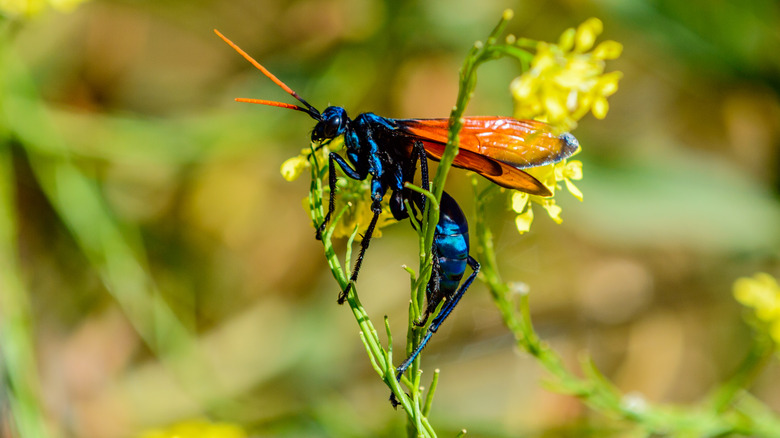 An Entomology Expert Explains How To Identify And Get Rid Of Tarantula
I once saw one on a hiking trail near Sedona, just calmly crawling over a rock. It looked like a tiny, armored drone from a sci-fi movie. My heart raced, but the wasp just ignored me—it was on a mission, probably hunting for a tarantula’s burrow. That’s the key: they’re not out to get you; they’re focused on their job.
What makes them so fascinating (and a little funny)
Their hunting behavior is wildly dramatic. A female tarantula hawk will sting a tarantula, paralyzing it, then drag it back to her burrow. She lays a single egg on the spider, and when the larva hatches, it eats the spider alive from the inside. Gruesome? Yes. But it’s also nature’s version of a thriller movie plot.
And here’s a fun fact: tarantula hawks are a favorite of roadrunners—yes, the cartoon bird. Real roadrunners will grab a tarantula hawk, smash it against a rock to remove the stinger, and then eat it. So if you see a roadrunner speeding across a road, it might be late for a very spicy lunch.
Should you be scared? Nah, just respectful
Think of tarantula hawks like the grumpy mailman of the insect world: they have important work to do, and they’d rather not be bothered. If you leave them alone, they leave you alone. Their sting is a last-resort defense, not an invitation to a fight.
 Spider Eating Wasp Texas
If you’re hiking in their territory, wear closed-toe shoes and don’t swat at them. Just give them space and enjoy the show. They’re a reminder that even the most intimidating creatures play a vital role in keeping ecosystems balanced.
Why this matters to you (even if you’re a couch potato)
You might never visit the desert, and that’s okay. But understanding where tarantula hawks live helps you appreciate the wild diversity right in your own backyard—or at least in someone else’s. It’s a small, weird piece of the world that makes nature feel like a surprise party you didn’t know you were invited to.
Plus, next time you see a large wasp with orange wings, you won’t scream—you’ll say, “Oh, that’s just a tarantula hawk, doing its thing.” And you’ll feel like a total nature expert. That’s the kind of humblebrag that makes mornings a little better.
So, whether you’re a desert dweller or a city slicker, know that these creatures are out there, quietly making the world more interesting. They’re not villains—they’re just really good at their jobs. And honestly, wouldn’t we all like to be that focused on our own goals?