
So, we’ve all been there. It’s 2 AM, you’ve had one too many, and that spinning tower of seasoned meat is calling your name like a siren. But have you ever stopped mid-bite, sauce dripping down your chin, and wondered: where did this glorious mess actually come from? Let’s grab a coffee—or a kebab—and untangle this juicy mystery together, shall we?
The First Sizzle: It’s Not Just From Greece
Okay, let’s bust the biggest myth first. Kebab didn’t originate in Greece, no matter how many times you’ve defended a gyro’s honor at a late-night food truck. The real story starts way back in the battlefields of ancient Persia (modern-day Iran).
Think about it: soldiers had no fancy kitchens. They had swords, a campfire, and a fresh kill. So, what do you do? You skewer the meat on your blade and roast it over the flames. Crude, efficient, and deliciously genius.
Must Read
That primitive method is the granddaddy of everything we call kebab today. The word “kebab” itself likely comes from the Persian “kabab,” meaning “to fry” or “to burn.” Funny how “burning” something accidentally became one of humanity’s best ideas.
But Wait—Did Iraq Invent It?
Oh, you’re sharp today. Some food historians argue the real birthplace was ancient Mesopotamia (Iraq). There’s even a recipe for “meat on sticks” in a 4,000-year-old Sumerian text. That’s older than your grandmother’s secret sauce recipe, I guarantee it.
So, Persia or Mesopotamia? Honestly, it’s like arguing over who invented the wheel. The Middle East is the heartland, and we’re all just lucky they shared the magic.
The Turkish Revolution: From Skewer to Tower
Fast forward a few thousand years to the Ottoman Empire. Turks took the basic skewer and said, “Nah, let’s go bigger.” They invented the döner kebab—the spinning mountain of meat we all worship today.
The legend says it was a guy named Isak Efendi in 19th-century Bursa, Turkey. He stacked lamb slices vertically and cooked them on a vertical rotisserie. Why? Because horizontal grills were for amateurs, apparently.
This changed the game forever. Now you could carve off thin, crispy strips for hours. It’s efficient, theatrical, and makes you feel like a carnivorous king watching your kingdom spin.
 Discover How Kababs Differ Across Cultures
And Then, Germany Changed Everything
Here’s where it gets wild. In the 1970s, Turkish immigrants in Berlin took the döner and stuffed it into bread. They added salad, sauce, and a whole lot of love. A guy named Mahmut Aygun is often credited with serving the first “kebab on a plate” in Berlin—soon turned into a sandwich.
This is the doner kebab you know and love today. The one you eat while walking, crying, or both after a breakup. It’s a German-Turkish hybrid, not some ancient relic. Yes, that means the “British kebab” is technically a Berliner. Mind-blown yet?
Today, Germany devours over 600 million döners a year. That’s a lot of garlic sauce and existential regret at 3 AM.
But Don’t Forget India and the Seekh Twist
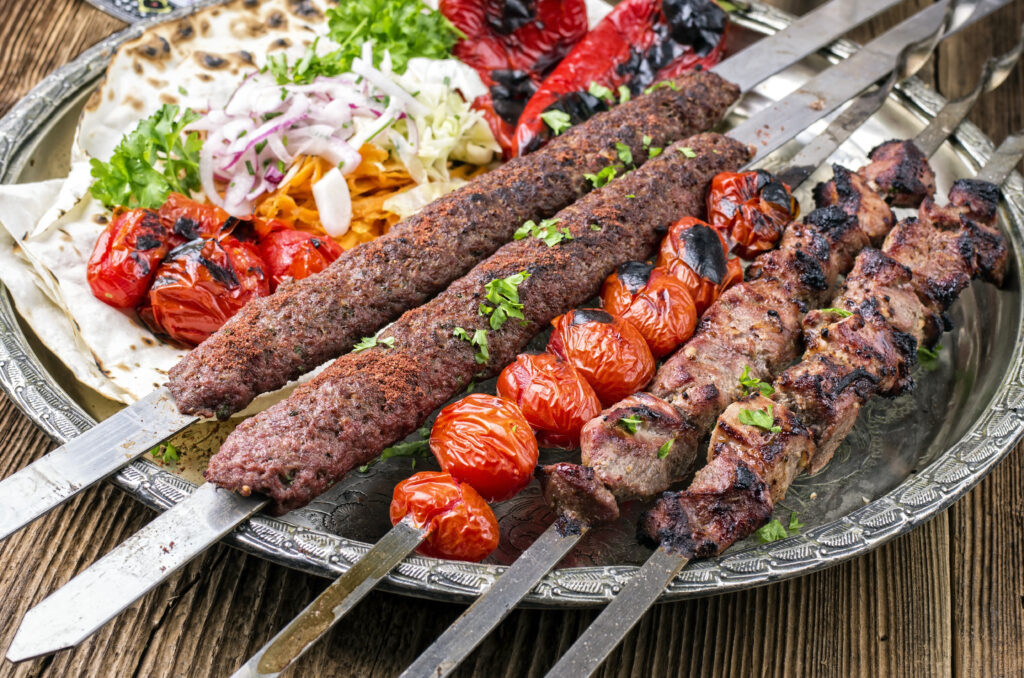
We can’t ignore the spicy cousin: the seekh kebab. This is the minced, spiced version cooked on flat skewers, popular in India, Pakistan, and Afghanistan. It’s a whole different beast—less tower, more party on a stick.
The Mughal Empire brought Central Asian cooking to India. They took the basic kebab idea and said, “Let’s add everything in the spice cabinet.” Cumin, coriander, chili, ginger—boom. A new classic was born.
So next time you order a seekh kebab, thank a Mughal emperor. He probably had better table manners than you do right now.
What About Shish Kebab? That’s the Easy One.
Shish kebab is just the original, simple skewer. “Shish” means skewer in Turkish, so it literally translates to “skewered meat.” You’ve got chunks of lamb, peppers, and onions. It’s the LBD of kebabs—classic, never goes out of style.
 The History of Kebabs - YouTube
But let’s be real: shish is the “healthy” option we pretend we wanted. Döner is the “I want to feel alive (and full of regret)” option.
One Kebab, Many Faces
Here’s the beautiful chaos: kebab is a global traveler with a thousand passports. In Lebanon, you get kafta (spiced minced meat). In Greece, it’s gyros (pork or chicken). In Japan, they have yakitori—chicken skewers with salt or tare sauce. Is that a kebab? Spiritually, yes.
Even China has chuan’r, lamb skewers dusted with cumin and chili. The Silk Road is basically a very long, very delicious highway of kebabs. Nobody owns it. We’re all just enjoying the ride.
So, where did kebab originate? The answer is: everywhere and nowhere at once. It’s a human invention born of fire, hunger, and creativity.
So Next Time, Eat With Pride
When you’re standing in line at 1 AM, staring at that rotating meat, remember you’re eating 4,000 years of history. You’re eating Persian soldiers, Ottoman chefs, Berlin immigrants, and Mughal emperors.
And honestly? You’re also eating a little bit of chaos. But that’s what makes it so damn good. Now go grab a kebab—you’ve earned it after that history lesson.
Just get extra sauce. You know which one.