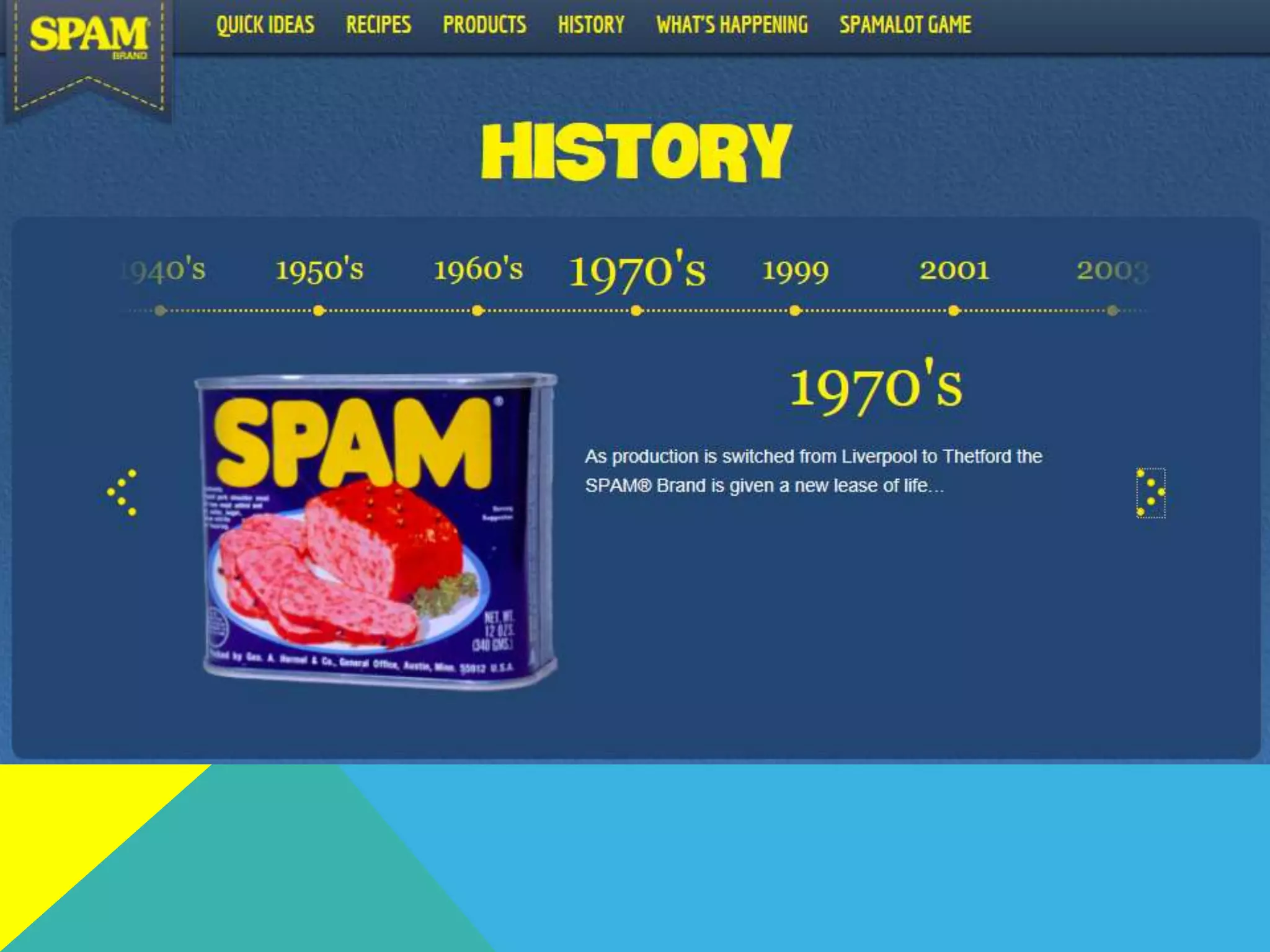
Let’s be honest: Spam is a mystery meat masterpiece. It’s salty, shelf-stable, and oddly delicious when fried crispy. But have you ever stared at that blue can and wondered, “Where on earth did the name Spam come from?”
Spoiler alert: it’s not a secret government code, and it has nothing to do with unwanted emails. The real story is much weirder and way more fun.
The Birth of a Culinary Legend
It all started back in 1937, during the Great Depression. The Hormel Foods Corporation in Minnesota had a problem: they had tons of leftover pork shoulder (not the fancy stuff) and needed to sell it.
Must Read
Enter a clever guy named Jay Hormel, who invented a canned pork-and-ham product. But the product needed a name that wouldn’t make people think of “mystery slop” (though let’s be real, it’s a little mysterious).
The company held a naming contest at a New Year’s Eve party. They offered $100 to whoever coined the winning moniker. That was serious cash back then!
The Winning Word
A man named Kenneth Daigneau, a movie actor and brother of a Hormel VP, won the prize. He suggested a simple, snappy word: Spam.
But where did he get it? He smushed together two words: spiced ham. Yes, it’s literally a portmanteau—a fancy word for a word salad.
Here’s the funny part: the product didn’t actually contain much ham. It was mostly pork shoulder. But “Spiced Pork Shoulder” doesn’t exactly roll off the tongue, does it?
Why “Spam?” Why Not “Yummy Gloop?”
Hormel wanted a name that was short, punchy, and easy to remember. “Spam” was only four letters, which fits perfectly on a can. It was also super easy to say after a few drinks (which, let’s be honest, was probably the vibe at that New Year’s party).
The name worked because it sounded friendly and exotic at the same time. “Spiced ham” sounds way more glamorous than “canned pork parts.” It’s marketing magic!
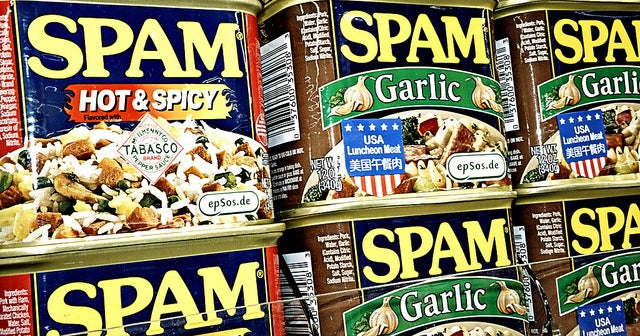 Hormel fights for Spam name - CBS News
Fun fact: The original label read “Spam – The Meat of a Thousand Uses.” And they meant it. People used it for breakfast, lunch, dinner, and even as a fishing bait. (Don’t knock it till you try it.)
The Unexpected Internet Fame
Fast forward to the 1970s, and a British comedy troupe called Monty Python released a legendary sketch. In it, a couple in a café tries to order, but every single menu item available includes Spam.
The sketch features a group of Vikings singing, “Spam, spam, spam, spam…” as a catchy (and incredibly annoying) chant. If you’ve seen it, you know it’s pure, beautiful chaos.
Here’s where the digital connection happens. In the 1990s, early internet geeks (probably the same guys who named their computers “Viking”) started calling unwanted bulk emails “spam.” Why? Because the Monty Python sketch had the word repeated so much that it became synonymous with annoying, repetitive nonsense.
So, the name for junk mail literally comes from a canned meat product, which got its name from a party contest. Isn’t that ridiculous? I love it.
Spam’s Global Empire
Today, Spam is a global phenomenon with strange local twists. In Hawaii, they eat more Spam per person than anywhere else—it’s practically a state food. You can get Spam musubi (a sushi-like roll) at any 7-Eleven there.
In South Korea, Spam is a luxury gift item often presented in fancy gift sets. Yes, you read that right: people give each other canned meat as a token of love. That’s one way to say “I care about your arteries.”
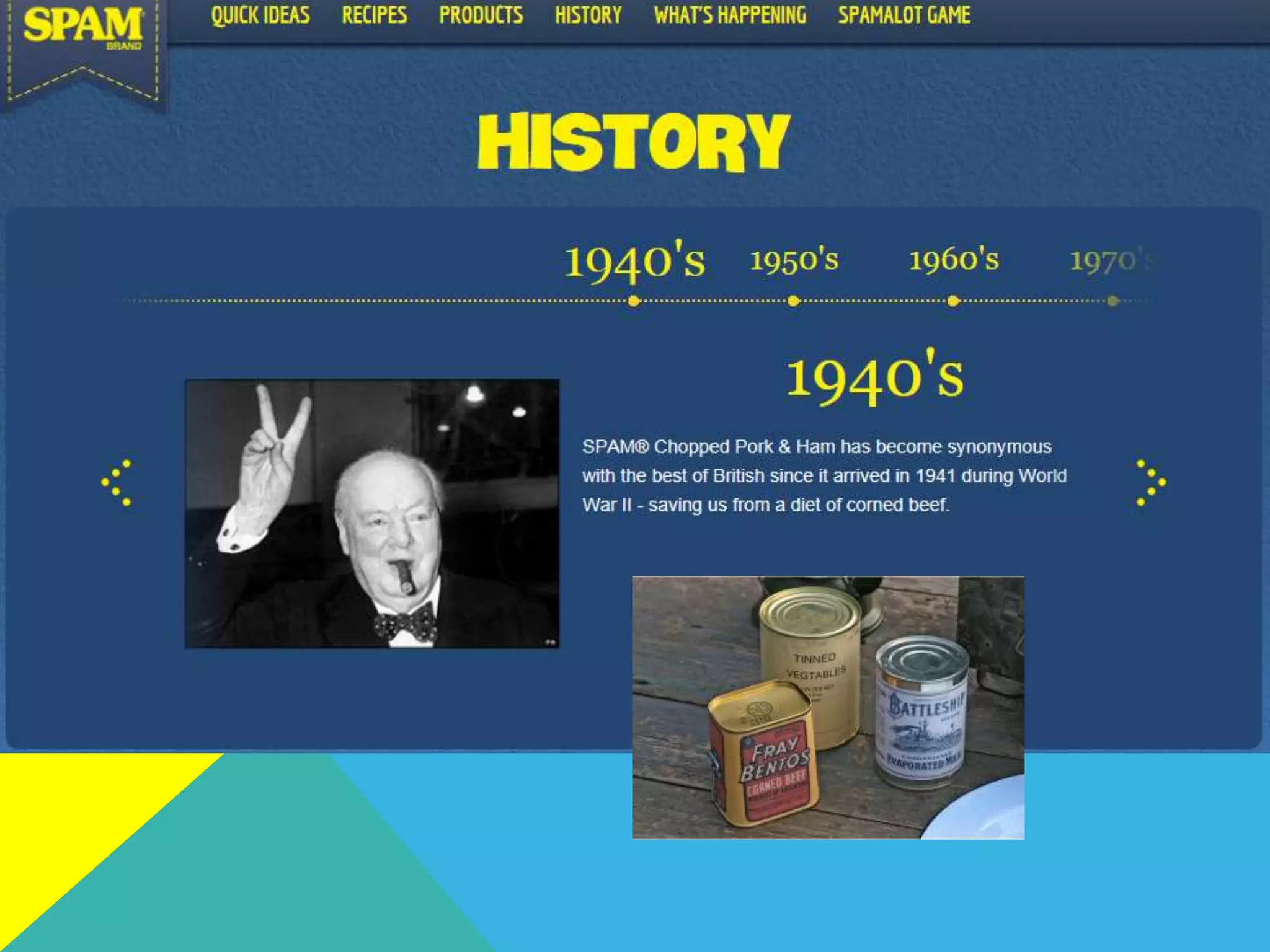 History of spam | PPTX
In the Philippines, they have a Spam-flavored fast-food burger called the Spamsilog. It’s so popular that McDonald’s tried to copy it. (They failed, obviously. You can’t improve on perfection.)
The Name That Refuses to Die
The name “Spam” has outlived its original marketing campaign, the Great Depression, and even the careers of the Monty Python cast. It’s now a synonym for canned meat and also a synonym for your inbox when your cousin forwards you chain emails.
Think about the incredible luck of that name. A random portmanteau from a New Year’s party turned into one of the most recognizable brand names in history. And it inadvertently gave the world a term for digital garbage.
So the next time you see a can of Spam at the grocery store, give it a little nod of respect. It’s not just meat—it’s a linguistic legend.
The Uplifting Conclusion
Here’s the beautiful truth: Spam’s name is a testament to the randomness of life. A silly party contest, a bored actor, and a comedy troupe all conspired to create a word that would last for nearly a century. It started as a clever marketing ploy and ended up defining how we talk about unwanted digital noise.
If that doesn’t make you smile, I don’t know what will. Because if a canned meat product can go from a 1937 party to a global food icon—and accidentally create internet slang—then anything is possible. You could be eating a slice of fried Spam right now, and in a weird way, you’re tasting a piece of pop culture history.
So go ahead, embrace the spam. Whether it’s in your kitchen or your email inbox, remember: sometimes the best things in life come from the most unexpected—and most delicious—sources. Now, who wants a Spam sandwich? (Just don’t ask what’s really in it.)