
So, you’re wondering how long artificial turf lasts on a football field. Great question. Let’s chat about it like we’re grabbing a coffee—no jargon, just the good stuff.
First off, the short answer: 10 to 15 years. That’s the sweet spot for most top-notch fields. But here’s the kicker—pun very much intended—it depends on everything.
What Makes It Last (Or Die Fast)?
Think of turf like a pair of sneakers. You wear them every day, they fade. You treat them nice, they last. Football fields get pounded like a piñata at a birthday party.
Must Read
Pro fields? They’re babied. They get rotated, cleaned, and even vacuumed. Yes, vacuumed—like your living room rug, but way bigger. High school or community fields? They get the leftovers: rain, mud, and Friday night chaos.
The Fiber Type Matters (A Lot)
Not all grass is created equal. There are nylon, polyethylene, and polypropylene blades. Nylon is the tough guy—durable but stiff. Polyethylene is softer, feels nicer, but wears out faster. Polypropylene is like the cheap sunglasses of turf: fine for a season, then trash.
Most modern fields use a mix of polyethylene and nylon. That combo gives you softness without turning into a bristle brush.
Infill: The Secret Sauce
You know that black crumbly stuff? That’s infill—usually rubber or sand. It holds the blades upright and absorbs shock. Without it, your turf goes flat faster than a soda left open.
Over time, infill gets compacted. You lose bounce. Players start complaining about “dead spots.” You can top it up, but only so many times. After a decade, the infill is basically dust.
The Sun Is a Silent Killer
UV rays are mean to turf. They break down the plastic fibers, making them brittle. In sunny climates (hello, Texas or Florida), fields age faster. Shade helps, but not everyone builds with a canopy.
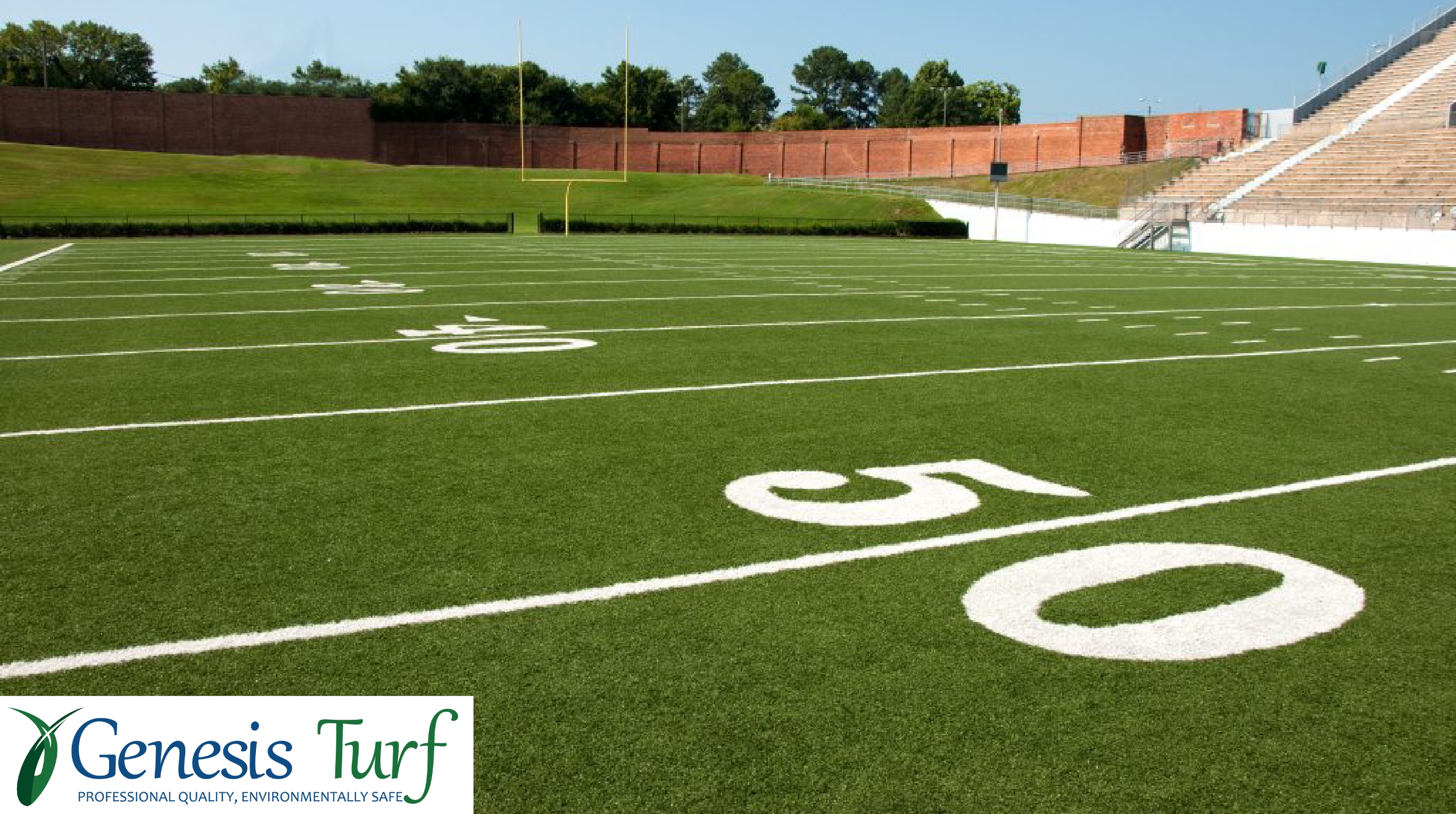 Artificial-Football-Turf-Field - Genesis Turf
I’ve seen fields in Arizona that looked 15 after only 8 years. Meanwhile, a field in Seattle—rainy, cloudy—still looked decent at 12. Weather is the boss.
Maintenance: Or, How Lazy Are You?
Here’s the thing: turf isn’t “no maintenance.” It’s different maintenance. You gotta brush it, disinfect it, pull out weeds, and refill infill. Ignore it? It’ll look like a mangy old carpet within seasons.
A well-maintained field can push to 15 years. A neglected one? Eight years, max. That’s the difference between a champagne retirement and a dumpster fire.
What About The Cost?
Installing turf is not cheap. We’re talking $500,000 to $1 million for a full field. So yeah, you want it to last. But here’s the irony: you’ll save money on water and mowing. It’s a trade-off—like buying a fancy espresso machine instead of daily lattes.
And when it’s time to replace it? That’s another major expense. But at least you get to recycle the old turf into playgrounds or mats. How’s that for a second act?
The Player Factor (Spoiler: They’re Hard on It)
Football players are professional wrecking balls. They cut, slide, and stomp. High-traffic areas—like the hash marks and end zones—go bald first. You’ll see that before the rest of the field even yawns.
Some fields rotate the field orientation for even wear. Others just let the center take the beating. Guess which one lasts longer?
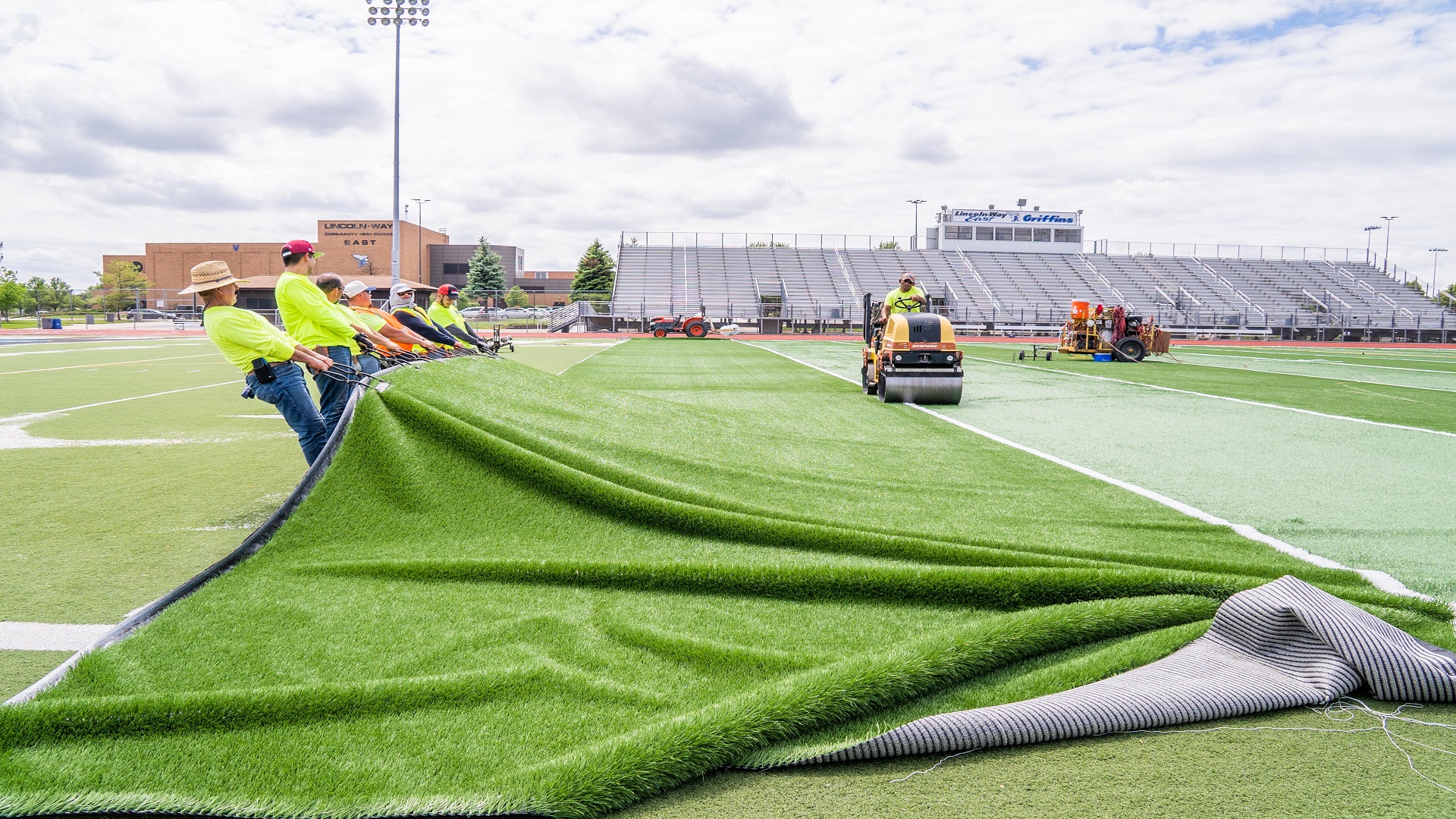 How To Know When It's Time To Replace Your Artificial Turf Field
So, How Long Really?
Let’s be real: 10 to 12 years is the realistic average for a decent field used regularly. Pro fields with perfect care hit 15. High school fields that see 50 games a year? Might tap out at eight.
But here’s the thing: even at year 10, it’s still playable—just not pretty. It’s like your favorite hoodie after a decade: comfy but faded, with a few holes. You’ll still wear it to the couch, but not to your wedding.
The Wildcard: Fake Grass vs. Real Grass
Natural grass lasts forever if you let it rest. But turf? It’s a ticking clock. The good news: you can predict its death. Natural grass surprises you with mud pits or bald patches. Turf just slowly gets sad.
And honestly? Players prefer turf for grip and speed—until it gets too old. Then they complain about heat (it gets hot—like egg-frying hot) and stud burn. Nobody wins forever.
The Final Word (No Capes, Just Truth)
If you’re buying a turf field, plan for 12 years. Budget for replacement at year 10. Treat it like a rental car: gentle, but expect some dings.
And remember: the lifespan isn’t just about the turf—it’s about the sun, the players, the infill, and your willingness to baby it. One bad storm? One skipped maintenance? Poof—there goes a year.
So, grab your coffee, look at your field, and ask: “Are you a 10-year champ or a 15-year legend?” The answer is in how you treat it. Cheers to that.