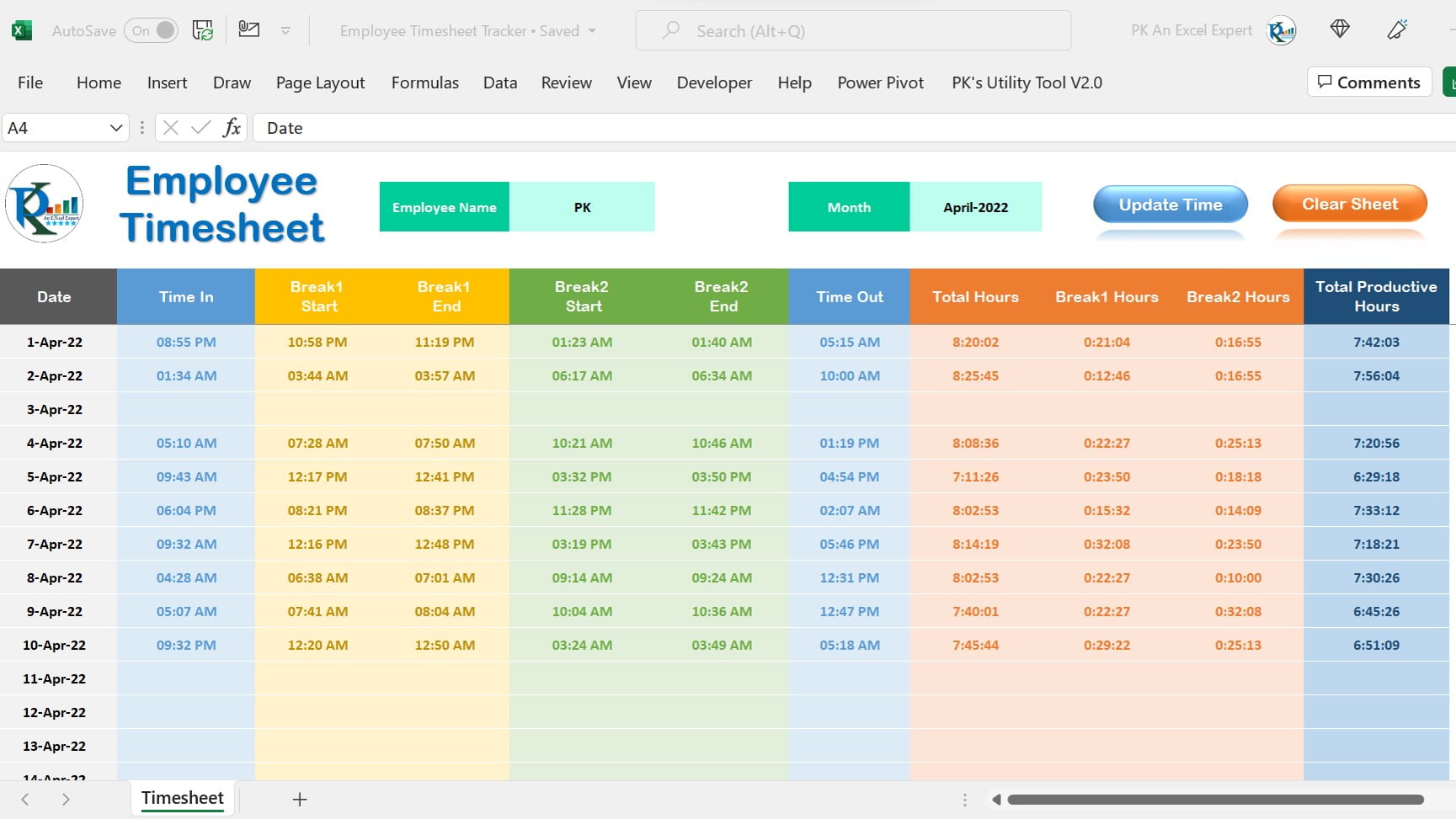
Let’s be honest. Timesheets sound about as exciting as watching paint dry. But hold up—Excel changes the game. You can build a time tracker that’s actually fun to use.
No boring templates. No soul-crushing data entry. Just you, a spreadsheet, and a little bit of spreadsheet wizardry.
Why Excel? Why Now?
You already have Excel. It’s sitting on your computer, collecting digital dust. That’s a tragedy.
Must Read
Excel is the Swiss Army knife of productivity. It’s flexible, powerful, and weirdly satisfying. Creating a timesheet here is like playing with LEGO—except you’re building a little money-monitoring machine.
Plus, you look like a genius when you show it off. “Oh, this? Just my custom hour tracker.” Immediate street cred.
Step 1: The Blank Grid (Your Canvas of Power)
Open a fresh workbook. Stare at the empty cells. This is your canvas.
Start with a header row. Type: Date | Start Time | End Time | Break (mins) | Total Hours. That’s five columns. Simple math, huge impact.
Fun fact: The average person spends 4 minutes a day looking for a pen. Your Excel sheet laughs at pens. It’s already there.
Step 2: Format Like a Pro (Without Being One)
Highlight the Date column. Right-click. Choose “Format Cells.” Pick a date format you love (like “Mon, 14 Apr”).
Do the same for Start and End Time. Pick a time format (like “1:30 PM”). Why? Because Excel thinks in numbers, but you think in “lunch at 12:30.” Meet in the middle.
Now select the whole Total Hours column. Format it as “Custom” and type h:mm. This is the secret sauce. Excel will now calculate hours automatically. Mind blown yet?
Step 3: The Magical Formula
Here’s where the fun begins. You get to be a wizard.
Click the first cell under “Total Hours.” Type this spell: = (End Time – Start Time) * 24 – (Break/60). Wait—that looks scary. Let’s simplify.
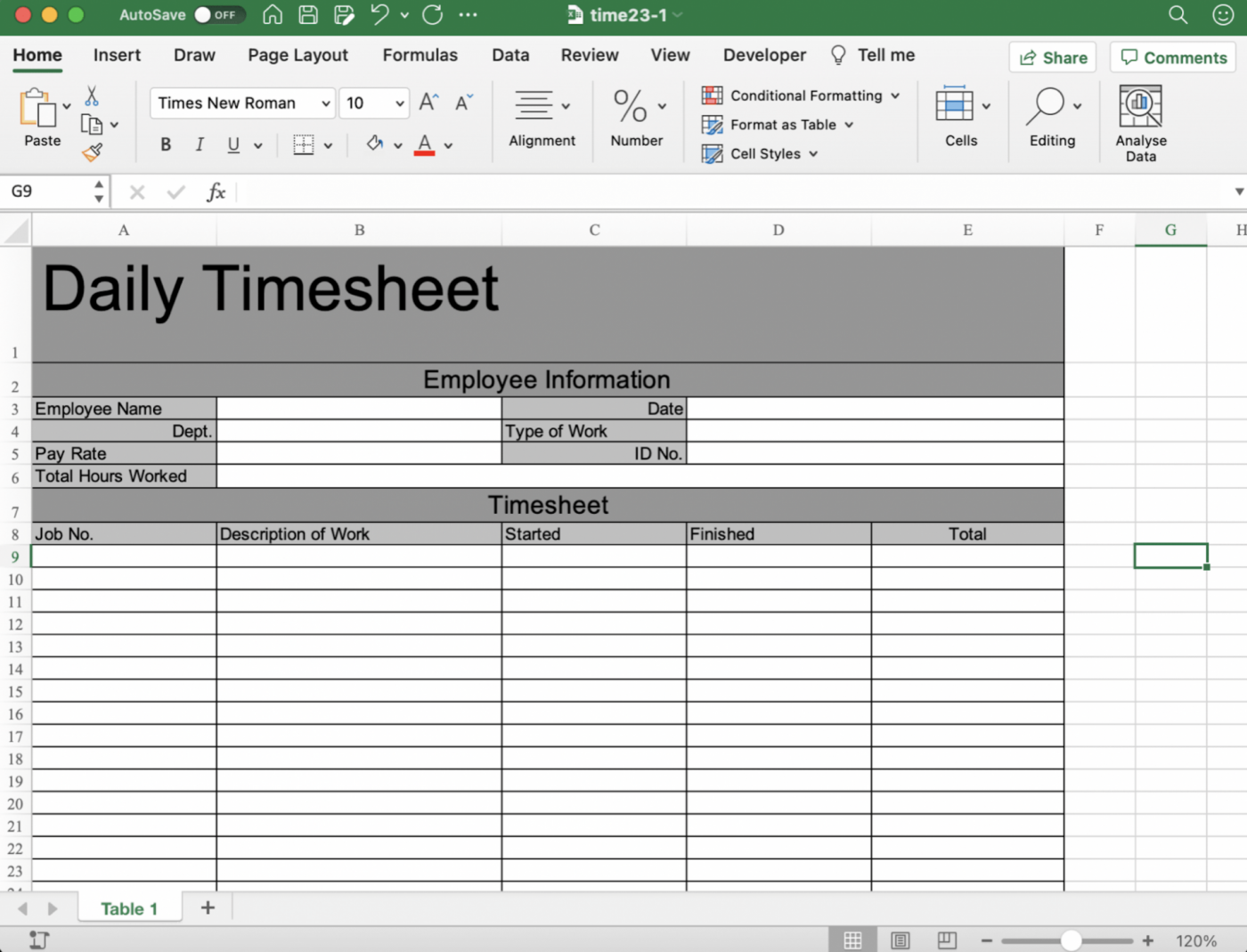 How To Create A Timesheet In Excel
Actually, Excel hates math. Use a simpler charm: =(C2-B2)*24-D2/60. Hit Enter. Boom. Hours appear like magic.
Now drag that formula down the column. Every new row calculates itself. It’s like having a tiny robot slave for your work hours. No judgment. Just numbers.
Quirky truth: The first spreadsheet was invented in 1979 for a paper about “budgeting for a wedding.” You’re part of that weird, romantic legacy.
Step 4: Add Some Personality (Yes, Really)
Your timesheet doesn’t have to be gray and sad. Make it yours.
Use bold headers. Color your weekend rows yellow. Add a “Notes” column for drama (“Client called while I was napping”).
Insert a SUM formula at the bottom of Total Hours. Click the cell, type =SUM(E2:E31), and watch your week total appear. Satisfying, right? It’s like checking your score in a video game.
You can even add a progress bar. Use Conditional Formatting. Fill a cell green if you hit 40 hours. Red if you’re slacking. Gamify your existence.
Step 5: The Hidden Superpowers
Want to get fancy? Add a drop-down menu for projects. Go to Data → Data Validation → List. Type: Project A, Project B, Coffee Break. Click “OK.”
Now each row can be tagged. You can filter your timesheet later. “Show me all the ‘Coffee Break’ entries.” Spoiler: there are a lot.
Better yet, create a PivotTable. It sounds intimidating, but it’s just a click. It summarizes everything instantly. You suddenly know how much time you wasted on meetings. Ignorance was bliss. Now you have data.
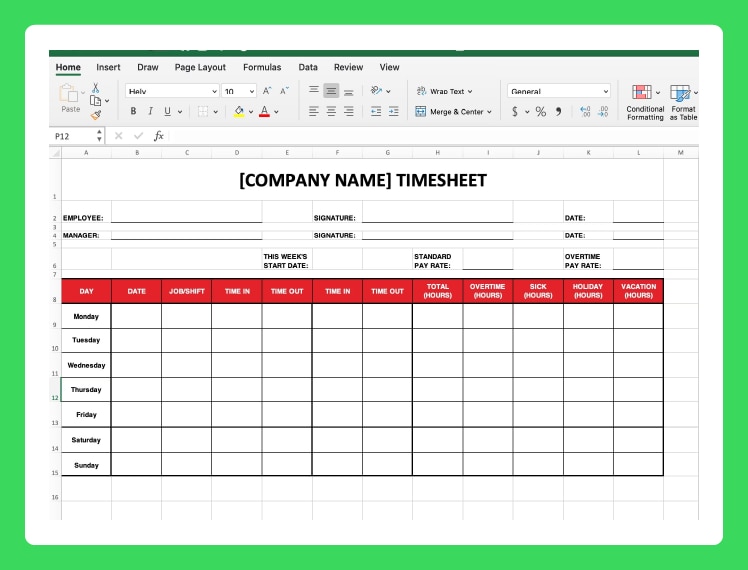 How To Create a Timesheet in Excel (Guide with Templates) | ClickUp
Why This is Actually Fun
Building a timesheet is adulting with creativity. You’re a designer, a mathematician, and a detective. You find patterns in your day.
Did you know that most people underestimate their work hours by 20%? Your Excel sheet doesn’t lie. It’s a brutally honest friend.
And when your boss asks for your hours, you send a clean, professional file. They think you’re a robot. You just smile. Let them wonder.
Pro Tips (For the Brave)
Add a cell with =TODAY(). It auto-updates the date. You never type the current day again. Freedom.
Use the Format Painter (the paintbrush icon). Click a pretty cell, then click another. Instant style transfer. You’re an artist now.
Save your file as a template (.xltx). Next month, just double-click it. A fresh timesheet appears. It’s like Groundhog Day, but productive.
The Final Punchline
You just turned a boring chore into a tiny, satisfying game. You control the data. The data doesn’t control you.
Every time you open that sheet, you’re a little more organized. A little less stressed. And a lot more impressive.
So go ahead. Open Excel. Click a cell. Start building. Your future self—who remembers exactly how long they worked on Tuesday—will thank you.
Now go track those hours like the spreadsheet superhero you are.