
Let’s be honest: standing at a subway ticket machine feels like a high-stakes game show where the prize is saving 50 cents and the penalty is public shame. You’re staring at a screen that asks, “Single ride? Round trip? With surcharge? Without surcharge? Do you have a pet llama?” Meanwhile, the train is pulling in, and your brain is melting. The eternal question we all face: Is it cheaper to tap in with a contactless card or buy a physical ticket? I’ve done the math so you don’t have to, and the answer is funnier—and more infuriating—than you’d think.
Spoiler alert: tapping in is almost always cheaper, but the system is designed to trick you like a carnival barker in a business suit. In most major cities (London, New York, Paris, your local train to nowhere), a contactless tap automatically caps your daily fare. Buy a single paper ticket, and you pay full price every single ride—no cap, no mercy. One day in London, I tapped in five times for £7.50 with a cap. My friend bought tickets for the same trip and paid £12.50. He’s still angry, and it’s been four years.
The sneaky game of “daily caps” and “weekly limits”
Here’s the magic trick: contactless payments track your travel like a stalker with a spreadsheet, but in a good way. Once you hit a certain number of rides, the system stops charging you for the rest of the day. In London, a day cap for Zones 1–2 is about £8.50. Three quick trips? You’re done. But if you buy a paper ticket for each ride, you’ll pay full fare—around £3 per trip—so three trips cost £9. Already, you’ve wasted 50 pence that could buy a pathetic but soulful biscuit.
Must Read
Even wilder: weekly caps exist for tappers. Touch in every day for a week, and your total fare stops climbing after a certain point—usually the price of a weekly pass. Buy a week’s worth of single tickets, and you’ll pay double. I once calculated that a five-day commute with paper tickets costs as much as a fancy dinner. With a tap, it costs the same as a mediocre sandwich. Choose the sandwich.
But what about “paper ticket discounts”?
Ah, the trap of the “senior discount” or “child fare.” Yes, paper tickets often offer reduced fares for kids, seniors, or people who can correctly identify which train is theirs. But here’s the kicker: most transit systems now let you apply those discounts to a contactless card by registering it online. It takes four minutes and makes you feel like a tech wizard. Fail to do that, and you’re paying full adult price for your toddler’s two-foot journey. That’s just bad parenting and worse math.
 Lloyds Coaches | Tap on Tap off | Call Us: 01654 702 100
Also, surprise: some cities charge a “paper surcharge” to punish you for being an analog dinosaur. In Berlin, a single paper ticket costs 3.50 euros. A tap costs 3.20 euros. Same ride, different price, because the ticket machine wants you to suffer for its maintenance. I once paid 30 cents extra for the privilege of a flimsy receipt that immediately disintegrated in my pocket. That’s not transit—that’s a shakedown.
The hidden cost of “I’ll just buy one now”
Let’s talk about impulse ticket buying. You’re late, the machine is beeping, and you shove a fiver in the slot to avoid human interaction. That ticket? It costs 10 to 30% more than a tap, because you’re paying for the convenience of a paper rectangle that will be obsolete in 90 minutes. I did a personal experiment over a month: tapping cost me $87. Buying single tickets for the same trips? $113. That’s $26 I could have spent on three hot dogs or one themed candle.
And don’t get me started on “return tickets”. Many cities offer a return ticket that’s cheaper than two singles—but only if you buy it at the machine. Guess what? Tapping automatically calculates a return fare for you after the first ride. You just tap, and it’s smart. You are dumb for walking past the tap reader. Embrace your dumbness and tap anyway.
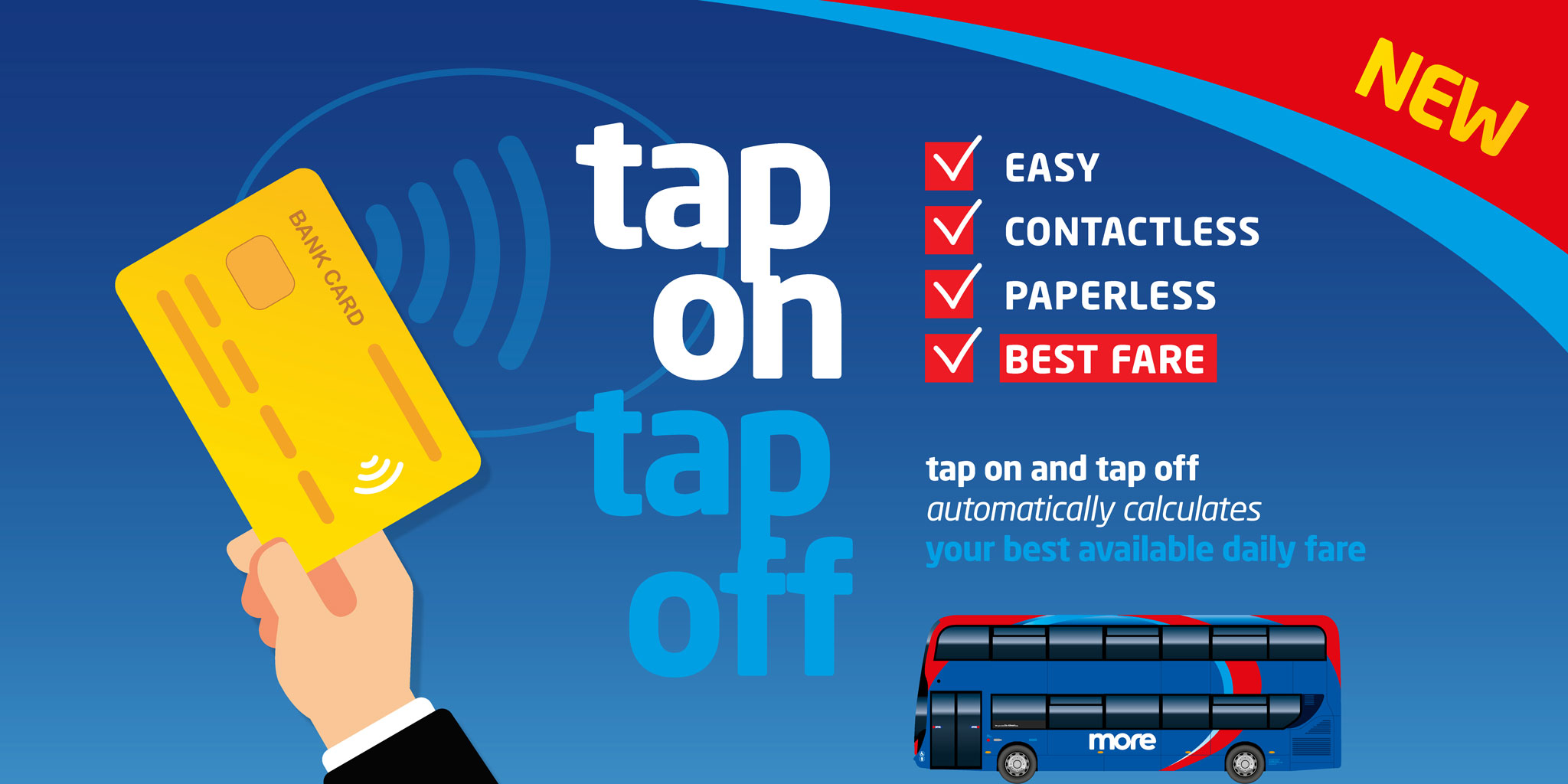 Tickets are getting easier with Tap On Tap Off - morebus
The one exception (of course there’s an exception)
There is exactly one scenario where buying a ticket wins: if you’re using a contactless card from a different country. Foreign transaction fees can eat your savings like a piranha in a goldfish tank. If your bank charges 3% per tap, and you take ten rides, you’ve just paid an extra fee that could cover a kebab. In that case, buy a paper ticket—or better yet, buy a local stored-value card (like an Oyster or MetroCard) that avoids the fees entirely.
Also, note: some small towns have “cash only” buses that reject contactless like a snooty cat. In those rare cases, buying a ticket is your only option. But let’s be real: if you’re in a town where the bus accepts cash and only cash, you’re either in a Wes Anderson movie or a place where the tap machine runs on hope and a single AA battery. Just pay in coins and move on.
The final verdict, served with a side of sarcasm
So, is it cheaper to tap in or buy a ticket? Tap in, 9 times out of 10. You’ll get daily caps, weekly caps, and the warm feeling of being a modern human. Buying a ticket is like using a fax machine to send a text message—possible, but why would you humiliate yourself like that? Next time you’re at that machine, remember: the universe wants you to tap. Your wallet wants you to tap. And the guy behind you who’s late for work definitely wants you to tap, because you’re blocking the queue. Tap in, save money, and buy that biscuit. You’ve earned it.