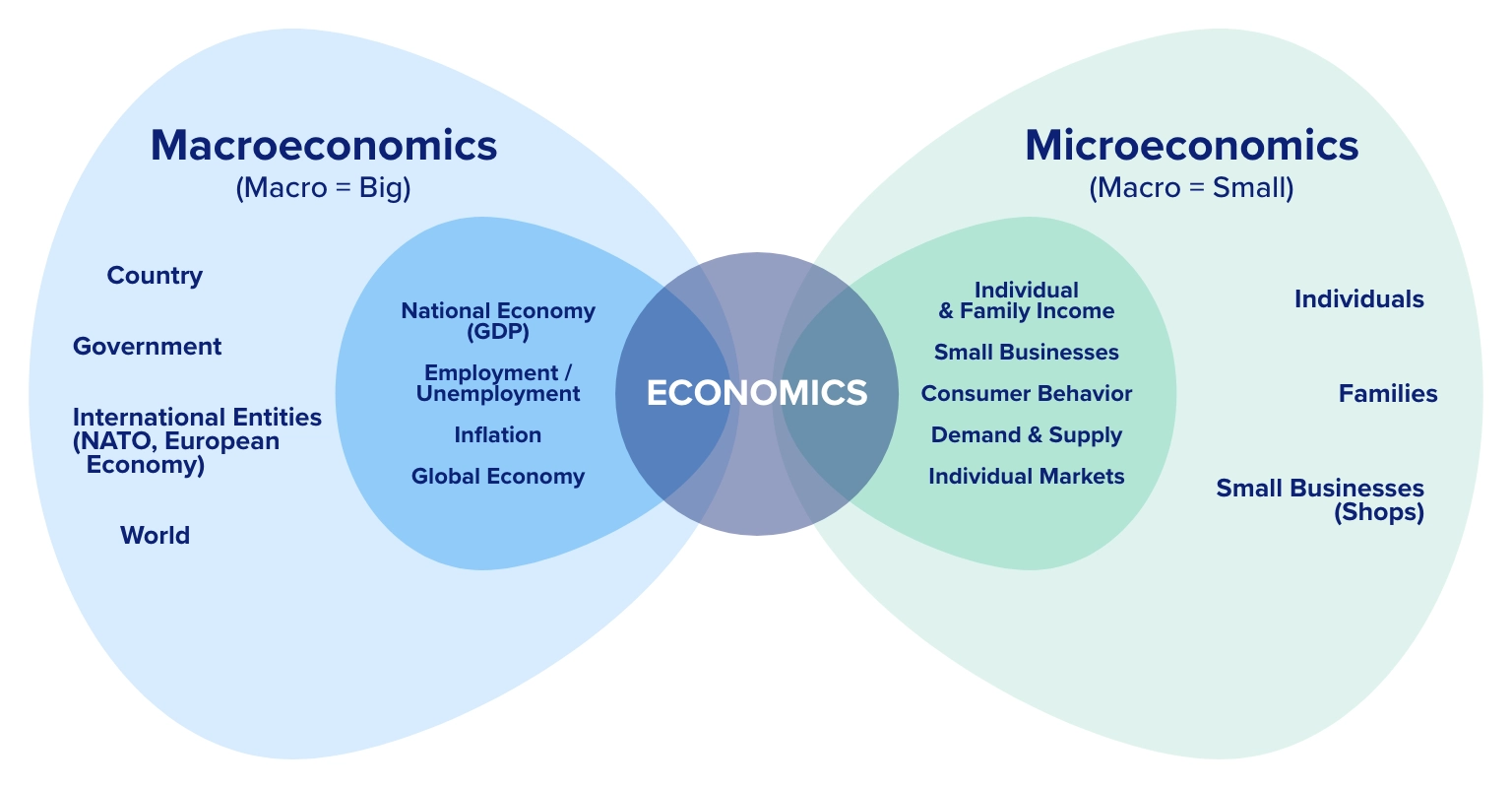
Ever wondered why your favorite coffee shop raised its prices, or why the whole country seems to be talking about interest rates? You’ve just stumbled into the two main branches of economics: micro and macro. They sound like fancy academic terms, but they’re really just two ways of looking at the same big, messy world of money and choices.
Think of it like watching a movie. Microeconomics is the close-up shot, focusing on a single character—you, a business, or a specific market. Macroeconomics is the wide-angle lens, taking in the entire landscape—the whole economy of a country or the world. Both are essential to understand the full story.
Microeconomics: The Detail-Oriented Sibling
Let’s start with the micro view. Microeconomics is all about the little decisions that individuals and firms make every single day. Why did you buy that latte instead of brewing coffee at home? That’s microeconomics in action—supply and demand at a personal level.
Must Read
It’s the study of scarcity and trade-offs. You have a limited budget, so you choose between a new phone or a weekend trip. A bakery decides between baking more croissants or more bagels. Microeconomics asks: How do we allocate limited resources?
Ever notice how prices go up when a product is super popular? That’s the invisible hand of microeconomics, pushing supply to meet demand. It’s like a silent auction happening all around you, in every store and online shop.
This branch also explains why your landlord raised the rent. It’s analyzing the specific market for apartments in your neighborhood. It’s nerdy, but it’s also the reason you can predict a surge in umbrella sales right before a rainstorm.
Why It’s Cool: You’re Already a Microeconomist
Here’s the fun part: you practice microeconomics every time you bargain at a flea market or compare prices at the grocery store. You’re analyzing marginal utility—is that extra slice of pizza worth the cost?
 Microeconomics Examples
It’s also the tool behind perfectly normal daily drama. Why do concert tickets sell out in seconds? Microeconomics. Why do some brands charge $5 for a bottle of water? Brand power and perceived value, baby. It makes the world feel like a giant, fascinating game.
Macroeconomics: The Big Picture Boss
Now, zoom way out. Macroeconomics is the weather system of the economy. It doesn’t care about your individual latte purchase; it cares about total consumer spending across the entire country. It’s the study of the forest, not just the trees.
This is where you hear about GDP (Gross Domestic Product), inflation, and unemployment rates. When you hear on the news that “the economy grew by 3%,” that’s macroeconomics. It’s the scoreboard for a whole nation’s financial health.
Why do central banks raise interest rates? That’s a macro move—to cool down the entire economy and stop prices from skyrocketing. It’s like a global thermostat, trying to keep things from getting too hot or too cold.
Why It’s Fascinating: It Explains Your Reality
Macroeconomics is why you might feel a recession in your gut, even if your personal job is safe. When the whole system slows down, businesses stop hiring, and the domino effect touches everything. It’s the vibe of the economy.
 Macroeconomics Vs Microeconomics: Understanding How Scale Shapes Market
Think of it like this: microeconomics is deciding to buy a car. Macroeconomics is wondering if the car factory will even be open next year. One is your choice; the other is the environment that shapes that choice.
It’s also surprisingly political. If a government cuts taxes, macroeconomics predicts it will stimulate spending. If it raises them, it might cool inflation. You’re living in a giant, real-world science experiment.
The Coolest Part: They’re Inseparable
Here’s the real secret: you can’t have one without the other. Micro and macro are two sides of the same coin. Your individual decision to save money (micro) can, in aggregate, lead to a drop in consumer demand that affects the whole economy (macro).
A macro crisis, like a stock market crash, changes micro behavior—people stop buying luxury goods. It’s a feedback loop. Understanding both gives you a superpower: you can see both the small dramas and the big plot twists.
So next time you buy a coffee, you’re not just buying coffee. You’re part of a supply chain, a market, and a national economic story. Pretty wild, right? Economics isn’t just about money—it’s about us, and all our confusing, wonderful choices.