So, you got a mysterious piece of mail from something called National Financial Services LLC. And it’s about a 1099-R.
Your first thought? “Did I accidentally win the lottery or get a secret retirement account?”
Relax. Grab your coffee (or tea, I don’t judge). Let’s unravel this little tax puzzle together.
Must Read
What in the world is this form?
A 1099-R is basically a “Hey, IRS!” postcard from a retirement account. It tells the government you took money out of something like a 401(k), IRA, or pension.
And National Financial Services LLC? That’s just a big, boring company that manages those accounts. Think of them as the very serious-looking butler who hands you the bill.
They didn’t send you cash. They sent a record of what you already did. Probably last year.
But I didn’t take any money out! Did I?
Oh, you’d be surprised. Life happens. Maybe you switched jobs and your old 401(k) got rolled over to an IRA. That counts as a distribution.
Or maybe you took a small hardship withdrawal to fix your leaky roof. You know, the one that cost you a kidney and a half.
Or—and this is the sneaky one—you inherited a retirement account from a relative. Even if you didn’t touch the money, the IRS sometimes requires a payout. And thus, a 1099-R.
The numbers on the form that will freak you out
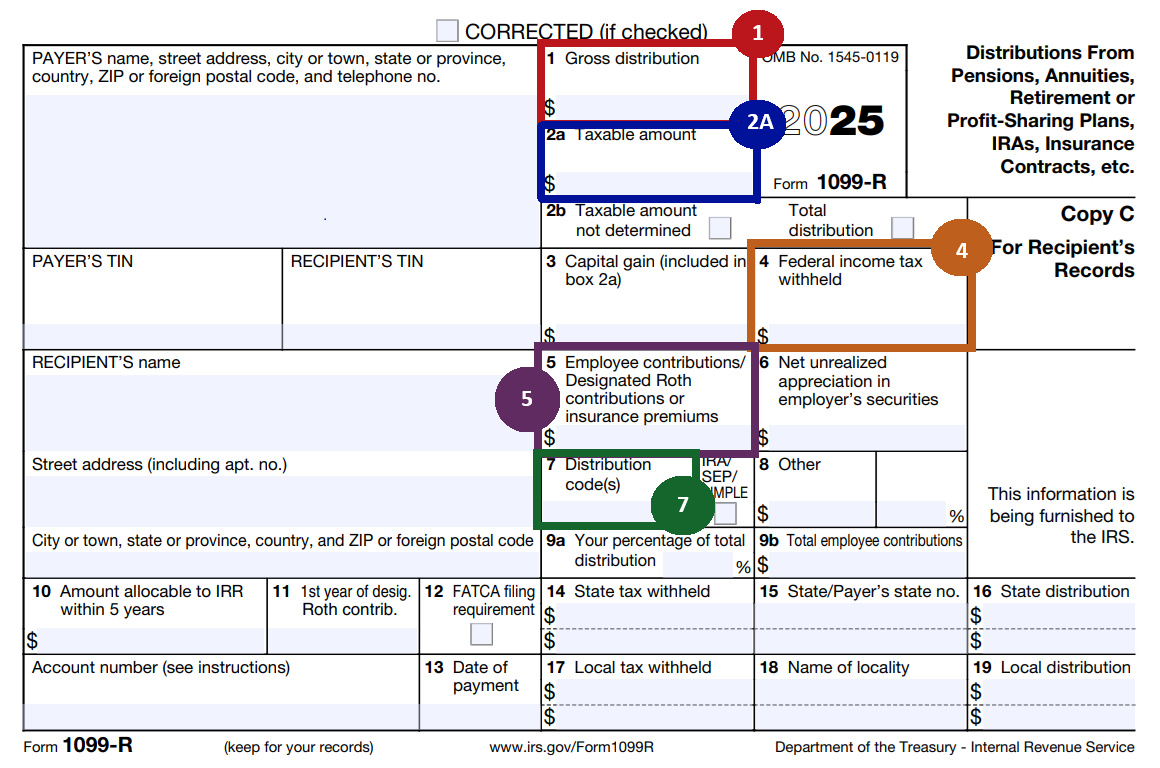
Box 1 shows the gross distribution. That’s the total amount that left the account. It looks huge. Breathe.
 FCNR Deposits for Retirement: Good or Bad Idea for NRIs?
Box 2a shows the taxable amount. That’s what you actually owe taxes on. Sometimes it’s less than box 1, especially if you did a direct rollover into another retirement account. Lucky you!
Box 7 is the distribution code. This is the secret sauce. A code “G” means a direct rollover (tax-free, hooray!). A code “1” means an early withdrawal before age 59½ (and the IRS might slap you with a 10% penalty).
Why National Financial Services LLC specifically?
They’re a huge custodian for financial giants like Fidelity, Schwab, and others. If you had a work retirement plan that later got managed by them, they’re the ones issuing the form.
It’s like getting a letter from the official record keeper. Not your boss, not your bank. Just the paper-pusher with the fanciest printer.
And yes, they probably have a very nice office with beige carpets. I imagine they smell like fresh toner.
What you absolutely must do next
First, don’t ignore it. The IRS gets a copy of this form too. They know. They always know.
Second, check your own records. Did you actually move that money? Did you take that cash? If the form looks wrong, call National Financial Services LLC. Their customer service is fine—just expect a hold time that lets you finish a podcast.
 Form 1099-R: What It's Used for and Who Should File It
Third, feed this form to your tax software or your accountant. Do not just shove it in a drawer with pizza coupons. That drawer is a tax black hole.
The playful truth about taxes
Look, retirement accounts are like time machines for money. You put cash in now, it grows, and you pay taxes later. The 1099-R is that “later” happening right now.
It’s not a punishment. It’s just the IRS saying, “Hey, thanks for the loan. Now pay up.”
So laugh it off. Make a silly joke about “my retirement account is having a garage sale.” Then file your taxes. And maybe treat yourself to a nice coffee afterward. You earned it.
One last thing (because I’m chatty like that)
If you’re still confused, you are not alone. The tax code has more twists than a pretzel factory. And National Financial Services LLC is just one factory worker.
But here’s the good news: this form usually means you did something right with your money. You saved. You invested. You moved it smartly—or at least, you tried.
So take a sip of your coffee, give that 1099-R a little nod, and move on. Life’s too short to stress about boxes and codes. You’ve got this.
Now go file that thing. The IRS is waiting.