
Okay, let’s talk about Australia. You know, the land of sunshine, stunning beaches, and… a truly terrifying array of creatures that could probably end you in three different ways before you finish your flat white. It’s a fair question: Why does this beautiful continent have so many dangerous animals? Grab a cuppa, and let’s dive into this evolutionary mystery—I promise not to spoil your next vacation.
It’s All About the Isolation, Baby
First up, think of Australia as a giant, floating ark that broke away from the supercontinent Gondwana about 180 million years ago. For eons, its plants and animals evolved in total isolation, like a crazy science experiment left to run wild. No big placental mammals (like lions or bears) came along to keep things in check, so the local critters had to invent their own rules.
This isolation meant that venom became a super useful tool for hunting and defense, especially since the continent dried out over time. If you’re a small, skittish creature in a big, hot land, it’s way easier to inject a potent toxin than to wrestle your dinner. It’s the evolutionary equivalent of bringing a flamethrower to a knife fight—slightly overkill, but it works!
Must Read
The Venom Arms Race: Spiders and Snakes
Let’s start with the eight-legged nightmares. Australia is home to the Sydney funnel-web spider, which has venom so nasty it can kill a human in 15 minutes. But here’s the hilarious part: the male funnel-web is significantly more venomous than the female. Why? Because he roams around looking for a date, and his venom evolved to be a supercharged defense against bigger predators. Lucky us, huh?
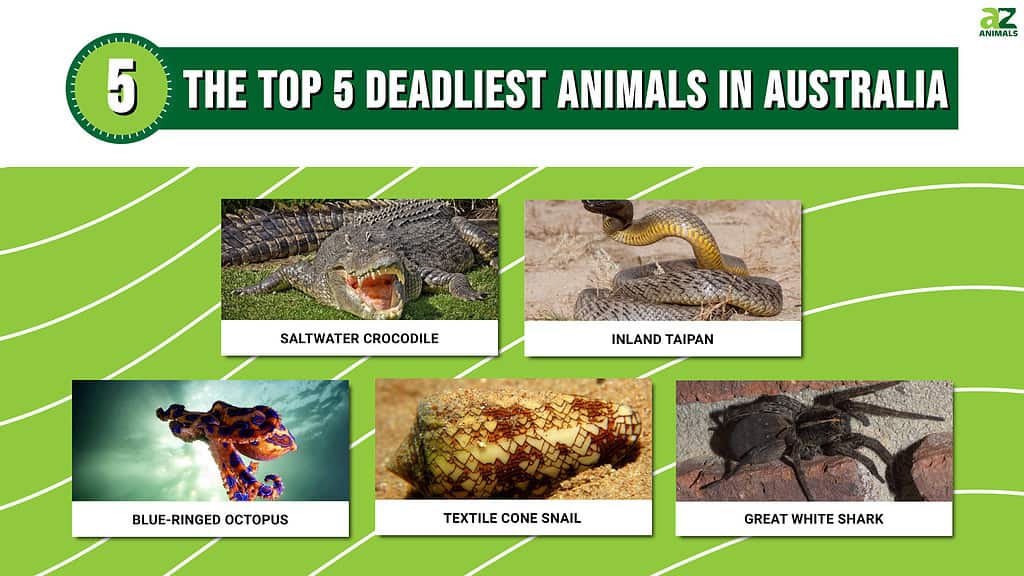
And then there are snakes. Australia has about 20 of the world’s 25 most venomous snakes. The inland taipan, for instance, has a single bite that could kill 100 men. But here’s the joke: they’re actually shy! They’d rather slither away than fight. The danger is real, but the hysteria is mostly us being dramatic. More people die from bee stings in Australia than from snake bites. Let that sink in while you check your shoes.
The Ocean: Where Even the Cute Stuff is Deadly
If you think the land is bad, wait until you dip a toe in the water. The box jellyfish is basically a floating bag of neurotoxins with tentacles that can stop your heart in minutes. It’s so dangerous that surf lifesavers stock vinegar on the beach specifically for jellyfish stings. And don’t even get me started on the blue-ringed octopus—it’s the size of a golf ball, cute as a button, and its venom is 1,000 times more potent than cyanide. One bite and you’re paralyzed, but fully conscious. Talk about a conversation starter!
 Deadliest Animals In Australia Why Do So Many Dangerous Animals Live
What about the stonefish? It looks like a lumpy rock and has spines that inject a venom so painful that people have begged for amputation. Evolution basically said, “Let’s make a fish that is both invisible and agonizing.” And the saltwater crocodile? That’s not a venom thing—that’s a “I’m a living dinosaur who has been perfecting ambush tactics for 200 million years” thing. They are the absolute bosses of the food chain. You see one, you leave. No negotiation.
But Wait, There’s a Reason for All This Crazy
Here’s the beautiful twist: all this danger serves a purpose. The venom isn’t there to spite tourists; it’s there because Australia’s environment is harsh and unpredictable. Fires, droughts, and nutrient-poor soils forced creatures to become hyper-efficient. If you’re a small marsupial, being venomous means you can take down prey bigger than you. If you’re a jellyfish, potent venom ensures you don’t become lunch for a sea turtle.
Plus, many of these “dangerous” animals are actually ecosystem heroes. Spiders eat insects that would destroy crops. Snakes control rodent populations. Crocodiles keep waterways healthy by culling sick fish and animals. They’re not villains; they’re just really, really good at their jobs. And let’s be honest—they were here first. We’re the ones who built houses in their living rooms.
The Fine Print: You’re Probably Fine
Here’s the secret that Aussies know but don’t always broadcast: the vast majority of Australian animals will not hurt you if you don’t mess with them. The deadliest spider in the world? A bite from a funnel-web is incredibly rare, and we have an effective antivenom. The death rate from snake bites is nearly zero. And statistically, you are more likely to be killed by a horse in Australia than by a shark, croc, or snake combined. Horses! The gentle giants of the paddock are the real menace.
 Why Are There So Many Dangerous Animals In Australia | Detroit Chinatown
So why the scary reputation? Because stories sell. “Man eaten by crocodile” makes headlines. “Woman had a lovely picnic and saw a kangaroo” does not. We love a good scare, and Australia’s wildlife delivers like a Hollywood blockbuster. But the reality is that Aussies swim at beaches, bushwalk in national parks, and sleep with windows open—all without a care in the world. Most of the danger is in our heads.
The Uplifting Ending (I Promise)
So, the next time you see a list of Australia’s “most dangerous animals,” take a deep breath. Yes, the island continent has a bonkers collection of venomous, prickly, and toothy creatures. But they are also some of the most fascinating, resilient, and misunderstood animals on Earth. They’re not trying to kill you; they’re just trying to survive in a land that has tested them for millions of years.
And here’s the real takeaway: Australia’s dangerous animals are a testament to the wild, creative power of evolution. They make the world more interesting, more mysterious, and more wondrous. So visit, but wear sturdy shoes. Don’t step on anything that looks like a rock. And remember: the greatest danger is not the funnel-web under your toilet seat—it’s going through life without a little bit of marvel. Australia is nature’s way of saying, “Hey, don’t take the world for granted.” And isn’t that a beautiful, slightly terrifying, thought?
Now go hug your dog. It’s safe. Probably.